

What specific industries benefit the most from using zinc phosphate spray pretreatment?
Zinc phosphate spray pretreatment is particularly beneficial in automotive, construction, manufacturing and metal fabrication, where steel components need a sound foundation for powder coating. It helps prepare surfaces for improved coating adhesion and added corrosion protection, making it suitable for parts exposed to handling, moisture and demanding service conditions.
The industries that benefit most from zinc phosphate spray pretreatment are those using steel components that must withstand handling, moisture, condensation, road exposure or industrial contamination before receiving a powder-coated finish. Its greatest value is seen where coating adhesion and corrosion resistance are important to the working life of the finished part, rather than appearance alone.
Automotive and transport manufacturing are major users because brackets, chassis-related parts, enclosures, guards and fabricated steel assemblies can encounter water, salts, oils and repeated handling. A zinc phosphate layer provides a suitable conversion coating between the cleaned metal and the powder coating, helping the finished system perform more consistently on components used in demanding environments.
Construction and architectural metalwork can also benefit, particularly where steelwork is installed externally or in areas subject to condensation. Applications may include structural accessories, support components, security items, railings, frames and site equipment. Pretreatment is especially relevant when the component cannot easily be repainted or accessed for maintenance after installation.
General manufacturing and metal fabrication often use zinc phosphate pretreatment for repeat batches of brackets, panels, cabinets, machine parts and welded assemblies. It is suitable where different fabrication stages have introduced oil, handling residues, weld contamination or light surface oxidation that must be removed before powder coating. A controlled spray process can be incorporated into a repeatable preparation sequence for components of varied sizes and shapes.
- Agricultural and ground-care equipment: machinery parts and fabricated items may be exposed to water, mud, fertilisers and outdoor storage conditions, making a properly prepared coating system important.
- Industrial equipment and machinery: guards, frames, housings and support parts can benefit where abrasion, workshop handling and intermittent moisture would otherwise create weak points in the coating.
- Electrical and control enclosures: steel cabinets and boxes require a consistent surface for powder coating, particularly where the enclosure protects equipment in workshops, plant rooms or semi-exposed locations.
- Heating, ventilation and building-services equipment: steel casings, brackets and fabricated supports may experience humidity and temperature variation, so sound pretreatment helps the coating system remain intact.
- Material-handling and storage equipment: racking components, frames, trolleys and machine supports are frequently moved, loaded and unloaded, increasing the importance of a coating that is well bonded to the prepared substrate.
The process is most appropriate for ferrous substrates such as mild steel and iron when the coating specification calls for a phosphate conversion layer beneath powder coating. It is not automatically the correct treatment for every metal. Aluminium, galvanised steel and mixed-metal assemblies may require different chemistry or a separate specification, so the substrate, intended environment and final coating system should be assessed before production begins.
Industry alone does not determine suitability. Component geometry, weld quality, drainage, masking requirements, expected service conditions and the size of the batch all affect the result. Parts with cavities or joints must be designed and positioned so that cleaning and rinsing are effective; otherwise residues or trapped moisture can undermine later coating performance. For this reason, zinc phosphate spray pretreatment is particularly valuable to manufacturers and fabricators able to provide consistent materials and clear requirements for the complete coating system.
For businesses in the Midlands and surrounding areas, collection and delivery arrangements can support outsourced preparation and powder coating of batch-produced metal components. The key selection criteria remain the metal type, exposure category, component design and required finish, followed by confirmation that the pretreatment and powder coating specification are compatible.
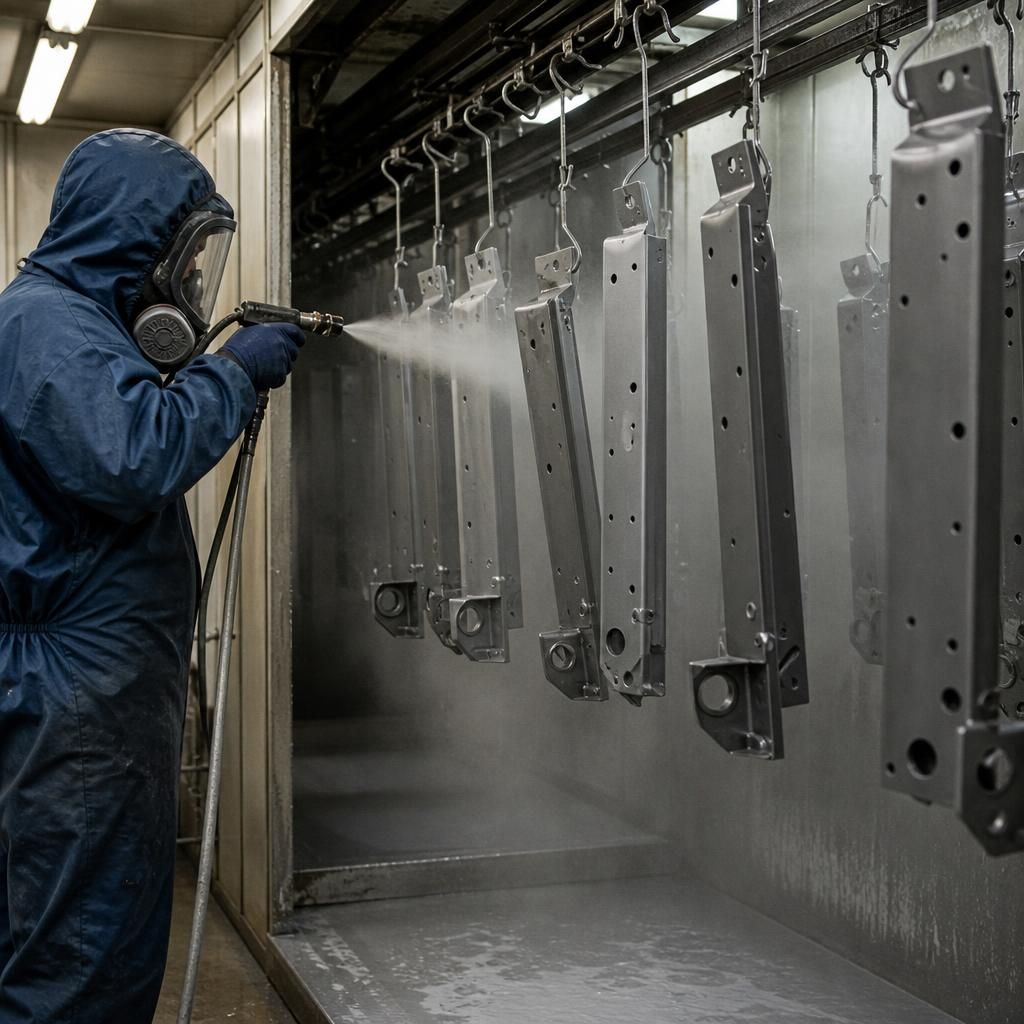
Zinc phosphate spray pretreatment is especially useful in industries where metal components pass between several production stages or suppliers before final assembly. A defined pretreatment specification gives the manufacturer, fabricator and coater a shared basis for assessing surface preparation, coating compatibility and finished-part requirements.
This is relevant to equipment manufacturers, contract fabricators and vehicle-component suppliers producing parts that must match an established coating system across different production runs. It also helps when components vary in shape, provided the cleaning, rinsing and spray coverage requirements are agreed before processing. The benefit is not limited to one end-use sector: it applies wherever consistent preparation is needed to control variation between batches and support reliable downstream assembly.
Discuss Zinc Phosphate Spray Pretreatment for Your Components
If you are assessing whether zinc phosphate spray pretreatment is suitable for your components, discuss your requirements with the powder-coating team. They can help establish whether the proposed pretreatment and powder-coating specification are compatible with the finished application.