

What role does surface texture play in the effectiveness of electrostatic powder coating?
Surface texture affects how well electrostatic powder coating wets, bonds to and covers a metal substrate. A suitably prepared profile can improve adhesion and durability, while excessive roughness may cause uneven coverage, trapped contaminants or visible finish defects.
Surface texture determines how a metal component interacts with the electrostatic application process, the deposited powder film and the curing cycle. It affects the consistency of the electrical field at the surface, the amount of powder that settles in different areas, the way the film flows during heating and the appearance of the finished part. The most effective texture is therefore not simply the roughest possible surface; it is a controlled profile suited to the metal, the powder system and the required finish.
In this context, surface texture includes the peaks, valleys and irregularities produced by manufacturing, corrosion, previous coatings or pre-treatment. It is useful to distinguish texture from visible roughness. A component may look relatively smooth but still have a measurable surface profile, while a visibly coarse surface may contain contamination or damage rather than a useful preparation profile.
A controlled profile can provide a larger effective surface area for the coating film to engage with and can help the cured coating remain anchored during handling and service. However, the profile needs to be proportionate to the coating thickness. If the peaks are too pronounced, they may remain visible through the finish, become more vulnerable to mechanical damage or require excessive powder to cover the valleys. If the profile is too shallow for the application, it may provide insufficient surface irregularity for the chosen coating system.
Texture also changes the behaviour of charged powder particles as they approach the workpiece. Sharp peaks can concentrate the local electric field, encouraging powder to collect preferentially on those areas. Deep recesses, narrow channels and internal corners can have the opposite problem: the electrostatic field may be weaker within them, making it harder for powder to reach and remain in those locations. This is related to the Faraday cage effect and is particularly important on fabricated parts with boxed sections, folded returns, holes or closely spaced features.
Pre-treatment must create a consistent texture rather than an uncontrolled pattern. Abrasive blasting, mechanical abrasion and chemical preparation produce different surface conditions, and the appropriate method depends on the base metal and its existing state. Blasting may remove oxide and establish a more uniform profile, whereas aggressive or uneven abrasion can leave directional marks, localised deep scratches or rounded edges. Any preparation method should remove loose material and contaminants without damaging thin sections, precision features or areas that are difficult to coat.
The profile should be checked across representative areas instead of being judged only by sight or touch. Measurements or suitable surface comparators can identify whether the preparation is consistent on broad faces, edges, recesses and repaired sections. Inspection should also look for sharp burrs, embedded abrasive, pitting and residual corrosion. These conditions are surface defects in their own right and should not be confused with a deliberately engineered coating profile.
Texture influences the visual result after curing. A fine, even substrate profile is more likely to support a uniform appearance, while pronounced irregularities can telegraph through a smooth powder finish. Coarse texture may be appropriate where a textured decorative finish is specified, but it should be compatible with the powder’s ability to flow and level. During curing, the powder melts and spreads; it can soften minor surface irregularities, but it will not reliably conceal deep pits, heavy scratches or major differences in profile.
The required texture should therefore be selected by considering:
- the substrate metal and its condition, including mill scale, oxidation, pitting or previous coatings;
- the powder chemistry, film thickness and whether the specified finish is smooth, matt or deliberately textured;
- the geometry of the component, particularly recesses, internal corners, perforations and narrow gaps;
- the required appearance, including gloss uniformity and the visibility of machining or preparation marks;
- the service environment, where impact, abrasion, moisture or chemical exposure may make surface preparation especially important; and
- the ability to reproduce the same profile across a production batch.
A suitable texture cannot compensate for poor cleaning, moisture, oil or remaining oxide. Contaminants can occupy the valleys of the profile, interfere with the pre-treatment and produce local defects during heating. For that reason, surface profiling forms part of a wider preparation sequence: the substrate is assessed, contaminants and unstable material are removed, the profile is created or confirmed, and the prepared surface is kept clean before powder application.
For batch and specialist metalwork, consistency is as important as the nominal roughness. Parts should be assessed by material, manufacturing route and geometry, with particular attention to areas that receive different preparation treatment. Matching the surface profile to the powder and component design helps the electrostatic coating process deposit more predictably and allows the cured film to achieve its intended functional and decorative properties.
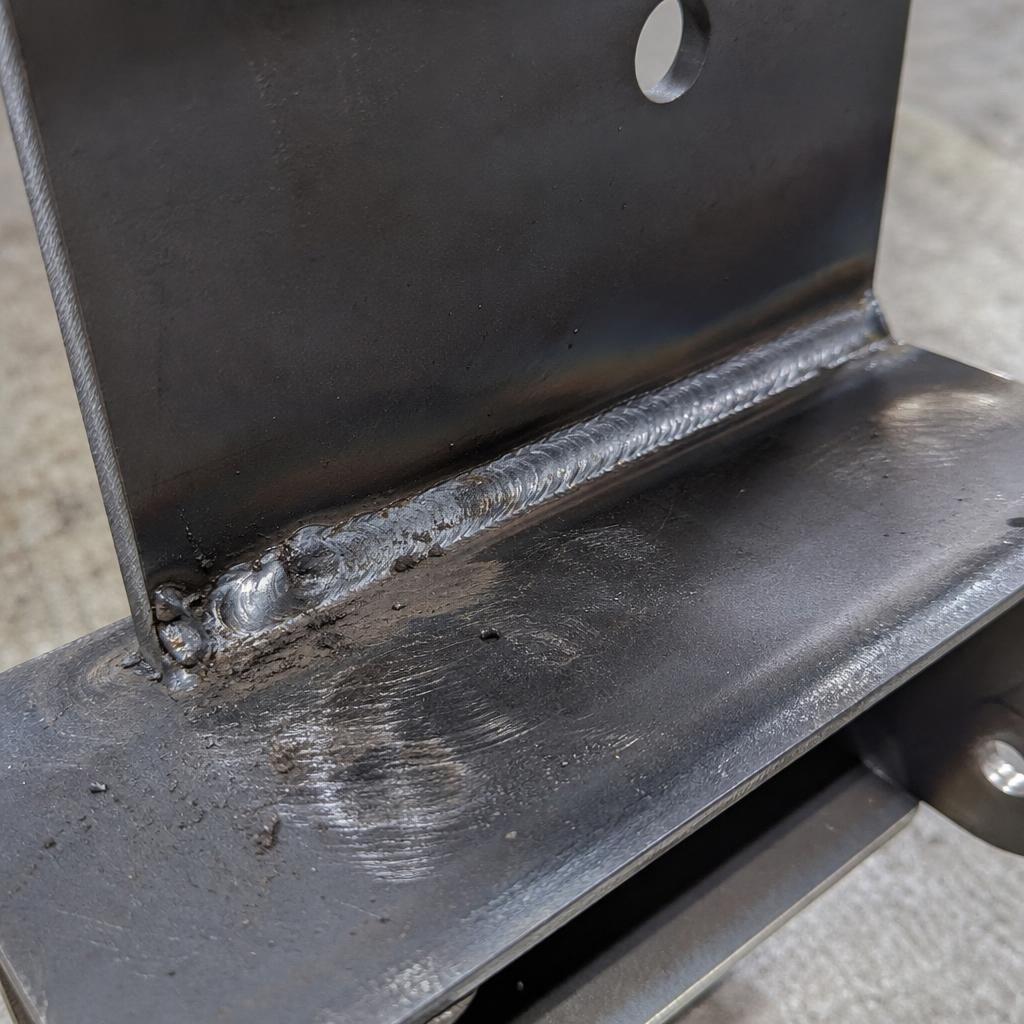
At welded and fabricated areas, surface texture can vary sharply over a short distance, making these locations important to the effectiveness of electrostatic powder coating. Weld spatter, undercut, sharp transitions and uneven grinding can create local high points or depressions that affect the continuity of the cured film.
Preparation should remove loose spatter and unstable surface material while blending abrupt edges into the surrounding metal. Excessive grinding can create a shallow area beside the weld, whereas insufficient preparation may leave raised defects visible through the coating. Heat-affected areas should also be checked for oxide or discolouration that could interfere with subsequent treatment.
This is particularly relevant to fabricated frames, brackets and assemblies where welds join sections with different shapes or thicknesses. A consistent transition gives the powder film a more even foundation and reduces the risk of visible ridges, pinholes or locally weak areas. The selected powder finish may disguise minor variation, but it cannot reliably correct poor weld preparation or significant surface damage.
Discuss the Right Surface Texture for Your Coating Project
Discuss your component requirements with the powder-coating.co.uk team, including the substrate, geometry, specified finish and intended service conditions. This allows the appropriate surface texture and preparation approach to be considered before coating.