

What common issues might occur if surface preparation is not performed correctly before powder coating, and how can they be prevented?
Incorrect surface preparation can cause poor adhesion, blistering, corrosion beneath the coating, uneven coverage and premature peeling. These defects are prevented by removing oil, dirt, rust and existing coatings thoroughly, using suitable chemical pre-treatment or mechanical abrasion, ensuring the surface is clean and dry, and checking the prepared metal before powder is applied.
Incorrect surface preparation can create visible finish defects, trapped gases, dimensional problems and inconsistent performance even when the powder application and curing stages are correctly controlled. Prevention depends on matching the preparation method to the substrate, the existing contamination and the component’s design, then inspecting the prepared surface before coating.
Typical problems caused by inadequate preparation include:
- Pinholes and outgassing: Porous castings, zinc-coated steel, galvanised components and weld areas can release air, moisture or process residues when heated. This may produce small holes, bubbles or a rough, cratered appearance. Suitable preheating, controlled degassing procedures and the use of an appropriate coating system can reduce the risk. Vent and drain holes may also be needed in hollow fabrications so that air and trapped chemicals can escape safely.
- Craters, fisheyes and surface separation: Silicone, oil, grease, adhesive residue, polishing compound or other low-surface-energy contamination can cause the powder to withdraw from isolated areas. These defects are prevented by identifying how the component has been manufactured or handled, selecting a compatible cleaning process and preventing recontamination after preparation.
- Flash rust and water staining: Bare ferrous steel can begin oxidising if it remains damp after cleaning or is exposed to humid conditions before coating. The prepared part should therefore be dried thoroughly, handled with clean gloves where appropriate and protected from further moisture or contamination during transfer to the coating stage.
- Weld-related defects: Weld spatter, slag, sharp weld edges and heat-affected residues can remain visible through the finish or create local weaknesses. Welds should be inspected and dressed where required, while spatter and residues should be removed without leaving deep gouges that may remain visible after coating.
- Edge pull-back and thin coverage at corners: Very sharp edges can make it difficult for powder to form a consistent film, while burrs may remain hazardous or visually apparent. Specifying suitable edge radii, removing burrs and checking complex profiles helps the coating reach edges and recessed areas more consistently.
- Colour and gloss variation: Differences in substrate condition, residual conversion chemicals or preparation between batches can alter the appearance of the finished powder film. Consistent preparation, controlled rinsing and clear separation of different substrates or coating specifications help maintain a uniform finish.
- Dimensional interference: Powder adds a measurable film to a component. If masking and preparation are not planned around threads, bearing seats, sliding faces, mating surfaces or precision apertures, the finished part may no longer assemble correctly. These areas should be identified on the drawing or job instructions and protected with suitable masking before coating.
Prevention starts with a component assessment. The preparation plan should consider whether the item is mild steel, stainless steel, aluminium, galvanised metal or a mixed fabrication. It should also record existing paint, mill scale, rust, weld contamination, casting porosity, threaded features and areas that must remain uncoated. A single method is not suitable for every component: abrasive preparation, alkaline cleaning, acid treatment, conversion coating or a combination may be appropriate depending on the material and required finish.
Mechanical preparation must be controlled rather than simply made aggressive. Excessive abrasion can alter dimensions, round edges, embed abrasive particles or leave a profile that is unsuitable for the coating system. Insufficient preparation may leave residues or unstable material in place. The chosen abrasive, pressure, working direction and cleanliness of the equipment should all be appropriate to the substrate.
Chemical preparation also requires process control. Cleaning stages need suitable concentration, temperature, contact time and rinsing. Poor rinsing can leave salts or chemical residues that interfere with the finish, whereas an ineffective cleaning stage may leave an invisible film of oil. Water-break testing, visual examination and checks for remaining oxidation or residue can help identify whether a surface is genuinely clean rather than merely appearing clean.
Inspection should take place at several points: after stripping or abrasion, after chemical treatment and immediately before powder application. The inspection should look for residue, moisture, flash rust, embedded contamination, sharp edges, damaged masking and inaccessible areas. For repeat production, agreed acceptance criteria and records of the preparation route make it easier to identify process drift between batches.
Component design and handling are equally important. Drainage and venting should be considered for hollow sections, while joints should not retain cleaning solution. Parts should be supported so that prepared faces do not contact dirty surfaces, and clean components should not be handled with contaminated gloves, slings or racks. Masking materials must withstand the coating and curing process without transferring adhesive or leaving residue.
Where the condition of the substrate is uncertain, a trial preparation and coating sample can reveal problems such as outgassing, compatibility issues or an unsuitable surface profile before a full batch is processed. For industrial work, providing drawings, material details, previous coating information and any critical masking requirements allows the coater to assess preparation risks before production begins. This type of pre-production review is particularly useful for fabricated assemblies, castings and components with tight dimensional tolerances.
At Powder-coatings.co.uk, preparation requirements can be considered as part of the coating brief for metal components and batch work. Sharing accurate information about the substrate, service conditions, existing finish and areas requiring protection helps establish a preparation route that is suitable for the component rather than relying on a generic treatment.
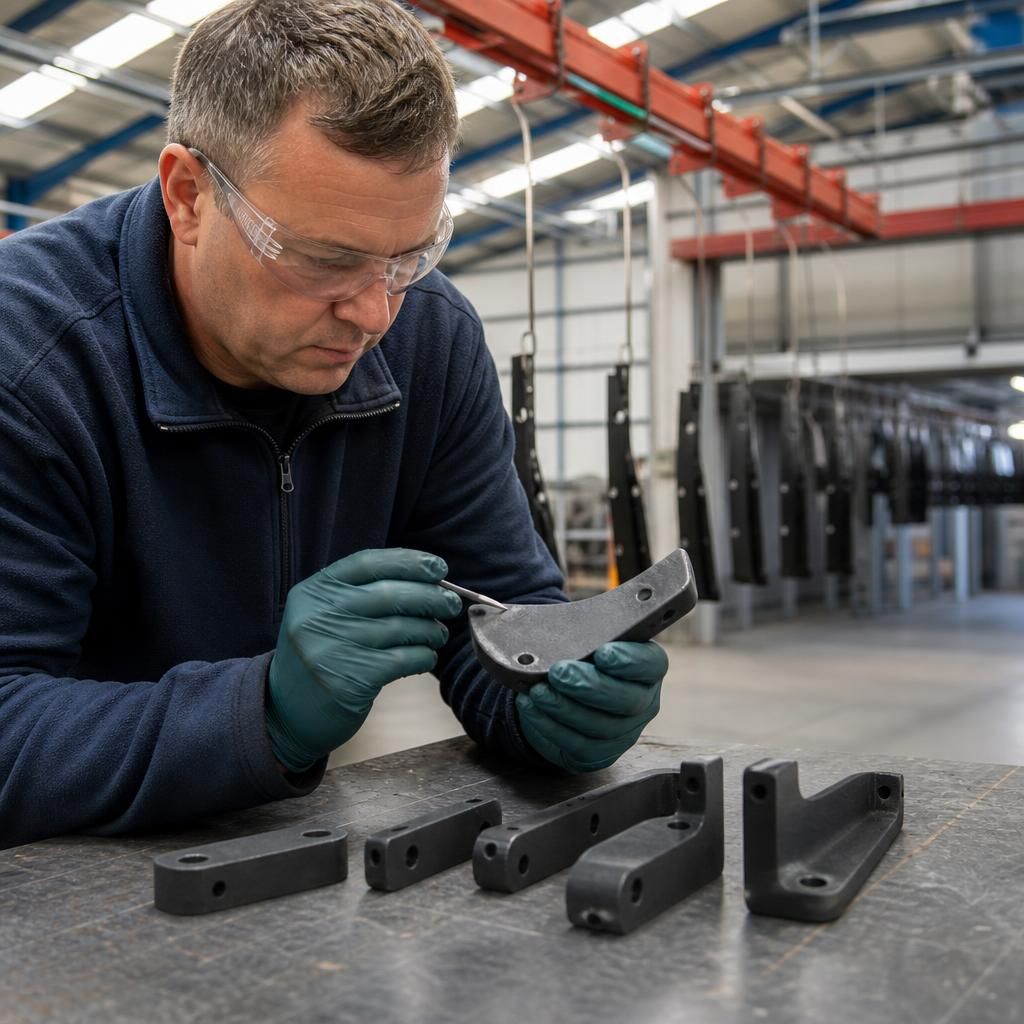
Surface-preparation defects should be diagnosed by pattern, because the appearance of a fault can indicate where the process failed. Isolated fisheyes or craters commonly suggest local contamination, whereas widespread pinholing may point to gas or moisture released from the substrate. Peeling concentrated around welds, edges or recessed areas can indicate incomplete cleaning or preparation in those locations rather than a general powder or curing fault.
Recording the defect location, component material, preparation route and curing batch helps separate preparation problems from application or oven-control issues. This evidence supports a targeted correction instead of unnecessarily reprocessing every stage, while repeated patterns can identify weaknesses in work instructions, component design or handling.
Discuss Your Powder Coating Surface Preparation Requirements
Discuss your component’s surface preparation requirements with Powder-coatings.co.uk, including any critical finish, masking or dimensional constraints. A pre-coating assessment can help determine the appropriate preparation approach before processing begins.