

What are the environmental benefits of using black powder coated sheet metal compared to traditional painting methods?
Black powder coated sheet metal can have a lower environmental impact than many traditional wet-paint systems because powder coating produces negligible solvent emissions, allows overspray to be collected and reused, and creates a durable finish that can reduce the need for frequent recoating. Its efficient application also helps limit coating waste and the associated use of solvents and cleaning materials.
Black powder coated sheet metal can offer environmental benefits beyond the coating stage, particularly through reduced hazardous material handling, efficient use of raw materials and longer component service life. However, the overall advantage depends on the powder formulation, pretreatment, curing energy, production volumes and how the finished metal is managed at the end of its use.
Reduced reliance on liquid coating materials
Traditional painting commonly involves liquid binders, thinners, primers and cleaning agents. These materials require additional packaging, storage and controlled disposal, while contaminated cloths, filters and containers may need to be treated as hazardous waste. Powder coating is supplied as a dry coating material, so a typical application does not require the same volume of liquid solvent products or solvent-cleaning equipment.
This can simplify waste management for a coating operation. It also reduces the risk of spills involving liquid coating products, although powder still needs to be stored and handled responsibly. Any pretreatment chemicals, masking materials and contaminated residues must be managed according to their composition and the relevant waste requirements.
Efficient material use
Powder coating is applied as a dry film with controlled thickness. This makes it possible to specify the amount of coating required for a component rather than applying successive wet coats to achieve coverage. The result can be a more predictable use of coating material, especially for repeat batches of sheet-metal parts with consistent dimensions.
Good process control is important. Excessive film thickness, poor grounding, unsuitable spray settings or inadequate preparation can increase rejects and consume additional material. Environmental performance therefore depends not only on choosing powder coating, but also on accurate application, inspection and handling of defective parts.
Lower waste from cleaning and process consumables
Wet-paint systems can generate waste through paint residues, solvent-soaked wipes, disposable mixing containers and equipment-cleaning fluids. A powder coating line has a different waste profile. It may require fewer solvent-based cleaning products, and the main consumables are more likely to include preparation chemicals, masking products, filters and packaging.
This does not mean that powder coating creates no waste. Powder residues, used filters and pretreatment waste still need suitable controls. The environmental benefit comes from changing the type and quantity of waste generated, rather than eliminating waste altogether.
Potential lifecycle benefits
A well-specified coating helps protect sheet metal from corrosion, abrasion and general industrial wear. By preserving the component for longer, it can reduce the need to manufacture and transport replacement parts. That lifecycle effect includes the energy and raw materials associated with forming new sheet metal, machining it and delivering it to the point of use.
The coating must be appropriate for the operating conditions to achieve this benefit. Factors such as moisture, chemicals, ultraviolet exposure, impact and temperature can affect performance. A finish that is unsuitable for the environment may require early repair or replacement, reducing the expected environmental advantage.
Energy use needs to be assessed honestly
Powder-coated parts normally require heating in a curing oven so that the powder melts and forms a continuous film. This uses energy, and the environmental impact will depend on oven design, loading, operating temperature, insulation and the source of the electricity or fuel. Powder coating should therefore not be described as impact-free or automatically lower-carbon in every application.
For a fair comparison, businesses should assess the complete process rather than comparing coating materials alone. Relevant questions include whether the wet-paint system requires separate drying, how much preparation and cleaning it involves, the number of rejected parts, and how long each finish is expected to remain suitable in service.
End-of-life considerations
Sheet metal remains a valuable recyclable material after use. A powder-coated finish does not remove the metal’s potential for recycling, although the exact treatment depends on the recycling route and the composition of the component. Designers should avoid combining coated steel with materials or fittings that make dismantling unnecessarily difficult, and should identify any additional substances that require separate handling.
Thermosetting powder coatings cannot simply be melted and reapplied in the same way as thermoplastic materials. This is one reason why correct specification, durable design and responsible metal recycling are important when considering the full environmental profile.
Does the black colour itself provide an environmental advantage?
Usually, the main environmental considerations come from the powder-coating process and the finish’s service performance, not from the colour black alone. In applications exposed to direct sunlight, black surfaces can absorb more solar heat than lighter colours, potentially increasing the temperature of the component or the surrounding assembly. This should be considered where thermal performance affects energy use or product operation.
For a reliable comparison with traditional painting, assess the coating specification, pretreatment, curing method, expected service conditions, waste controls and end-of-life route together. Black powder coated sheet metal may then provide a sound environmental choice where its finish is correctly matched to the application and the process is managed to minimise rejects and resource use.
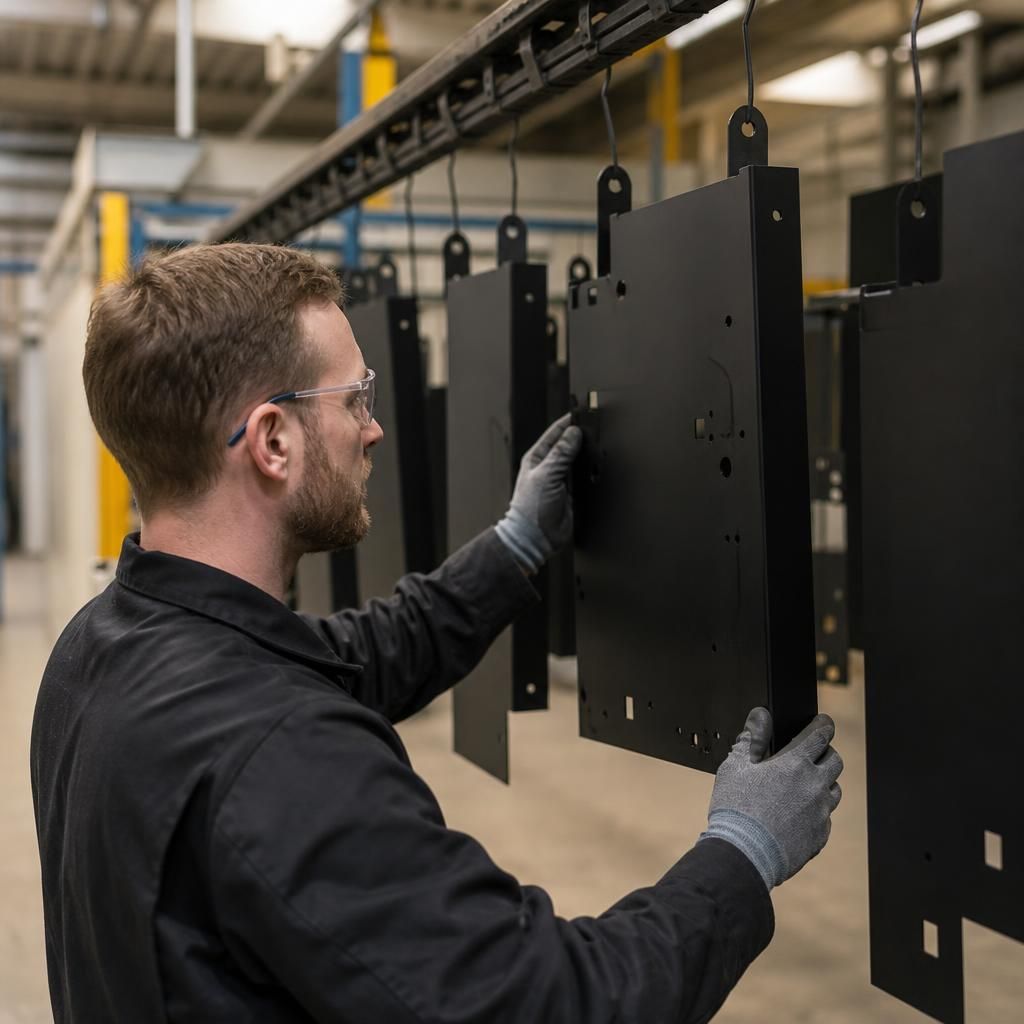
The environmental case for black powder coated sheet metal is strongest when the finish is specified for its actual service environment. A coating that resists the expected moisture, abrasion, chemicals and ultraviolet exposure is less likely to need premature stripping and replacement. This makes coating selection an important part of resource efficiency: the most suitable finish is not simply the one that provides the required black appearance, but the one that remains fit for purpose throughout the component’s intended service life.
Discuss Your Environmental Coating Requirements
Discuss your environmental coating requirements with Powder-coatings.co.uk, including the sheet-metal application, operating conditions and expected service life. This will help identify a suitable black powder coating specification and process for your components.