

What steps need to be taken to ensure the longevity and optimal performance of textured black powder-coated surfaces?
Ensure textured black powder-coated surfaces are handled carefully, cleaned with mild detergents and soft materials, and kept free from contaminants that may damage the finish. Inspect them regularly for chips, scratches or corrosion, address any damage promptly, and follow the coating supplier’s maintenance guidance for the specific environment and application.
Long-term performance of a textured black powder-coated surface depends on more than the coating itself. The finish must be correctly specified for its environment, applied to a suitable substrate, fully cured, and protected from mechanical, chemical and installation-related damage throughout its service life.
Specify the coating for the operating environment. Indoor components subject to abrasion, handling or industrial contamination may require a different powder formulation from exterior parts exposed to moisture, ultraviolet radiation, salt or atmospheric pollutants. Consider the temperature range, humidity, chemical contact, impact risk and expected frequency of handling before selecting the coating system. A textured appearance should not be treated as proof that the finish is suitable for every environment.
Where a component will be exposed to persistent moisture or corrosive conditions, the coating specification should account for the substrate and the complete protective system. The design may need additional protection at vulnerable areas such as joints, recesses, folded edges, welds and drainage points. If water or residue can collect against the coated part, corrosion may develop beneath or around the finish even when the visible face initially appears intact.
Prepare the metal and apply the coating consistently. The substrate should be free from oil, grease, rust, mill scale and other residues before coating. Suitable preparation creates a stable surface for adhesion and helps prevent defects such as bubbling, peeling or premature corrosion. Welds should be continuous and properly finished where appropriate, while sharp projections, deep pits and trapped contaminants should be addressed before the part enters the coating process.
Application must also allow the powder to reach the required film thickness without excessive build-up. Heavy deposits around corners, edges or recesses can affect appearance and performance, whereas insufficient coverage can leave the metal vulnerable. The curing schedule must match the powder specification and the actual metal temperature, rather than relying only on the oven air temperature. Inadequate or uneven curing can reduce adhesion, hardness and resistance to impact or chemicals.
Design components to protect the finish. Avoid unnecessary sharp edges, narrow gaps and enclosed areas that are difficult to coat or drain. Provide suitable drainage and ventilation for hollow sections so that moisture cannot remain trapped inside the component. Where two coated or uncoated metals meet, consider the risk of galvanic corrosion and use suitable separation or sealing methods where required.
Fasteners, brackets, washers and contact points should be selected and installed so they do not cut through the coating. Clamping pressure, threaded connections and forced alignment can mark or fracture a textured surface. If parts must slide, pivot or bear against one another, specify suitable clearances and contact materials rather than allowing the finished faces to rub directly together.
Control handling, storage and installation. Use clean, non-abrasive protection between coated parts during transport and stacking. Do not drag components across one another or place sharp tools, swarf or heavy items on the finish. Storage should prevent prolonged exposure to standing water, condensation and incompatible materials that could stain, soften or attack the coating. During installation, remove temporary protection in accordance with the coating supplier’s guidance so that adhesive residue or trapped moisture does not remain on the surface.
Pay particular attention to cut-outs, drilled holes and areas modified after coating. These operations expose the underlying metal and can create entry points for corrosion. Where post-coating work is unavoidable, the exposed area should be properly sealed or repaired using a compatible system recommended for the application. Abrasive tools and uncontrolled grinding can also spread metallic debris across the surrounding finish and should be managed carefully.
Manage service conditions and loading. Do not use the coated surface as a cutting board, work platform or sliding contact where the design does not allow for it. Repeated impact, concentrated loads and contact with abrasive particles may wear the texture or expose the substrate. Components in high-use areas may benefit from replaceable wear surfaces, protective pads or a design that keeps the coated face away from direct friction.
Keep records of the powder specification, substrate, preparation method, cure requirements and any repairs carried out. This information helps identify the correct maintenance approach if the component is relocated, exposed to a different substance or repaired later. For critical parts, periodic assessment should include coating adhesion, edge condition, fastener areas, joints and concealed faces rather than focusing only on the most visible panel.
When a textured black finish is being commissioned for industrial use, provide the coater with the component’s material, dimensions, intended environment and performance requirements. A specialist powder-coating service can then advise on a suitable system, masking requirements, hanging points and curing considerations before production begins. That early specification work is often the most effective way to preserve the finish’s appearance and functional protection over its working life.
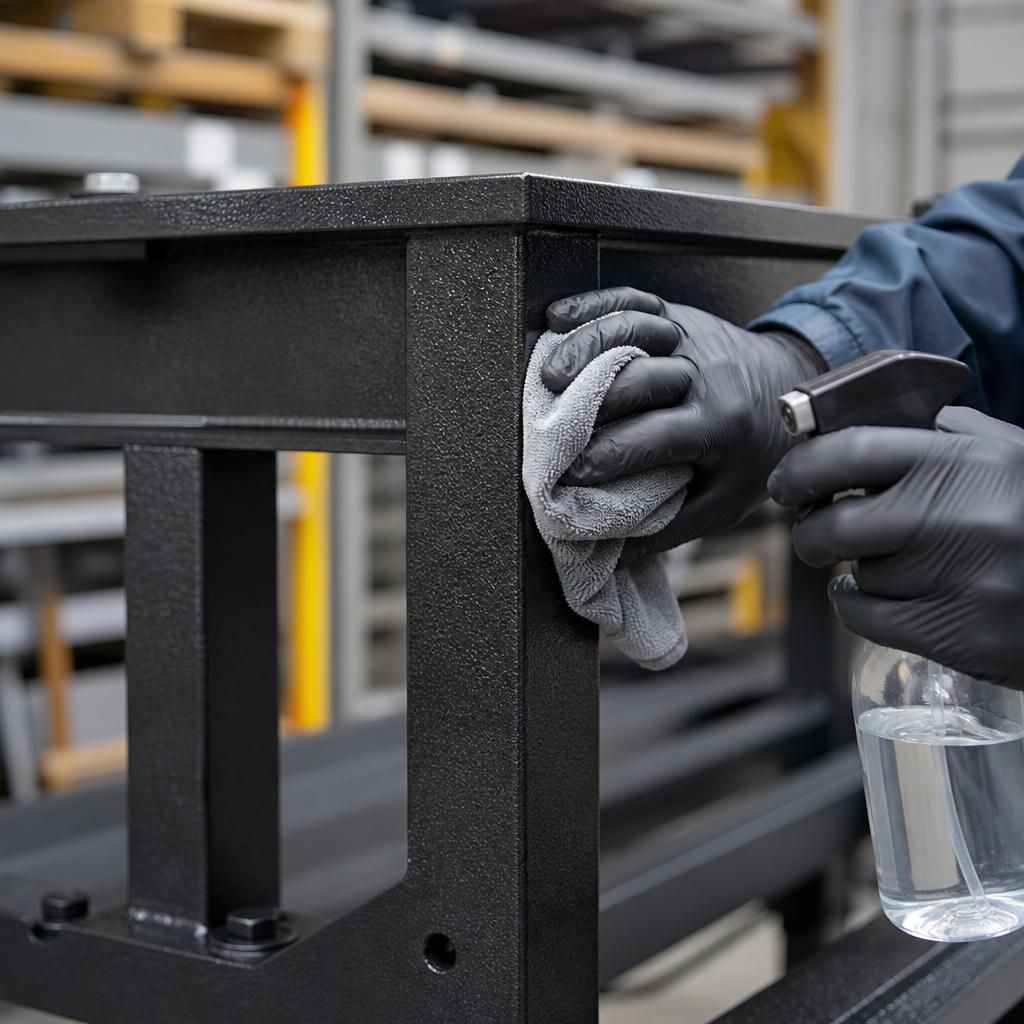
Routine cleaning should be compatible with the textured powder-coat system, because residues can collect in the surface profile and aggressive chemicals may alter the finish. Use a clean, soft cloth or non-abrasive brush with a mild, neutral detergent, then rinse away detergent and contaminants with clean water. Dry the component thoroughly, particularly around joints, recesses and horizontal surfaces where moisture may remain.
Before introducing a new degreaser, disinfectant or process chemical, check its compatibility with the coating supplier or test it on a concealed area. Avoid relying on strong solvents, abrasive pads or uncontrolled pressure washing unless the coating specification permits them. A consistent cleaning method helps preserve the textured appearance while allowing early signs of staining, coating damage or corrosion to be identified.