

What are the maintenance requirements for a shiny black powder coat finish?
A shiny black powder coat finish is maintained by regular cleaning with water and a mild, non-abrasive detergent, followed by thorough rinsing and drying. Avoid abrasive pads, harsh chemicals and prolonged exposure to contaminants, and inspect the coating periodically so chips, scratches or corrosion can be dealt with before they spread.
Maintaining a shiny black powder coat finish involves more than keeping the surface clean. The coating should be protected from impact, abrasion, moisture traps, unsuitable repairs and conditions that can alter its gloss or expose the underlying metal. A planned maintenance routine helps retain the uniform appearance of the finish and limits the risk of localised coating failure.
Shiny black surfaces make scuffs, fingerprints, water marks and uneven gloss more noticeable than textured or lighter finishes. Components should therefore be handled carefully during installation, servicing and transport. Use clean lifting equipment and protective separators where coated parts could rub against one another. Do not drag components across benches, floors or vehicle beds, and prevent tools, fixings and swarf from contacting visible faces.
Particular attention is needed at edges, corners, apertures, fastener points and areas subject to repeated contact. These locations can experience more wear than broad, flat surfaces. Where a component is regularly opened, adjusted or serviced, check that hinges, catches, brackets and adjacent parts are not rubbing against the coating. Misalignment should be corrected rather than allowing repeated contact to polish, scratch or wear through the finish.
Maintenance should also consider the surrounding environment. Reduce contact with substances such as oils, fuel, cement residue, road deposits, salt, industrial dust and standing water. If these materials reach the coating, remove them using the established gentle cleaning method rather than allowing them to remain on the surface. Components used outdoors or in demanding industrial settings may need more frequent condition checks because contamination and moisture can accumulate in joints, recesses and underside areas.
Good drainage is an important part of long-term coating care. Water should not be allowed to collect behind brackets, within folded sections, around fixings or in horizontal recesses. During routine servicing, clear blocked drainage paths and check that seals, caps and adjacent components are not creating moisture traps. Persistent dampness can increase the risk of corrosion if the coating has been breached.
Any damage should be assessed according to its depth and location:
- Surface marking: a light scuff that has not cut into the coating may only require careful cleaning and visual checking under good lighting.
- Coating damage: a chip or scratch that exposes the substrate should be protected promptly using a compatible repair system suitable for the component’s environment.
- Corrosion or widespread failure: bubbling, lifting, flaking or rust extending beyond one small defect normally requires removal of unsound material and a properly prepared recoating rather than repeated local touch-ups.
Touch-up products should be selected with care. A repair coating may differ from the original powder coat in colour, gloss level, texture and weathering behaviour, even where it appears to match initially. Test the proposed repair on an inconspicuous area where possible, and follow the product supplier’s preparation and curing instructions. Do not apply a new layer over loose coating, corrosion, grease or contamination, as the repair may fail with the material beneath it.
When a finish is exposed to sunlight, compare repaired areas with the surrounding coating before treating a large visible section. The original finish may have weathered differently from a new repair, making localised work more apparent on a high-gloss black surface. For prominent components or extensive damage, professional assessment and recoating may provide a more consistent result than progressively adding touch-up layers.
Maintenance records are useful for components used in production, construction or vehicle-related applications. Record the installation environment, any unusual contamination, areas of repeated contact and the type of repair material used. This information helps identify recurring causes of damage, such as poor fit, vibration, trapped moisture or unsuitable cleaning products, so the underlying issue can be corrected rather than repeatedly treating the visible symptom.
Before returning a maintained component to service, confirm that the finish is sound around fixing points and edges, that no repair material remains uncured, and that moving or mating parts do not contact the coated surface incorrectly. These checks are especially important where the coating provides both appearance and protection for a metal component.
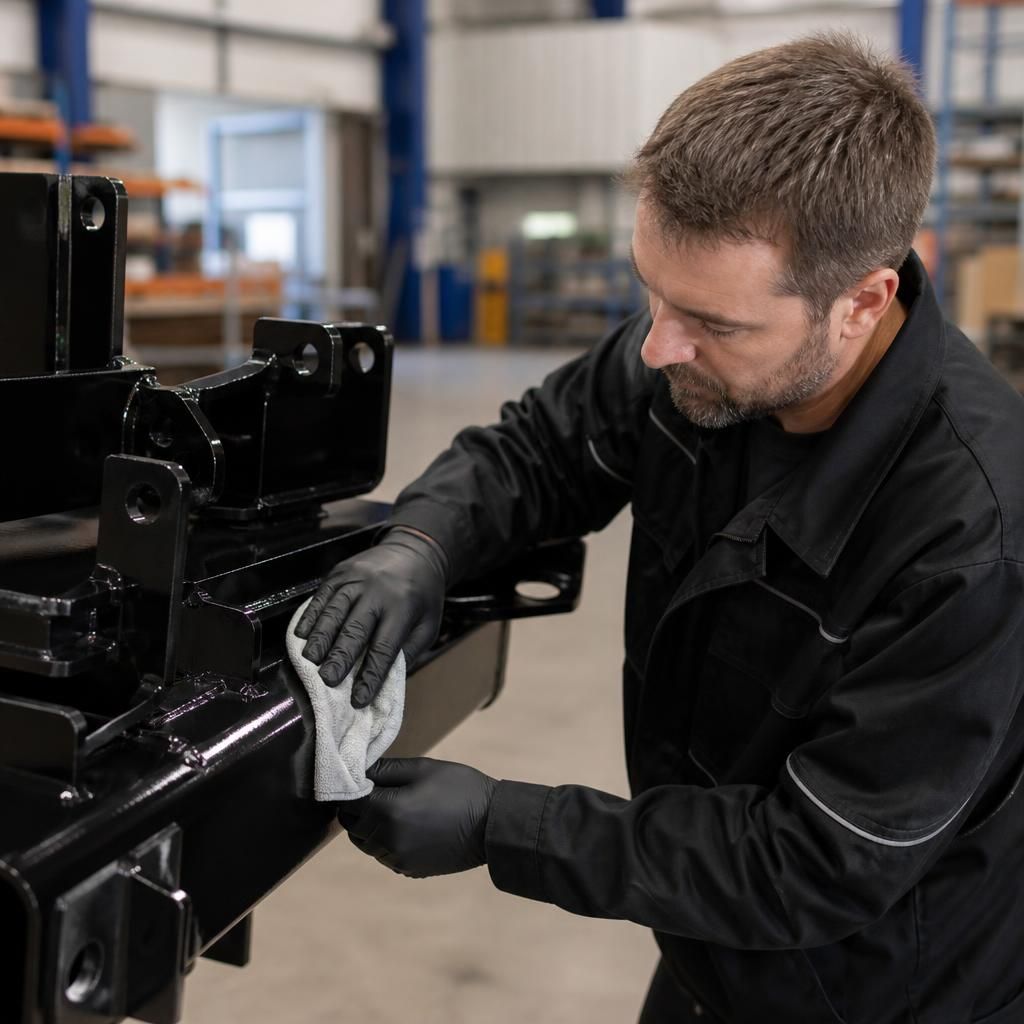
Maintenance requirements for a shiny black powder coat finish should be matched to the coating specification and the component’s operating conditions. Before introducing a cleaning agent, disinfectant or process chemical, check that it is compatible with the powder coating and test it on a concealed area. This is particularly important for components exposed to industrial substances or regular wash-downs, where an unsuitable product may gradually affect gloss without causing obvious damage at first. Keep the coating specification and any approved care instructions with the component’s maintenance documentation so future servicing uses the correct products and methods.