

How does the electrostatic application impact the quality of the powder coated finish on steel panels?
Electrostatic application charges the powder particles so they are attracted to the earthed steel panel, helping the coating spread evenly across the surface and reach edges and profiles more consistently. This controlled deposition supports a uniform film thickness, strong coverage and a smoother, more consistent powder coated finish.
Electrostatic application improves the quality of a powder coated steel panel by making powder deposition more controlled and repeatable. The electrical field helps regulate how much powder settles on the metal and where it accumulates, which supports consistent appearance, reliable curing and fewer coating defects when the panel is correctly prepared and grounded.
A key benefit is improved transfer efficiency. The charged powder is directed towards the steel rather than relying solely on an air stream, so less material is lost during application. This gives the coater greater control over the deposited layer and helps reduce variations between panels in the same batch. Consistency is particularly important where steel sheets form visible surfaces or need to fit together with other coated components.
The process also helps the coating follow changes in the panel’s shape. Steel panels may include folded edges, apertures, returns, stiffening features or recessed areas. The electrical field can influence powder movement around these features, while suitable gun settings and application technique help prevent excessive build-up on exposed edges or insufficient coverage in less accessible areas. Complex geometry still requires careful control, as electrical shielding in narrow recesses can restrict powder penetration.
Electrostatic application can reduce common appearance problems associated with uncontrolled spraying. Excessive local build may produce an uneven texture, while insufficient deposition can leave the substrate inadequately covered after curing. Applying powder under controlled conditions helps the operator manage these risks and produce a more consistent surface texture, colour impression and gloss level across the panel.
Grounding is fundamental to this result. The steel panel must provide a suitable path for the electrical charge; contamination, poor contact or an unsuitable hanging arrangement can weaken the attraction between the powder and the workpiece. This may cause irregular deposition, powder loss or inconsistent coverage. Contact points should therefore be positioned and maintained carefully, with the panel supported in a way that allows the relevant surfaces to be coated effectively.
Application settings must also be matched to the panel and the powder system. Factors such as gun-to-panel distance, powder output, air volume, electrical settings, panel geometry and the required finish all influence the result. Applying too much electrical energy can contribute to back-ionisation or an uneven surface, while excessive powder output can make film control more difficult. Experienced operators adjust the process rather than treating every steel panel as identical.
Electrostatic application does not remove the need for sound preparation or correct curing. Oil, rust, scale, dust and other contamination can interfere with adhesion regardless of how well the powder is sprayed. After application, the coated panel must reach the powder manufacturer’s specified curing conditions so that the resin forms the intended film properties. In practice, finish quality depends on the complete sequence:
- cleaning and pre-treatment suited to the steel substrate;
- secure electrical grounding and suitable panel positioning;
- controlled powder application adapted to the panel’s geometry;
- inspection of coverage, texture and visible defects; and
- correct oven curing and handling after coating.
For steel panels, the main contribution of electrostatic application is therefore process control. It gives the operator a practical way to manage powder deposition across repeated components, while grounding, preparation, application technique and curing determine whether that control becomes a durable, visually consistent finish.
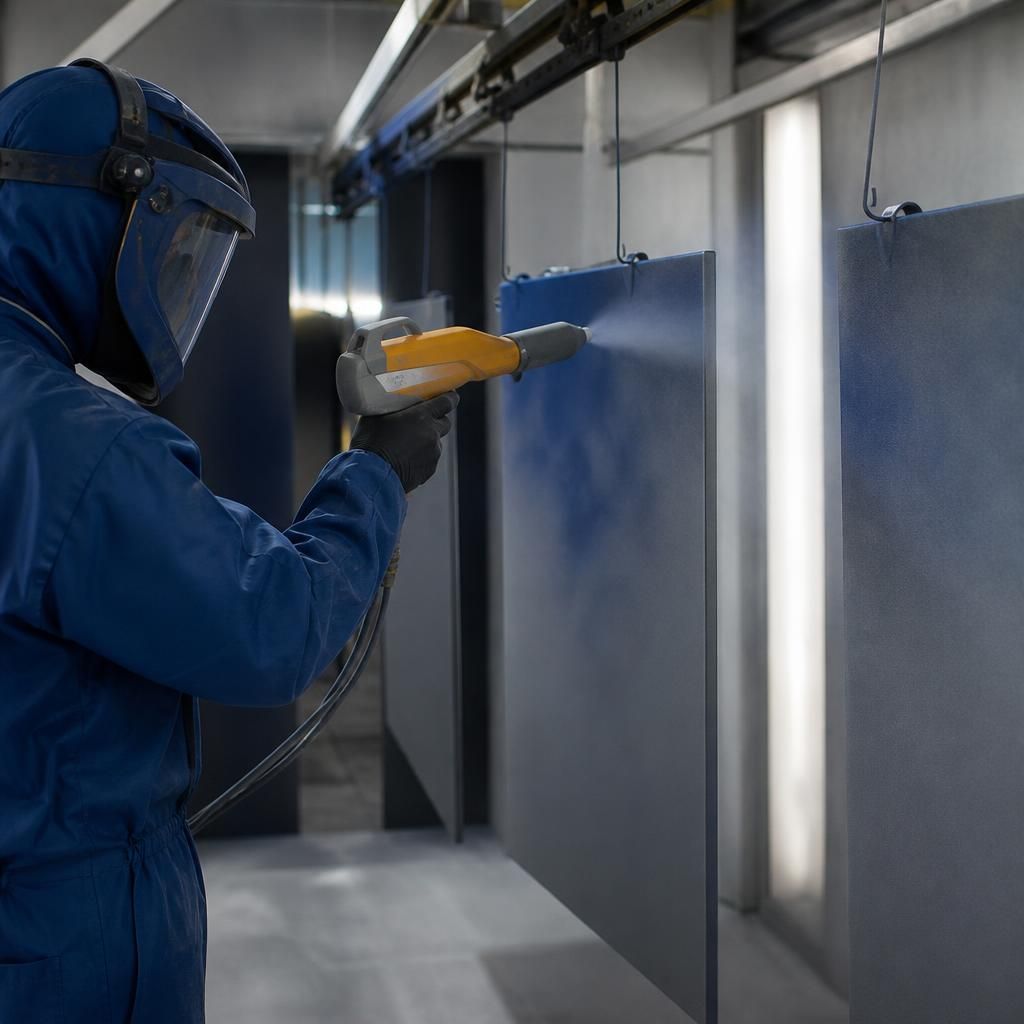
Electrostatic application affects finish quality partly through how consistently the powder particles become charged. The charge-to-mass ratio determines how readily particles respond to the electrical field and settle on the steel panel, so the powder formulation and application equipment must be compatible.
Particle size distribution, moisture in the powder or compressed air, and equipment condition can all influence charging behaviour. If the charge varies during spraying, the deposited layer may show differences in texture or coverage even when the panel and gun settings remain unchanged. Monitoring powder flow and maintaining clean, correctly adjusted application equipment helps keep the charge more consistent.
This is particularly relevant when a batch of steel panels must have a closely matched appearance. Electrostatic application provides the mechanism for controlled attraction, but consistent powder condition and equipment performance determine how reliably that mechanism translates into an even finished surface.
Ask about electrostatic powder coating for steel panels
Discuss your steel panel specification, geometry and required finish with our powder coating team to establish whether electrostatic application is suitable for the project. We can advise on the information needed to assess the coating requirements before production.