

What maintenance is required to ensure the longevity of powder-coated steel railings?
Powder-coated steel railings require regular gentle cleaning, prompt removal of contaminants and periodic checks for chips, scratches, corrosion or damaged fixings. Use non-abrasive methods and repair any coating damage promptly to prevent moisture and pollutants reaching the steel beneath.
Maintaining powder-coated steel railings involves controlling moisture, pollutants, impact damage and movement at the installation, rather than simply washing the surface. A planned maintenance regime helps preserve the coating’s appearance and reduces the risk of corrosion developing at joints, edges, fixings or exposed steel.
Pay particular attention to the areas where water can collect or remain trapped. Keep drainage paths clear and check that railing posts, base plates and horizontal members are not holding standing water or debris. Vegetation, accumulated soil and deposits around the base can retain moisture against the coating and should be dealt with as part of routine site maintenance.
The surrounding environment should also be considered. Railings near roads, manufacturing processes, coastal air or sources of chemical pollution may receive more aggressive deposits than those in a clean, sheltered location. In these settings, maintenance inspections should be more systematic, with particular attention to discolouration, chalking, blistering, lifting at edges and changes around joints.
- Keep records of inspections, cleaning undertaken and any remedial work.
- Check that water is not being directed onto the railings by defective gutters, downpipes or irrigation systems.
- Remove sources of rubbing or repeated contact, such as loose gates, fittings or adjacent equipment.
- Ensure replacement fasteners and accessories are compatible with the railing and do not introduce a corrosion risk.
- Do not use strong solvents, caustic products or aggressive tools unless their suitability for the coating has been confirmed.
Mechanical damage is more likely at entrances, loading areas, pedestrian routes and locations where equipment is handled nearby. Protective measures such as suitable barriers, revised traffic routes or improved clearance can prevent repeated impact. If a railing is bent, loose or subject to abnormal loading, the underlying cause should be corrected before cosmetic remedial work is considered.
Minor coating defects should be assessed rather than covered indiscriminately. A compatible touch-up system may be suitable for a small, localised mark, but larger areas, exposed steel, underfilm corrosion or failure around a joint normally require controlled preparation and recoating. Applying a new product over contamination or unstable coating can trap the problem and lead to further failure.
Fixings, weld areas, post bases and connections deserve separate attention because they can deteriorate differently from the main coated surfaces. Confirm that joints remain secure, that sealants have not failed where they are part of the design, and that movement has not opened a route for water. Repairs should maintain the intended drainage and avoid creating crevices where moisture can collect.
For commercial or public-facing sites, assign responsibility for inspections and record the condition with dated notes or photographs. Escalate defects when corrosion is spreading, the coating is lifting, structural stability is affected or the cause cannot be identified. Where extensive remedial work is needed, a powder-coating specialist can assess the existing finish, determine whether it can be prepared successfully and advise whether recoating or replacement is the more appropriate option.
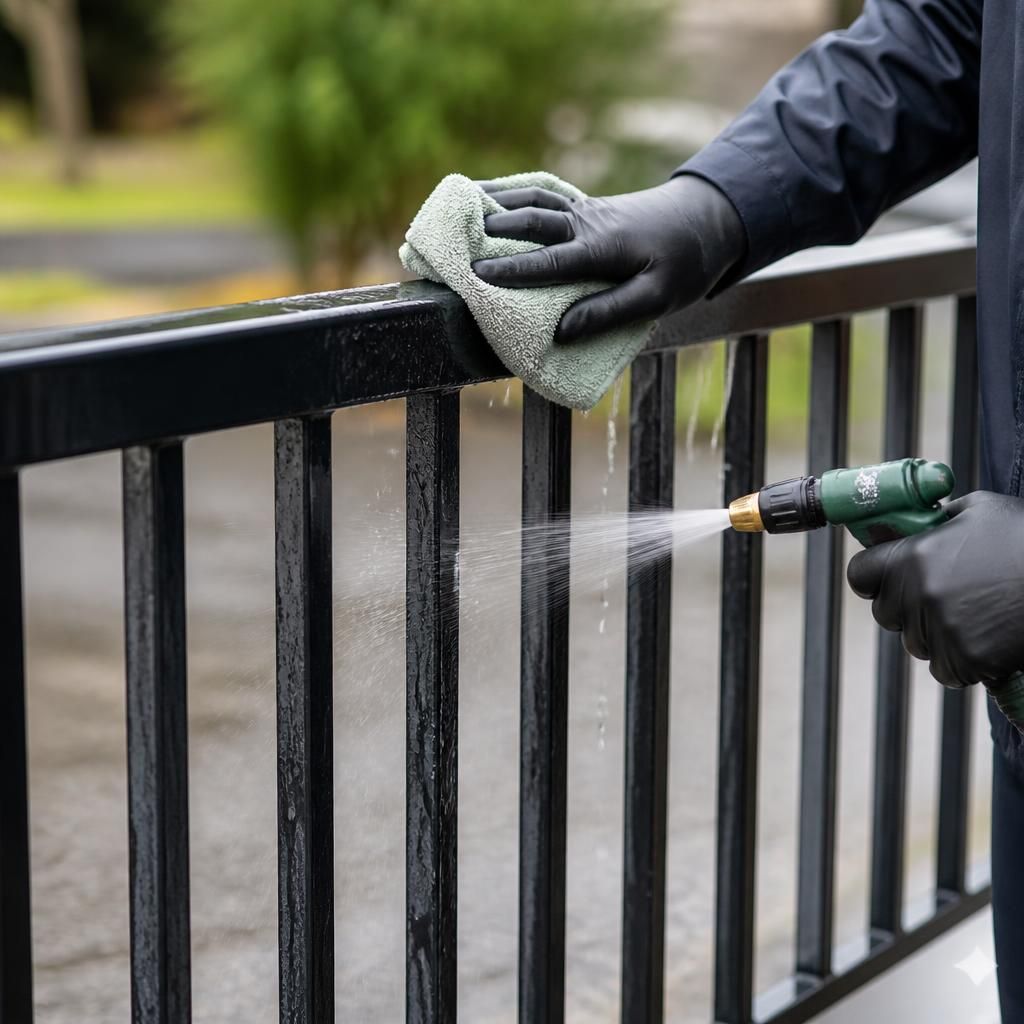
Mineral deposits and surface salts should be removed before they build up into hard, abrasive residues. Rinse the railing with clean water after washing, then allow it to dry without leaving detergent or dissolved deposits behind. If staining remains, test any specialist cleaning product on a small, inconspicuous area first and confirm that it does not alter the coating’s colour, gloss or texture. Do not scrape deposits from the surface, as this can create fine damage that becomes more noticeable over time.
Ask about recoating options for steel railings
If your steel railings show widespread coating failure or exposed metal, ask a powder-coating specialist to assess whether recoating is suitable. Powder-coatings.co.uk can advise on preparation and appropriate recoating options for your railing components.