

What is the typical lifespan of a powder-coated finish on rusted steel components?
A powder-coated finish on a rusted steel component has no fixed lifespan; with corrosion removed, thorough surface preparation and a coating system suited to its environment, it can provide durable protection for many years. Remaining rust, inadequate pretreatment, impact, moisture and harsh exposure can significantly shorten its service life.
A powder-coated finish on a properly treated steel component is generally a long-term finish, with service life measured in years rather than months. The actual lifespan cannot be assigned from the coating material alone: it depends on the component’s exposure, the required appearance, the steel’s design and the way the coating is inspected and maintained.
For industrial components, durability is usually assessed against the conditions the part will face:
- Dry internal environments: components protected from rain, condensation and aggressive chemicals normally place relatively modest demands on the coating.
- Sheltered external locations: occasional moisture, temperature changes and ultraviolet exposure increase the need for a suitable exterior-grade system and sound detailing.
- Fully exposed locations: standing water, repeated wetting and drying, sunlight and airborne contaminants can accelerate loss of gloss, colour change and corrosion at vulnerable points.
- Coastal, industrial or chemical environments: salt deposits, acidic or alkaline contamination and process chemicals can shorten service life unless the coating system is specifically selected for those conditions.
The first visible change may not mean that the entire finish has failed. Powder coating can gradually lose gloss or show some colour variation while still providing a protective barrier. More significant warning signs include blistering, cracking, flaking, corrosion showing through joints or edges, and rust spreading from chips or damaged areas. These symptoms should be investigated before they extend beneath otherwise sound coating.
Component design has a direct effect on longevity. Sharp edges are more difficult to cover consistently than rounded edges, while folded sections, overlaps, threaded areas and crevices can retain moisture or contaminants. Hollow sections also require suitable drainage and ventilation. If water is allowed to remain trapped, corrosion may develop behind the coating even when the visible face initially appears intact.
Mechanical use is another important distinction. A static enclosure may retain its finish for much longer than a component exposed to abrasion, impact, vibration or repeated handling. Forklift contact, metal-to-metal movement and the tightening of fixings can breach the film locally. Once damage occurs, prompt cleaning and repair helps prevent a small defect becoming a wider corrosion site.
Maintenance should be proportionate to the environment. Periodic visual checks should examine edges, welds, fixings, drainage points and areas where dirt or moisture collect. Washing with clean water and a mild, non-abrasive detergent can remove deposits that would otherwise attack the surface. Abrasive pads, aggressive solvents and unsuitable cleaning chemicals may damage the coating and should be avoided unless their compatibility has been confirmed.
When the finish is approaching the end of its useful life, recoating is not simply a matter of applying another layer over the existing surface. The condition of the film and the steel beneath it must be assessed. Loose coating, corrosion products and contaminants need to be removed, and any defects in the component may require attention before a new system is specified. Where only isolated damage is present, a compatible local repair may be appropriate; widespread loss of adhesion or corrosion generally calls for more extensive preparation.
For this reason, a realistic lifespan estimate should be based on the component’s intended environment and maintenance arrangements rather than a generic number. A coating specification should identify the exposure conditions, colour and gloss requirements, likely mechanical demands and the consequences of failure. That approach gives a more reliable indication of how long the finish should remain both protective and presentable.
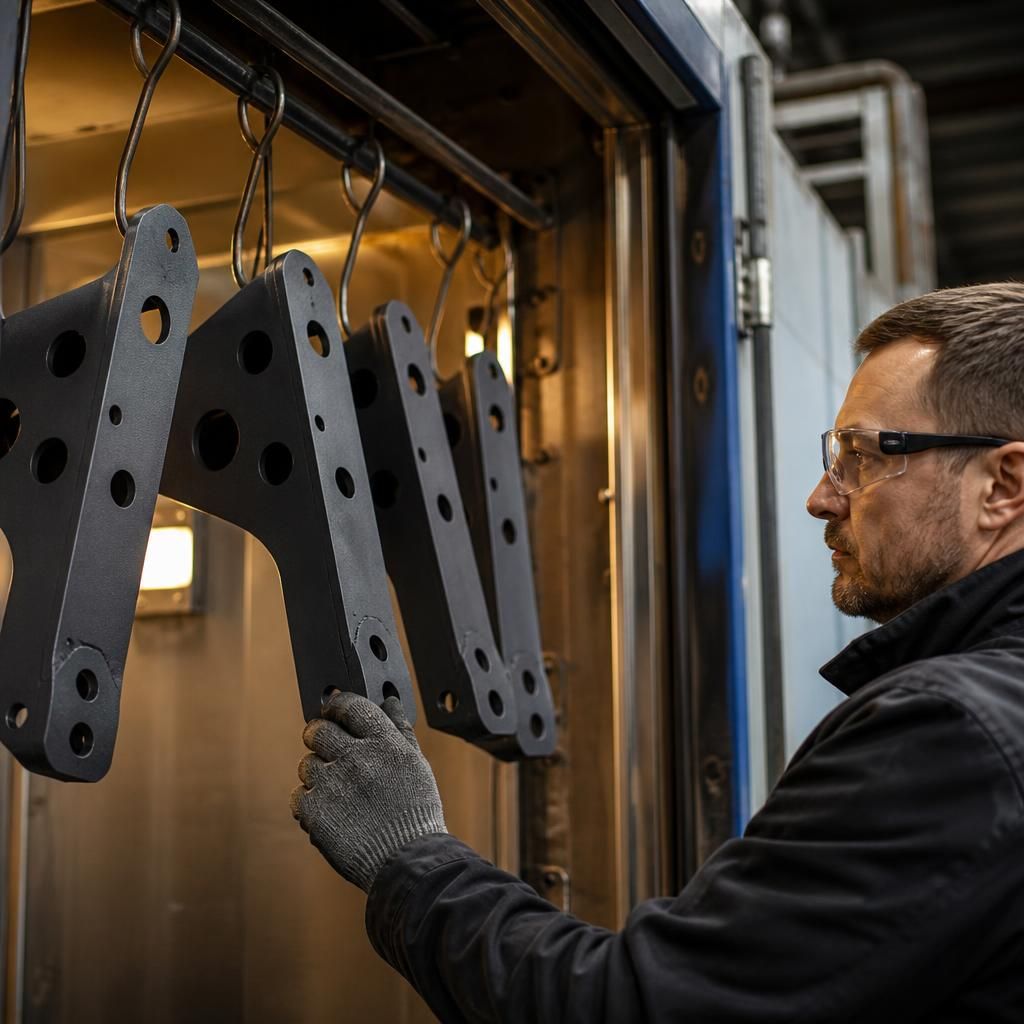
The expected lifespan of powder coating on rusted steel also depends on how accurately the coating is applied and cured. The powder must form a continuous film at a suitable thickness, with particular attention to edges, welds, corners and less accessible faces. Thin areas may provide weaker corrosion protection, while excessive build can affect appearance and adhesion.
Curing must follow the coating manufacturer’s specified time and temperature, based on the actual steel temperature rather than the oven’s air temperature alone. Under-cured powder may not develop its intended hardness, adhesion or chemical resistance; overheating can also affect the finish. Checking film coverage and confirming that the steel has reached the required cure condition helps ensure the coating delivers its expected service life.
Discuss the expected lifespan of your powder-coated steel components
Discuss the expected lifespan of your powder-coated steel components with our team, providing details of the component, operating environment and required finish. This will help determine the most suitable coating specification and preparation approach for the application.