

What are the key considerations when selecting black powder coated aluminium for high-temperature environments?
When selecting black powder coated aluminium for high-temperature environments, assess the aluminium grade, powder coating system and its rated service temperature, together with exposure to thermal cycling, chemicals and outdoor conditions. Confirm that surface preparation and curing are suitable for the component, and obtain coating-system guidance where temperatures may approach or exceed the stated operating limits.
Selecting black powder coated aluminium for a high-temperature environment requires more than comparing nominal temperature ratings. The decision should account for the component’s actual surface temperature, how long it remains hot, the number of heating and cooling cycles, the aluminium’s structural role, and the coating’s likely changes in appearance and performance over time.
Assess the complete thermal profile. Identify whether the part experiences continuous heat, brief temperature peaks, localised hot spots or repeated cycling. A coating that performs acceptably during occasional exposure may not be suitable for prolonged operation at the same temperature. Record the temperature at the coated surface rather than relying only on the surrounding air temperature, since contact with hot equipment, radiant heat and restricted airflow can produce substantially different conditions across one component.
Allow for the effect of the black finish. Black surfaces generally absorb more radiant energy than lighter finishes. In direct sunlight or near radiant heat sources, this can raise the surface temperature above the general ambient temperature. The design assessment should therefore consider the combined effect of process heat, solar radiation, ventilation and adjacent materials. Where thermal management is important, compare the expected surface temperature of the black finish with the temperature assumed in the equipment design.
Consider aluminium movement and strength. Aluminium expands and contracts as its temperature changes, while the coating, fixings and adjoining materials may respond differently. This can place stress on edges, joints, fasteners and interfaces during repeated heating and cooling. Thin or highly loaded aluminium components may also lose stiffness or load-bearing capacity as temperature rises, regardless of the coating used. Check thermal expansion allowances, joint design, dimensional tolerances and the component’s structural performance at its operating temperature.
Separate appearance requirements from functional requirements. Heat can gradually affect gloss, colour stability and surface texture before there is obvious peeling or loss of adhesion. For a visible black finish, agree in advance which changes are acceptable, including fading, gloss reduction, chalking or minor variation between batches. For enclosed or industrial components, resistance to blistering, flaking and contamination may be more important than retaining the original level of gloss.
Review the surrounding exposure. Temperature rarely acts alone. Vapours, oils, cleaning agents, moisture, salt deposits and process chemicals can become more aggressive when the surface is hot. Check the compatibility of the complete coating system with the substances that may contact it, including any materials used during cleaning or maintenance. Also consider whether contaminants can collect in recesses and become concentrated during heating.
Check the component design before coating. High-temperature parts should be reviewed for sharp edges, deep recesses, enclosed sections, overlapping surfaces and areas that require masking. These features can affect coating coverage, heat transfer and the removal of residues. They may also create local differences in temperature that accelerate deterioration. Define which surfaces must remain uncoated for electrical contact, earthing, sealing or assembly, and make sure masking tolerances are suitable for the finished component.
Consider the coating process as part of the specification. Aluminium components can be sensitive to distortion, dimensional change and trapped contaminants during oven processing. Complex or thin parts may need suitable support and controlled handling to retain their shape. The coating specification should identify the required appearance, coverage, masking points and inspection method, rather than relying solely on a colour description such as black.
Use representative testing where the application is critical. A trial panel or component made from the same aluminium type, with the same geometry and coating build, can be exposed to a representative heat cycle. Inspect it for:
- blistering, cracking, flaking or edge lifting;
- loss of adhesion after heating and cooling;
- colour or gloss change;
- chalking, softening or surface contamination;
- corrosion at damaged areas, joints or uncoated interfaces; and
- dimensional change or interference with adjoining parts.
Testing should reproduce the likely duration and sequence of exposure, not just a single short temperature excursion. If the part is exposed to chemicals, moisture or cleaning during service, those conditions should be included in the assessment where practicable.
Define the acceptance criteria in writing. For production work, record the operating temperature range, exposure pattern, visual requirements, areas requiring masking, inspection points and any restrictions on cleaning products. Ask the coating specialist and powder-system supplier to confirm that the proposed system is appropriate for those conditions, particularly where the operating temperature approaches the system’s limit or where appearance is safety- or brand-critical.
For demanding applications, the most reliable choice is the coating system supported by evidence from the actual component design and service conditions. A black powder finish may be suitable, but its selection should be based on measured thermal behaviour, expected ageing and the consequences of coating deterioration rather than colour and initial appearance alone.
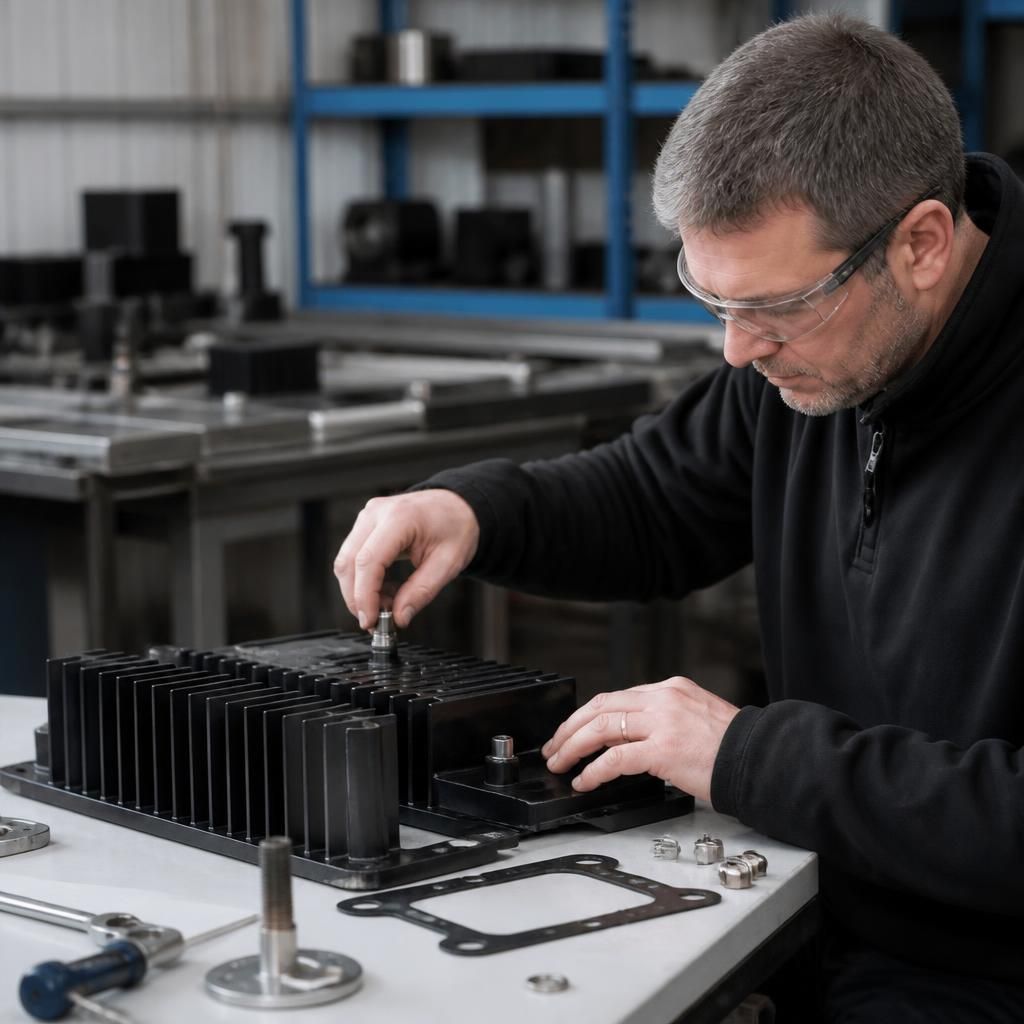
Check the temperature limits of the complete assembly, not just the powder coating. Aluminium alloy and temper, sealants, gaskets, adhesives, insulation and fasteners may each have different limits, and a coating that remains intact does not confirm that the component will retain its required mechanical or sealing performance.
For safety-critical or tightly toleranced parts, obtain the relevant material data and review the assembly at its maximum operating temperature. This helps identify whether a different aluminium specification, joint arrangement or ancillary material is needed before the black finish is selected.
Discuss your high-temperature coating requirements
Discuss your component’s high-temperature coating requirements with our powder coating team, providing its aluminium specification, operating conditions and finish expectations. We can help assess whether the proposed black powder coating system is suitable for the application.