

What maintenance practices are recommended to retain the shine and durability of high gloss powder coated surfaces?
Retain the shine and durability of high gloss powder coated surfaces by washing them regularly with clean water, a mild detergent and a soft cloth or sponge, then rinsing and drying thoroughly. Avoid abrasive pads, harsh chemicals, strong solvents and pressure concentrated on damaged areas; inspect the coating periodically and repair chips or scratches promptly to prevent further deterioration.
Retaining the shine and durability of a high gloss powder coated surface depends on managing abrasion, impact, moisture, chemical exposure and ultraviolet light throughout its service life. Cleaning is only one part of the regime; careful handling, suitable installation, controlled storage and prompt decisions about coating damage also have a significant effect on appearance and performance.
Prevent mechanical damage during handling and use. High gloss surfaces can show scuffs, rub marks and fine scratches more readily than textured finishes because reflected light highlights surface defects. Do not drag coated components across workbenches, pallets or vehicle beds. Use clean separators, protective sleeves or non-abrasive supports when stacking parts, and prevent coated faces from rubbing against one another. Lifting equipment, clamps and contact points should be padded where practical, particularly for large panels, fabricated frames and components with prominent visible faces.
Storage arrangements should also prevent movement and trapped moisture. Keep components separated so that air can circulate around them, and avoid placing coated surfaces directly on damp timber, contaminated packaging or bare metal. If parts are stored outdoors or transported between sites, use breathable protection that shields them from dirt and impact without sealing moisture against the coating.
Control water retention and corrosion risks. Powder coating protects the substrate, but its performance can be reduced if water remains trapped in joints, folds, drainage points or around poorly sealed fixings. Components should be positioned so water can run off rather than collect. During routine maintenance, pay particular attention to seams, edges, recesses and fastener locations. Any recurring water trap, failed seal or damaged drainage route should be corrected at source instead of relying on the coating to withstand prolonged exposure.
Where coated steel, aluminium or other metals are assembled with fixings, brackets or dissimilar materials, check that the complete assembly is compatible with the exposure conditions. Poorly chosen fixings, crevices and galvanic contact can create corrosion that may eventually affect the coated component. Seals and jointing materials should likewise be suitable for the environment and should not contain substances that stain, soften or contaminate the finish.
Limit exposure to aggressive substances. In manufacturing, construction and automotive environments, airborne oils, metal dust, cement residue, road salt, exhaust deposits and process chemicals can affect the appearance of a high gloss finish. Reduce exposure at source where possible by improving segregation, ventilation, splash protection or storage arrangements. Do not allow chemical residues to remain in contact with the coating while equipment is awaiting its next maintenance cycle. If a process substance is likely to contact the surface, confirm its compatibility with the powder coating before installation rather than relying on a general-purpose treatment afterwards.
Polishes, waxes, degreasers and protective treatments should only be used where their compatibility has been confirmed. Some products leave a film that alters gloss, attracts dust or interferes with future repair and recoating. Silicone-containing residues are particularly undesirable where a component may later need refinishing, as they can create adhesion and surface-preparation problems.
Account for sunlight and the service environment. A high gloss finish may gradually lose uniformity through weathering, especially where components receive strong sunlight, heat, moisture or industrial pollution. The most effective long-term approach is to ensure that the powder system was selected for the actual exposure when the project was specified. Maintenance can remove surface deposits and prevent avoidable damage, but it cannot fully reverse colour change, gloss reduction or chalking caused by unsuitable coating selection or prolonged environmental exposure.
Where possible, use shading, overhangs or positioning to reduce unnecessary exposure to direct sunlight and rain. Outdoor assemblies should be designed so that visible faces are not continually exposed to splash from contaminated ground or nearby traffic. Components in different orientations may weather at different rates, so replacement or refurbishment planning should consider the position of each part rather than assuming that all surfaces will age identically.
Manage damage according to its extent. Small local defects should be assessed for their cause, depth and location. A compatible touch-up system may be appropriate for a concealed or low-risk area, but touch-up material can differ in colour, texture and gloss from the original powder coating. On prominent faces, widespread abrasion, corrosion at edges or repeated coating failure, complete preparation and recoating may produce a more consistent result than repeated local repairs. The repair specification should identify the substrate, existing coating, exposure conditions and required appearance.
For business-critical assets, keep a simple maintenance record covering the coating system, installation environment, cleaning products approved for use, known chemical exposures and any repairs carried out. This helps distinguish normal weathering from damage caused by handling, assembly or process contamination, and provides useful information when a component is refurbished or a future batch is specified.
For high-value or specialist components, agree the care regime with the powder coating provider before production. The appropriate advice depends on the substrate, coating type, intended gloss level, indoor or outdoor exposure and the way the component will be handled. A maintenance plan built around those conditions is more reliable than applying the same treatment to every powder coated surface.
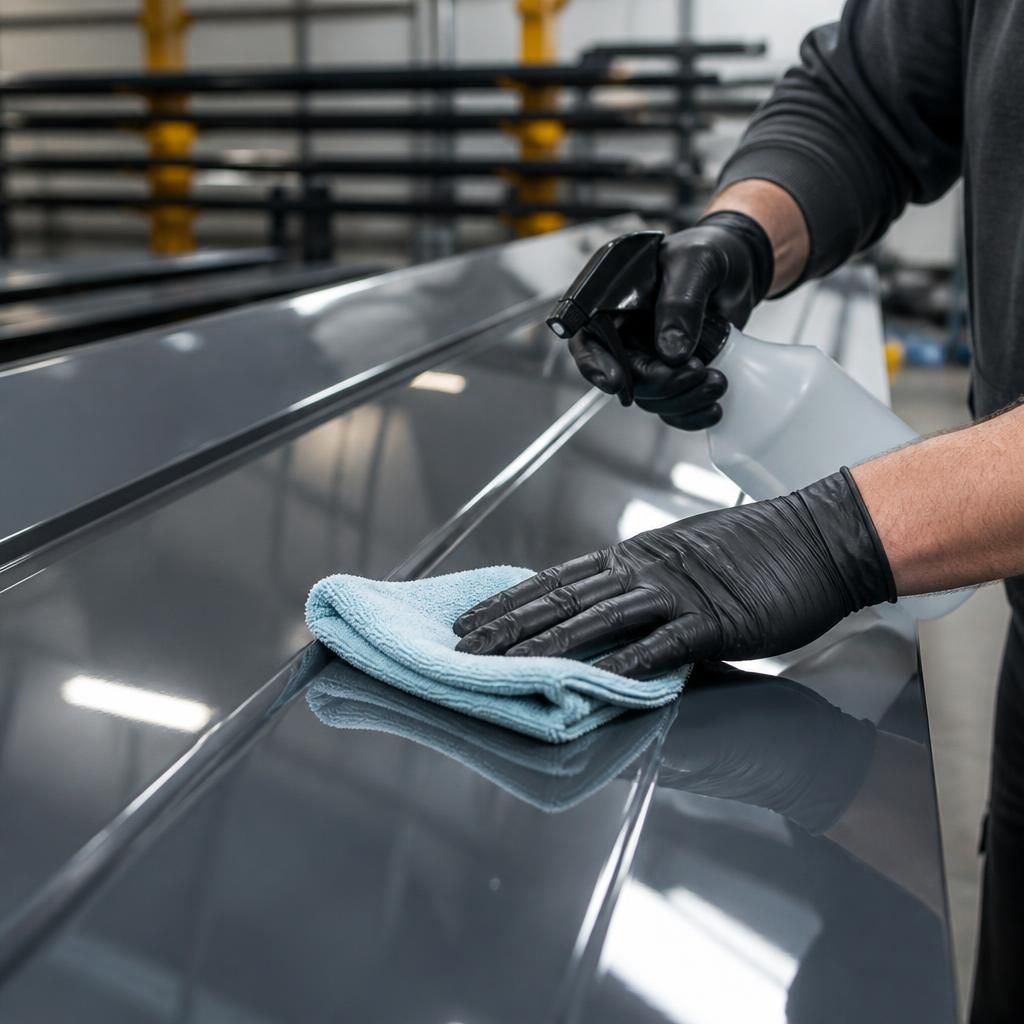
Cleaning equipment should be kept as carefully controlled as the cleaning solution. Dust, metal particles and grit trapped in a cloth, sponge or brush can create fine scratches across a high gloss powder coated surface, making the finish appear dull even when the coating remains intact. Use clean, non-abrasive equipment for each maintenance task and replace anything that becomes contaminated or worn.
Do not dry-wipe deposits from the surface. A dry cloth can drag abrasive particles across the coating, particularly in manufacturing, construction and automotive environments. Remove loose contamination with a gentle initial rinse, then clean using equipment reserved for coated components. Where surfaces are large or highly visible, work in manageable sections so that dirt is not redistributed across areas that have already been cleaned.