

What preparation steps are essential before applying a primer system in powder coating?
Essential preparation includes removing oil, grease, rust, mill scale and other contaminants, usually through suitable cleaning and abrasive blasting, followed by thorough drying and inspection. Mask areas that must remain uncoated, confirm the substrate and primer are compatible, and ensure the prepared surface is clean and free from dust before application.
Preparation for a powder coating primer system is a controlled process that ensures the metal, coating specification and application conditions are suitable before powder is applied. In addition to preparing the surface, the work should confirm the part’s design, substrate, pretreatment route, masking plan, application equipment and curing requirements so the primer can form a continuous, properly bonded layer.
Define the coating specification first. Confirm whether the primer is intended to improve corrosion protection, provide a bonding layer for the topcoat, improve chemical resistance or support a specialist finish. The specification should identify the metal substrate, the primer type, the compatible topcoat, the required film build and the curing conditions. This prevents a suitable primer from being used with an incompatible powder or an unsuitable application process.
Assess the components before they enter production. Check drawings and sample parts for features that can affect coating quality, including deep recesses, narrow gaps, overlapping sections, threaded holes, sharp corners, drain points and inaccessible faces. Powder may not reach enclosed areas evenly, while trapped liquids or air can interfere with pretreatment and curing. Where possible, parts should be designed or positioned to allow drainage, ventilation and a consistent spray path.
Review fabrication quality. Weld spatter, porous welds, silicone-based residues, adhesive traces and poorly finished joints can create defects beneath the primer. Welds and repaired areas should be continuous and suitably finished, with sharp burrs removed and edges treated where the specification requires a uniform film. Fabrication contaminants should be dealt with before the final preparation stage rather than relying on the primer to conceal them.
Choose the pretreatment route for the substrate. Different metals and alloys can require different chemical or mechanical preparation. Steel, galvanised material, aluminium and previously treated components may respond differently to cleaning, conversion treatment and abrasive preparation. The pretreatment must be chemically compatible with the primer and should leave the surface in a condition that supports adhesion without introducing residues that could affect the coating.
Control handling after preparation. Prepared parts should be handled with clean gloves or other suitable measures and kept away from processes that can reintroduce oil, moisture, dust or metal particles. Contact points, lifting equipment and storage surfaces should not compromise areas that need to be coated. Components should be transferred in a way that avoids fingerprints, abrasion and contact damage before the primer is applied.
Plan racking and electrical contact. The hanging method influences access, powder coverage and the ability to earth the component during electrostatic application. Racks, hooks and contact points should be positioned to provide stable support while limiting uncoated marks to acceptable locations. Contact surfaces need to remain capable of conducting electricity; accumulated coating on hooks or fixtures can reduce transfer efficiency and create inconsistent coverage.
Prepare masking materials and verify their limits. Masking should be selected for the specified process temperature and positioned so that it does not lift, shrink or leave residue during curing. Plugs, caps and tapes must protect functional surfaces without creating ridges or uncovered margins that affect assembly. The masking plan should distinguish between areas that must remain free of primer and areas where a small contact mark is acceptable.
Establish suitable application conditions. Before spraying, confirm that the booth, conveyor or work area is free from sources of contamination and that the application equipment is appropriate for the primer powder. Check powder condition, storage history and identification against the job specification. The spray gun, hoses and recovery arrangements should be clean and set up for the selected material so that residual powder from another system cannot affect the primer.
Confirm the curing plan. Powder curing depends on the metal temperature reached by the component, not simply the temperature displayed by the oven. Part thickness, loading arrangement and component geometry can alter heat-up time. The primer supplier’s curing requirements should therefore be checked against the actual part and oven process. If a topcoat will follow, the combined primer and topcoat cure sequence must be considered so that the primer is sufficiently developed without creating an unsuitable surface for the next layer.
Use a trial or first-off check for complex work. A representative component or test panel can be used to confirm coverage, masking, contact marks, film build, appearance and intercoat behaviour before a full batch is processed. This is particularly useful where parts have difficult geometry, mixed thicknesses, unusual substrates or a multi-layer primer and topcoat system. Any adjustment should be recorded and applied consistently to subsequent components.
Inspect and document the prepared job. Before coating begins, verify the part identity, substrate, pretreatment route, masking arrangement, rack position and process settings. After primer application, inspect for missed areas, pinholes, inclusions, visible contamination, excessive build and defects around welds or edges. Recording these checks provides traceability and helps distinguish a preparation issue from an application or curing issue if a later inspection identifies a problem.
In practice, the essential preparation is not a single cleaning operation. It is the coordinated control of substrate condition, part design, pretreatment, handling, masking, electrical contact, equipment cleanliness and curing. These checks give the primer system the conditions it needs to bond consistently and to work as part of the complete powder-coated finish.
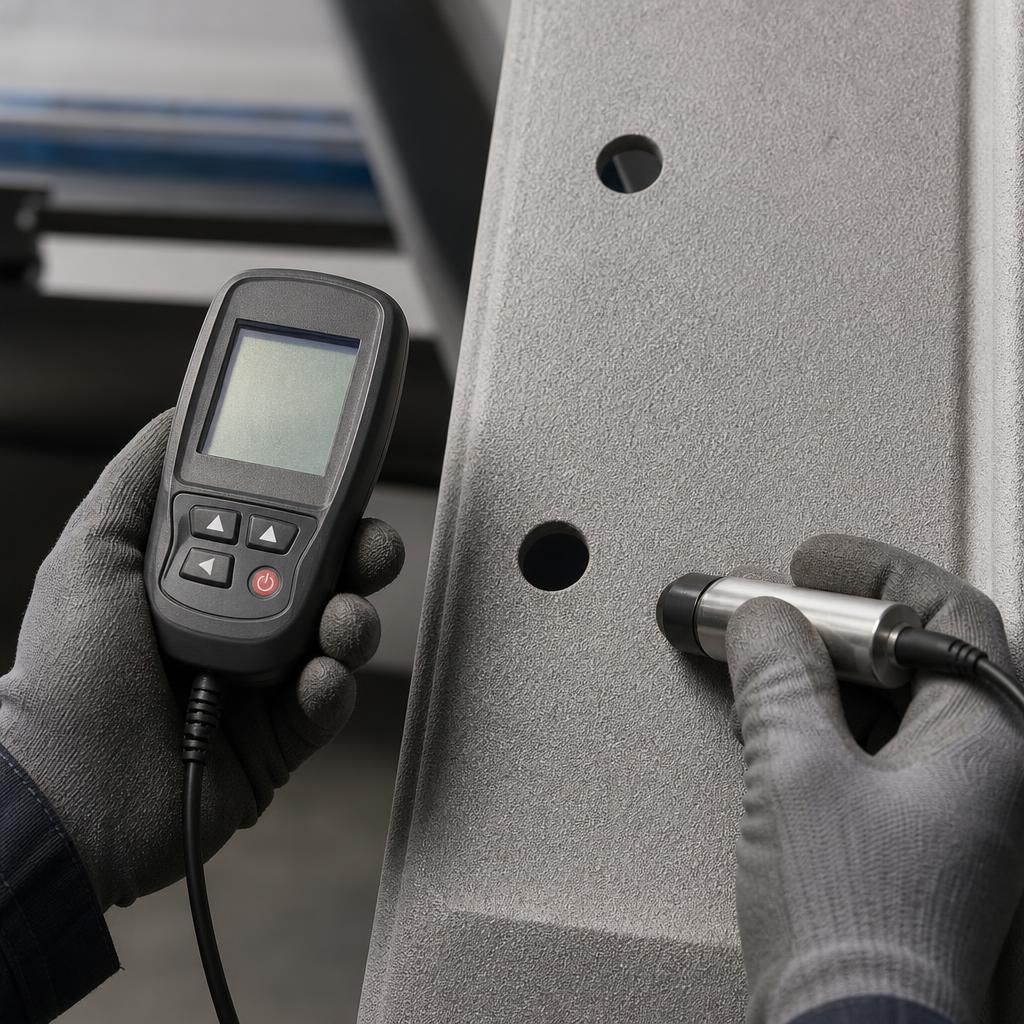
Verify the blasted surface profile before applying the primer. Abrasive preparation should create a texture that gives the powder primer sufficient mechanical key without producing peaks that remain thinly covered. The required profile depends on the primer specification, substrate and intended service, so it should be checked with suitable surface-profile equipment rather than judged by appearance alone.
Inspect representative areas for an even profile and check for defects such as sharp raised points, embedded abrasive or localised polishing. If the profile is inconsistent, the preparation process should be corrected before coating begins. Recording the inspection alongside the job specification provides evidence that the surface condition was suitable for the primer system and helps explain any later adhesion or coverage issue.