

What is the typical process for preparing metal surfaces before electrostatic powder coating?
Before electrostatic powder coating, the metal is cleaned to remove oil, grease, dirt and existing contaminants, then mechanically prepared by abrasive blasting or another suitable method to remove rust and create a key for adhesion. It is rinsed or treated as required, dried thoroughly, and inspected for cleanliness, damage and any areas that need correction before powder is applied.
The typical preparation process is a controlled sequence that matches the metal substrate and its intended service conditions with an appropriate pre-treatment, surface profile and handling method. After the main preparation stages are completed, the work must be checked, correctly masked and mounted so the powder can form a continuous, well-adhered film during application and curing.
- Review the component and coating specification. The preparation route depends on whether the part is mild steel, galvanised steel, aluminium or another compatible metal. The required finish, expected exposure, dimensional tolerances and areas that must remain uncoated should be identified before work begins. This is particularly important for fabricated assemblies, where welds, joints, enclosed sections and mixed metals may require different treatment.
- Assess the condition of the metal. The component is examined for heavy corrosion, mill scale, weld spatter, sharp edges, laminations, casting defects and damage from previous coatings. Preparation cannot correct every manufacturing defect. Welds may need dressing, rough edges may require removal and unsuitable repairs should be completed before the part enters the coating process. Any oil- or silicone-based contamination introduced during later fabrication must also be avoided.
- Select the appropriate preparation route. Abrasive treatment, chemical pre-treatment or a combination of methods may be selected according to the substrate and the required performance. Aluminium and galvanised surfaces, for example, need a method that promotes adhesion without unnecessarily attacking the base metal or removing protective layers. Heavily corroded steel may require more substantial mechanical preparation than sound, newly fabricated material.
- Control the surface profile. Mechanical preparation should leave a consistent surface rather than isolated polished and rough areas. A suitable profile gives the coating a key, but an excessively coarse or uneven texture can remain visible through the finished film or increase powder consumption. The selected abrasive, pressure and technique therefore need to suit the metal thickness and geometry.
- Correct difficult design features. Box sections, narrow recesses, overlapping joints and drainage points can retain preparation residues or moisture. Components should be designed or modified where necessary to allow effective access and proper drainage. Vent and drain holes may be required on hollow fabrications, while concealed faces should be considered because they can be difficult to coat and inspect consistently.
- Mask areas that must remain free of powder. Threads, precision bores, bearing seats, electrical contact points, mating faces and identification surfaces are commonly protected before coating. Masking materials must tolerate the curing cycle and be fitted securely enough to prevent powder migration. Masking should be planned with coating thickness and subsequent assembly in mind, rather than treated as an afterthought.
- Rack the component and establish electrical continuity. Parts are positioned on suitable hooks, jigs or frames so that all required surfaces are accessible to the spray equipment. The contact point must provide a reliable earth path for electrostatic attraction. Contact areas are normally selected on a concealed edge or a location that will not affect assembly, and the rack must be kept free from accumulated cured coating that could interfere with conductivity.
- Carry out a final pre-application check. Before powder is applied, the component should be free from visible residue, moisture, loose material and handling contamination. The operator also checks that masking is secure, hooks are making sound contact and no preparation defect has been overlooked. Once this check is passed, unnecessary handling should be minimised because fingerprints, workshop dust and contact with unsuitable surfaces can compromise the prepared condition.
Preparation also has to account for the coating system itself. The powder manufacturer’s technical requirements may specify a particular pre-treatment, substrate condition or curing schedule, and these requirements should be compatible with the metal and the component’s operating environment. A coating that is correctly applied but placed over an unsuitable or inconsistently prepared surface can suffer from poor adhesion, edge breakdown, blistering or premature corrosion protection failure.
For batch work, repeatability is as important as the treatment selected for an individual part. Components should be presented in a consistent orientation, with comparable racking and handling arrangements, so that preparation and coating conditions do not vary unnecessarily between pieces. Any change in material, fabrication method, previous coating or contamination risk should be reported before processing rather than discovered after application.
In practice, the preparation process is complete only when the substrate is suitable for the specified powder system and the part can be coated without compromising functional features. Clear drawings, defined masking points and accurate information about the metal and its intended use help the coater choose the correct preparation method and avoid preventable rework.
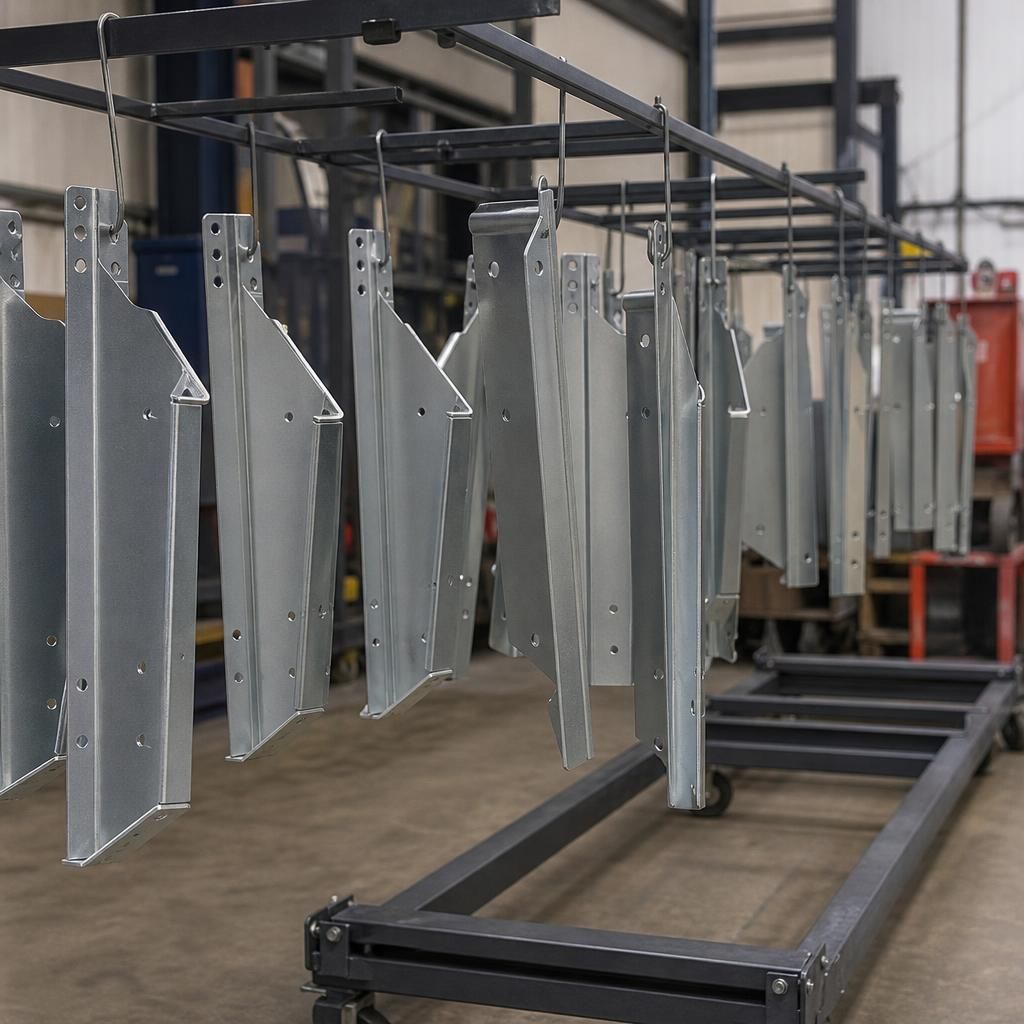
The interval between surface preparation and powder application is an important part of process control. Clean steel can develop flash rust if it is exposed to moisture, while prepared surfaces of any metal can collect dust, fingerprints or workshop contamination during storage or handling. These issues can reduce adhesion even when the original preparation was satisfactory.
Prepared components should therefore be kept dry, protected from avoidable contamination and handled only at suitable contact points. If coating is delayed, the surface should be reassessed before racking and application. Any visible oxidation, residue or handling contamination may require local correction or repeating the relevant preparation stage rather than being covered with powder.