

What maintenance is needed after applying electrostatic epoxy powder coating to ensure longevity?
Maintaining electrostatic epoxy powder coating involves regular cleaning, prompt removal of contaminants and inspection for chips, scratches, corrosion or areas of coating failure. Use non-abrasive cleaning methods and repair damage promptly to prevent moisture and chemicals reaching the metal substrate.
Long-term performance of an electrostatic epoxy powder coating depends on controlling the conditions in which the coated component is used, preventing avoidable mechanical stress and maintaining a documented care programme. The coating itself is not a substitute for suitable design, correct handling or protection from an environment beyond the specified system.
Match the coating system to the service environment. Epoxy powder coatings are valued for their adhesion, hardness and resistance to many industrial chemicals, but prolonged ultraviolet exposure can cause chalking, fading or loss of surface appearance. Components used outdoors or in areas with strong sunlight should therefore be checked against the original coating specification. A compatible topcoat or alternative powder system may be necessary where colour retention and weathering performance are important. The operating temperature, humidity, chemical exposure and likelihood of abrasion should all be considered when selecting the system.
Prevent mechanical damage during use. Powder coating can be damaged by impact, sharp edges, dragging, vibration or repeated contact with poorly aligned parts. Components should be handled with suitable lifting equipment and protected from contact with uncoated steel, abrasive debris and hard corners during storage and installation. Where coated parts meet, suitable washers, spacers or protective interfaces can reduce rubbing and localised wear. Fasteners should be fitted without damaging the surrounding film, particularly around drilled holes, cut-outs and joint faces.
Pay attention to design details that retain moisture. Water trapped in seams, overlaps, crevices or poorly drained sections can undermine a coating system over time, especially where the film has been breached. Installed components should be positioned so that water can drain rather than collect. Any modifications made after coating, including drilling, cutting or welding, need appropriate treatment because the newly exposed metal no longer has the original powder coating protection.
Control chemical contact. The resistance of epoxy powder coating varies with the chemical, its concentration, temperature and contact time. Oils, solvents, acids, alkalis, cleaning agents and process chemicals should be assessed against the coating manufacturer’s technical data rather than assumed to be harmless. Where regular exposure is unavoidable, use containment, shielding or a coating system specifically selected for that chemical duty. Do not introduce a new solvent, disinfectant or industrial cleaner into the maintenance regime without checking its compatibility.
Use a planned maintenance schedule based on risk. There is no single interval suitable for every powder-coated component. A part installed indoors in a controlled manufacturing area will have different requirements from one exposed to road salt, outdoor weather, abrasive dust or aggressive process chemicals. The maintenance plan should record the component’s location, coating specification, exposure conditions, handling risks and any areas requiring particular attention. Higher-risk installations warrant more frequent checks and more detailed records.
- Confirm that the coating remains suitable when the component’s use, location or process chemicals change.
- Check that protective covers, spacers, seals and drainage arrangements remain correctly fitted.
- Review areas subject to repeated impact, vibration, friction or contact with moving equipment.
- Record any alteration, repair or replacement so that the coating history is retained.
- Escalate recurring defects, unusual discolouration or poor adhesion to a qualified coating specialist rather than repeatedly applying an incompatible touch-up product.
Repair defects using a controlled method. Small repairs should be assessed for their cause before work begins. A damaged area may result from impact, corrosion beneath the film, chemical attack, poor installation or an unsuitable coating specification. The repair process normally involves removing loose or compromised material, preparing the exposed substrate, treating any corrosion and applying a compatible repair coating in accordance with the product instructions. A liquid touch-up product may improve local protection, but it will not necessarily reproduce the appearance, film properties or durability of the original factory-applied powder coating.
For extensive damage, repeated coating failure or components used in demanding environments, a professional assessment may be more appropriate than local repair. The assessment can determine whether the existing finish should be repaired, overcoated or removed and replaced. Any proposed overcoating must account for surface preparation, adhesion, contamination and compatibility between the existing epoxy film and the new system.
Good records support reliable maintenance. Retain the coating specification, colour and finish information, substrate details, installation date, exposure conditions, chemical compatibility information and records of any repairs. This helps maintenance teams identify whether a change is caused by normal environmental exposure, a process change or a local installation problem, and provides useful information if the component later requires recoating.
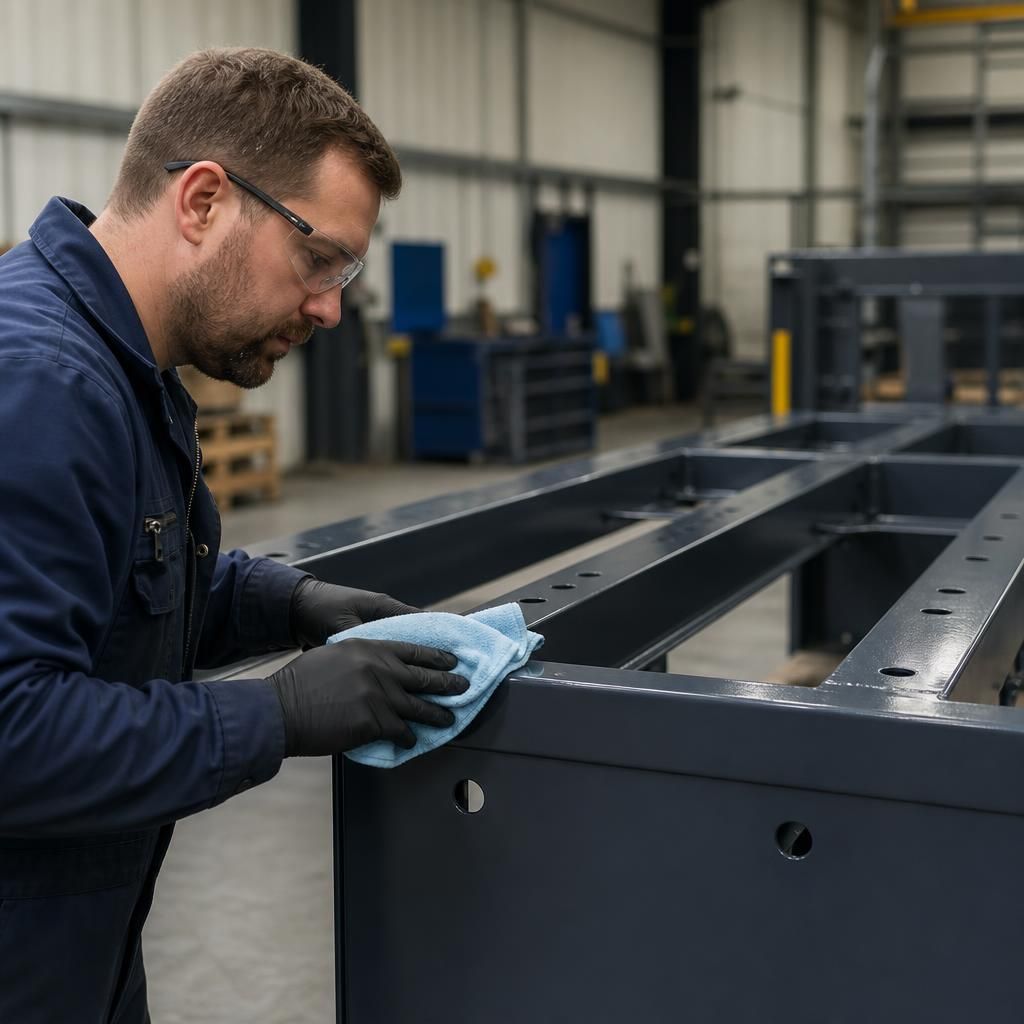
Cleaning should remove contamination without abrading or softening the epoxy film. Begin by removing loose dust and grit, then wash the surface with clean water and a mild, coating-compatible detergent using a soft cloth or non-abrasive brush. Rinse away detergent residue and allow the component to dry fully, paying particular attention to joints, recesses and drainage points. Avoid abrasive pads, harsh solvents and unapproved pressure-washing practices, as these can alter the finish or drive contamination into damaged areas.
After cleaning, inspect the surface in good light rather than treating every mark as coating failure. A change that remains after washing may indicate staining, chemical attack, chalking or loss of adhesion. Record its location and appearance, then compare it with the coating specification and previous inspection notes. This helps distinguish removable contamination from a defect requiring controlled repair or technical assessment.
Discuss maintenance for your electrostatic epoxy powder coating
Discuss your component’s service environment, coating specification and planned maintenance requirements with our Midlands powder-coating specialists. We can help assess the appropriate coating system and care approach for your application.