

What maintenance considerations are necessary for ensuring the longevity of powder coated aluminium finishes?
Maintaining powder coated aluminium finishes requires regular cleaning with mild, non-abrasive products, prompt removal of contaminants and periodic inspection for scratches, chips, corrosion or coating breakdown. Avoid harsh chemicals, abrasive tools and prolonged exposure to trapped moisture, and repair any damaged areas using a compatible coating system.
The longevity of a powder coated aluminium finish depends on more than the coating itself. Maintenance should be planned around the component’s environment, design, installation and use, with attention to drainage, mechanical damage, adjacent materials and any changes in service conditions.
Match maintenance to exposure. Aluminium components installed indoors, externally, near roads, in coastal areas or in industrial environments face different risks. Salt deposits, airborne pollutants, construction dust and process residues can increase the stress placed on the coating. The maintenance plan should therefore reflect the site conditions rather than follow a generic timetable. Areas exposed to heavier contamination may require more frequent attention than sheltered components in a clean internal environment.
Protect drainage and ventilation paths. Profiles, frames and fabricated sections should be kept free from obstructions that could retain water against the coated surface. Blocked weep holes, enclosed joints and poorly draining recesses can create persistent damp conditions, particularly at interfaces and lower edges. During planned maintenance, check that drainage routes remain functional and that sealants, gaskets and joint details have not deteriorated in a way that directs water into the assembly.
Control contact with dissimilar materials. Powder coated aluminium can be affected at interfaces with other metals, treated timber, masonry, concrete or incompatible sealants. Trapped moisture and contact between dissimilar metals may contribute to galvanic corrosion at fixings, cut edges or joints. Maintenance should include checking these interfaces and replacing failed barriers, spacers, washers or sealants with materials suitable for use alongside coated aluminium. Any cleaning or building-maintenance work nearby should also prevent wet cement, mortar, plaster or other alkaline residues from remaining in contact with the finish.
Review fixings, joints and movement. Fasteners, brackets and hinges can loosen through vibration, thermal movement or repeated use. Loose hardware may allow movement that damages the coating or exposes vulnerable edges. Check that fixings remain secure without overtightening them, and assess joints for movement, distortion or failed seals. Where large panels or long sections are used, allow for normal expansion and contraction so that the coating is not placed under unnecessary mechanical stress.
Manage handling and subsequent work. Powder coated aluminium should be protected during installation, transport, storage and nearby fabrication. Do not drag components across one another or rest them on contaminated surfaces. When drilling, cutting or fitting adjacent materials, remove swarf and debris promptly and prevent tools, clamps and temporary supports from marking the finish. Any alteration made after coating should be assessed carefully because newly exposed aluminium and unsealed edges may have different protection from the original coated surface.
Keep a maintenance record. For industrial installations, record the coating specification, colour or finish, installation location, exposure conditions and any remedial work. This information helps distinguish normal surface wear from a developing adhesion, corrosion or substrate issue. It also ensures that future repairs use a compatible system rather than an unsuitable paint or sealant that could fail visibly or affect the surrounding finish.
Escalate unusual changes. Blistering, lifting at joints, widespread fading, chalking, loss of adhesion, recurring staining or corrosion around fixings may indicate an underlying design, moisture or chemical-exposure problem. These symptoms should be assessed before local remedial work is carried out. If the component performs a structural, safety-critical or weather-sealing function, involve the relevant engineer or coating specialist so that the cause is addressed as well as the visible defect.
Effective maintenance is therefore a combination of suitable detailing, controlled installation, compatible materials and condition-based review. This approach helps preserve both the appearance and the protective function of powder coated aluminium throughout its intended service life.
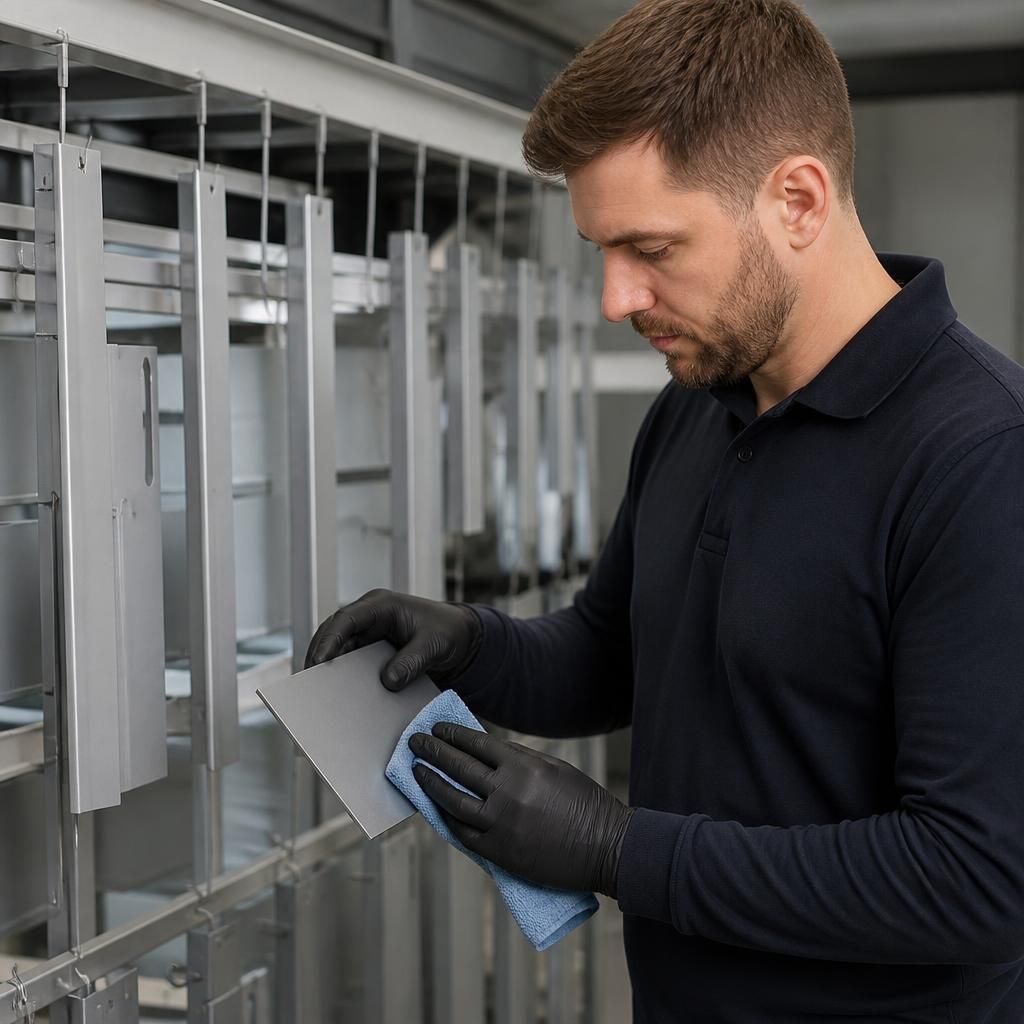
The safest maintenance plan for a powder coated aluminium finish starts with the coating specification and its care instructions. Different resin types, colours and surface textures can respond differently to cleaners, solvents and polishing products, so maintenance should be based on the coating system rather than assumptions about aluminium generally.
Before applying a new cleaning or treatment product, check its suitability with the coating supplier and test it on a small, inconspicuous area. Use the least aggressive method that removes the contaminant, rinse away residues thoroughly and allow the surface to dry before assessing its condition. This avoids mistaking cleaner residue or temporary marking for coating deterioration and reduces the risk of changing the finish during routine care.
Discuss Your Powder Coated Aluminium Maintenance Requirements
Discuss your powder coated aluminium maintenance requirements with the team, including the component’s exposure conditions, finish specification and any signs of coating damage. This helps identify suitable care and remedial coating considerations for your components.