

What are the environmental benefits of choosing powder coated aluminium frames?
Powder coated aluminium frames can reduce environmental impact through low-VOC application, durable protection that limits premature replacement, and the recyclability of both aluminium and its cured coating. The dry powder process also minimises liquid waste compared with many conventional painting methods, supporting more resource-efficient industrial projects.
Powder coated aluminium frames can offer environmental advantages across their service life because the coating process uses a dry coating material, supports efficient application and provides a protective finish without relying on solvent-rich liquid paint. The overall benefit depends on how the coating line is operated, the preparation chemicals used and how the finished aluminium is managed at the end of its useful life.
One important advantage is the potential for efficient powder utilisation. During application, electrically charged powder is attracted to the earthed aluminium surface, helping the material reach the component rather than dispersing indiscriminately. Suitable overspray can often be collected and managed within the coating process, subject to the powder system and colour requirements. This can reduce the quantity of unused coating material requiring disposal compared with an application method that cannot recover excess material.
Powder coating can also reduce the use of substances associated with liquid paint systems. The coating is supplied as a dry formulation, so it does not require the same type of solvent evaporation during application. This can simplify controls for airborne emissions and reduce the need to handle solvent-based cleaning materials. The relevant environmental performance should still be checked against the specific powder formulation, pretreatment system and factory controls rather than assumed from the term “powder coating” alone.
The aluminium substrate itself is significant in any environmental assessment. Aluminium frames are comparatively light for many structural and enclosure applications, which can reduce material mass in the finished design where the engineering specification allows it. Powder coating adds a protective surface without requiring a separate facing material or decorative covering. At end of life, the aluminium and its coating can enter established metal recovery routes, although components should be identified and handled in accordance with the requirements of the recycling facility.
There are process-related factors to assess before describing a project as sustainable:
- Curing energy: the oven used to cure the powder requires heat, so energy source, oven efficiency, loading and operating controls all affect the process footprint.
- Pretreatment: cleaning, etching and conversion coatings may involve water, detergents or other chemicals. Responsible management of rinse water and treatment residues is therefore part of the environmental assessment.
- Powder selection: the formulation should be appropriate for the intended exposure and performance requirements, avoiding unnecessary rework or premature replacement caused by an unsuitable specification.
- Colour management: frequent colour changes can increase cleaning requirements and create additional powder residues, making production planning relevant to material efficiency.
- Packaging and transport: reusable or appropriately reduced packaging, sensible batch planning and consolidated collection or delivery can help limit impacts beyond the coating line.
For a B2B project, useful questions include whether the applicator recovers suitable overspray, how coating residues and pretreatment waste are controlled, what energy measures are used in curing, and which documents support the powder specification. It is also worth confirming whether the proposed finish is suitable for the frame’s exposure, because environmental performance is not just a property of the coating material; it depends on the complete component, its manufacture, use and end-of-life route.
In practical terms, powder coated aluminium is most environmentally appropriate when the design uses the minimum suitable amount of material, the coating is selected for the actual operating conditions, and the applicator controls powder, energy, water and chemical inputs carefully. This whole-process view gives a more reliable assessment than comparing coating names alone.
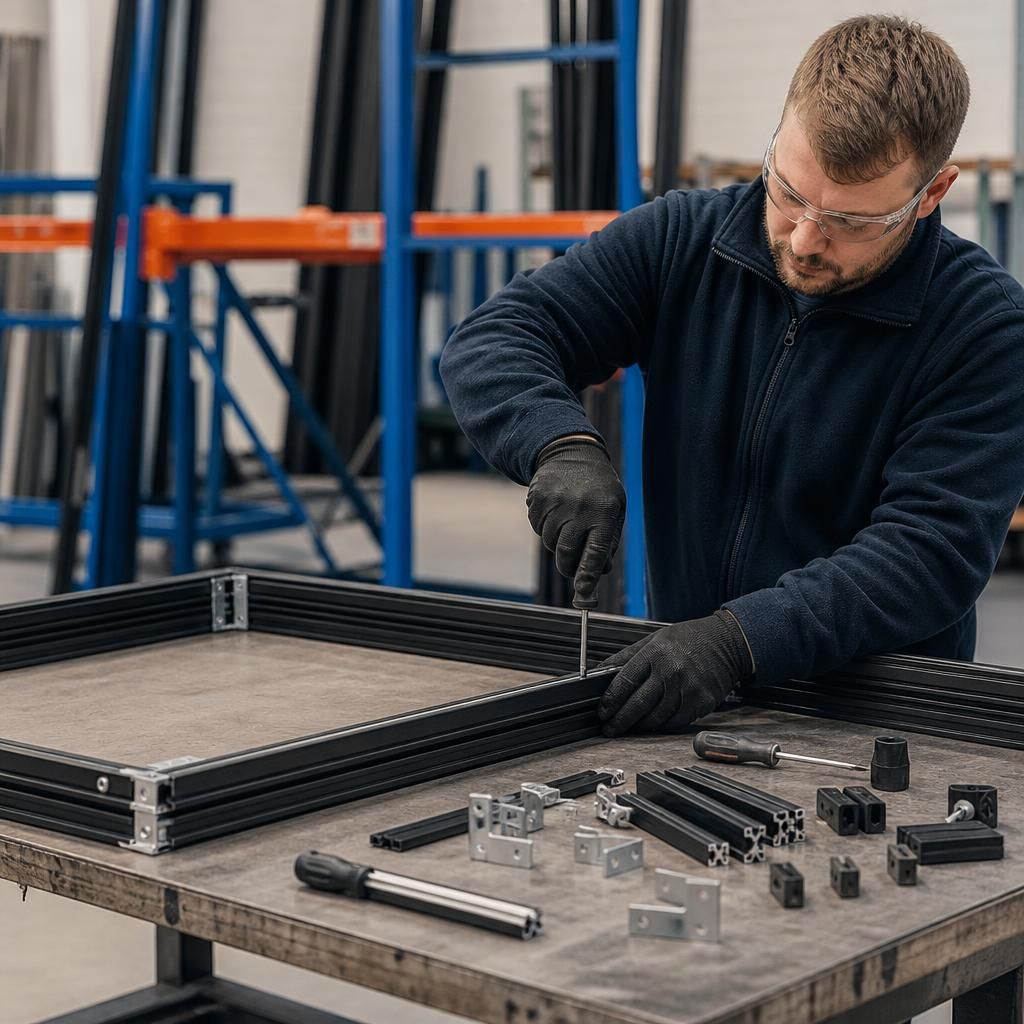
One environmental benefit of powder coated aluminium frames is that the finish can support design for disassembly and material recovery. Where frames are assembled with removable fixings rather than permanent adhesives or inseparable mixed materials, aluminium sections can be separated more easily from brackets, seals and other components when the installation is altered or removed.
For industrial projects, specify frame designs that allow individual sections to be repaired, replaced or reused instead of discarding the complete assembly. Keep coating and substrate information with the component, and confirm the intended recovery route with the recycling facility. This helps preserve the value of the aluminium at end of life while avoiding unnecessary disposal of serviceable parts.