

What factors should be considered when selecting a powder coating specification for aluminium profiles?
Select a powder coating specification for aluminium profiles by assessing the service environment, required durability, exposure to UV, moisture and chemicals, desired colour and gloss, profile geometry, pretreatment requirements and applicable project standards. The specification should also reflect the intended application method, coating thickness, quality checks and any performance or certification requirements.
A suitable powder coating specification for aluminium profiles should translate the project’s functional and visual requirements into measurable instructions for the coater. It should identify the aluminium substrate, define which surfaces are critical, set acceptable appearance and film-build limits, and state how the finished profiles will be inspected, handled and accepted.
Start with the aluminium substrate. The alloy, temper, extrusion condition and any previous processing can affect preparation and coating performance. The specification should identify whether profiles are new extrusions, machined sections, welded assemblies or components that have already been exposed to storage and handling. Oils, swarf, marking products, silicone contamination and embedded workshop debris may all affect adhesion, so the required pre-coating condition should be agreed rather than assumed.
Welds, cut ends, drilled areas and sharp edges also need specific consideration. The drawing or coating schedule should identify whether edges require preparation, whether weld-cleaning residues must be removed, and whether machined areas need a particular finish before coating. A powder coating specification cannot correct defects that remain in the aluminium surface, so surface condition and permissible imperfections should be defined before production.
Define the surfaces that matter most. Aluminium profiles often have faces that are visible, concealed, assembled against another component or located inside a recess. These areas may not have identical appearance or accessibility during coating. Marking the A-surfaces, masked areas, contact points and non-coated zones on drawings helps prevent disagreement after processing.
Masking requirements should cover holes, threads, bearing seats, drainage paths, electrical contact points and joining faces. The specification should state whether masking must be removed without residue and what level of overspray is acceptable near a masked boundary. If profiles are assembled after coating, allow for the coating thickness at interfaces and confirm that fasteners, seals and sliding parts will still operate correctly.
Set a precise appearance requirement. Colour should be identified using an agreed reference system or an approved physical sample, particularly where profiles will be installed beside glass, panels, painted components or previously coated parts. The specification should also state the required gloss category, surface texture and acceptable variation between production batches. A colour name alone is often insufficient because the same general colour can be supplied in different gloss levels or textures.
For visible architectural or industrial components, agree how appearance will be assessed. This may include the viewing distance, lighting conditions, direction of inspection and the types of marks that are unacceptable. Small variations can arise from profile orientation, batch changes and the geometry of the extrusion, so a representative sample or first-off approval can establish a practical reference before the full quantity is processed.
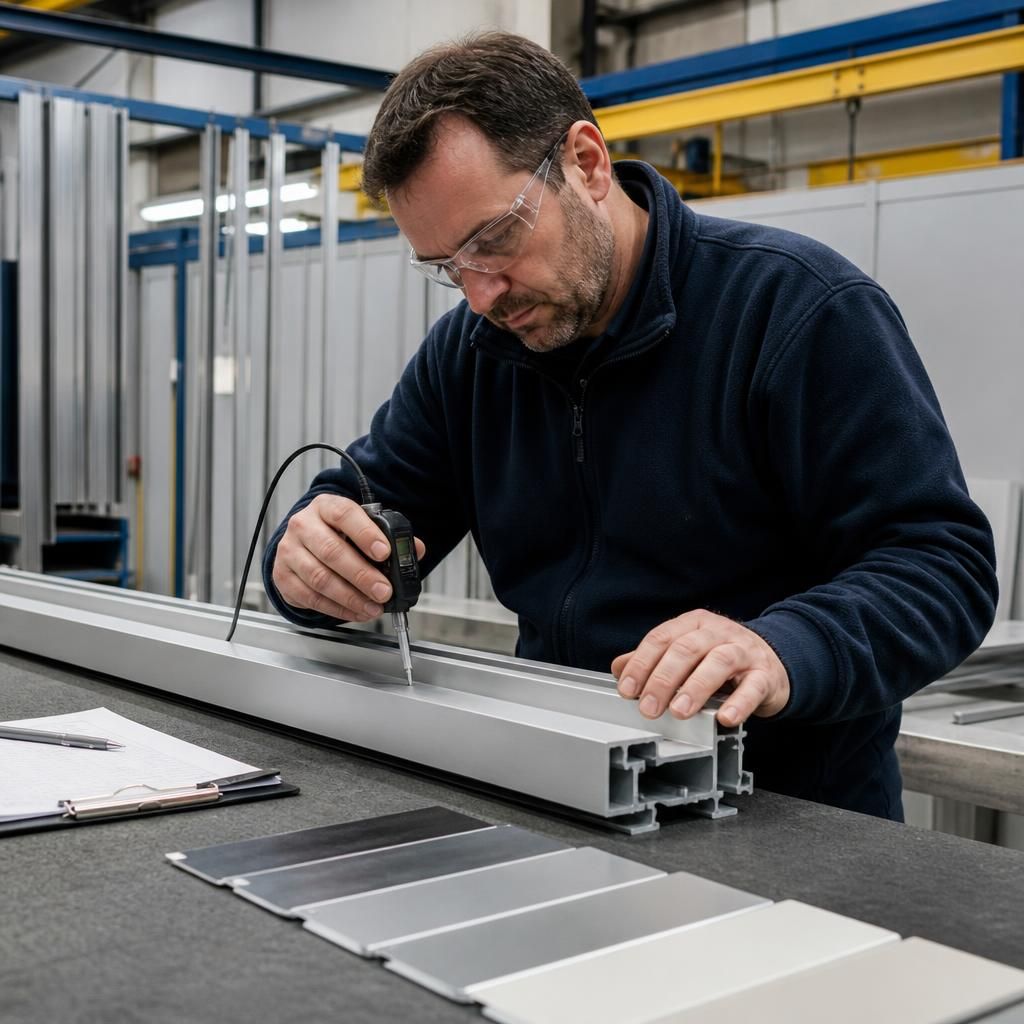
Make film build a controlled requirement. Instead of specifying only a nominal coating thickness, identify the acceptable range and the areas where measurement is required. Readings may vary on corners, edges, recessed sections and areas close to rack contacts. The specification should therefore explain how measurements are to be taken and how isolated high or low readings will be treated.
Excessive film build can affect dimensions, fit, masking removal and the appearance of edges. Insufficient build may leave the surface below the intended performance requirement. Where profiles have tight assembly tolerances, include the coating allowance in the design review and confirm that the selected application method can achieve the required consistency across the section.
Consider profile design and coating access. Deep recesses, narrow channels, enclosed sections and closely spaced fins can be difficult to coat evenly. The design should allow suitable access for cleaning, powder application and inspection. Where a profile is supplied as a long extrusion, specify acceptable rack marks and identify where suspension points may be placed. If both sides must remain visually consistent, confirm how the profile will be supported and presented during processing.
Long or unusually shaped profiles may also need requirements for straightness, bow, twist and protection against handling damage after coating. These are not coating defects in themselves, but they can become significant when the finished sections are assembled into frames or linear structures.
Specify curing and process records where necessary. Powder must be cured according to the coating manufacturer’s requirements, with the metal temperature and time considered rather than relying solely on the oven air temperature. A project specification may require records showing that the agreed process window was maintained. This is particularly relevant where the profiles vary considerably in wall thickness, because different sections may heat at different rates.
For repeat production, request traceability between the aluminium batch, powder batch, processing run and inspection results. This makes it easier to investigate a variation and helps maintain consistency when profiles are coated in separate lots. It is also useful to state how non-conforming parts are segregated, assessed and either reprocessed or rejected.
Agree inspection and acceptance criteria in advance. A practical inspection plan can include:
- visual examination of agreed visible surfaces;
- verification of colour, gloss and texture against the approved reference;
- coating thickness measurements at representative locations;
- checks on adhesion or other project-specific performance properties;
- confirmation that masked areas, holes and threads remain usable; and
- inspection for scratches, runs, pinholes, contamination, bare areas and unacceptable rack marks.
The specification should identify who carries out each check, what equipment or method is used, and how results are recorded. It should also distinguish between defects that require rejection and minor variations that are acceptable in non-visible areas.
Include handling, packaging and installation requirements. A correctly coated profile can still be damaged by stacking, strapping, moisture trapped between parts or contact with abrasive materials. State whether separators are required, how profiles should be protected during transport, and whether protective film is permitted or required. If the coating will be drilled, cut or fastened on site, clarify how exposed edges are to be treated and whether any touch-up method is acceptable.
Finally, review the specification with the aluminium supplier, designer, coater and installer before production. The most reliable document combines the profile drawings, surface classifications, finish reference, masking plan, dimensional tolerances, inspection method and packaging instructions. This removes assumptions and gives every party the same basis for assessing the finished aluminium profiles.
The powder coating material should be selected from documented performance requirements rather than colour or gloss alone. Review the product data for suitability on aluminium, required pretreatment, curing conditions, expected exposure and resistance to the chemicals or cleaning methods used in service. A coating intended for a sheltered internal component may not be suitable for profiles exposed to weather, industrial contaminants or frequent washing.
Where performance is critical, the specification should identify the evidence required before production, such as relevant test results, product data and confirmation that the proposed coating system is compatible with the agreed pretreatment. This helps ensure that the powder, preparation process and curing cycle are treated as one system rather than as separate decisions.
Discuss Your Powder Coating Specification for Aluminium Profiles
Discuss your aluminium profile drawings, service environment and required finish with the powder-coating team before production. This allows the proposed specification, preparation method and inspection requirements to be reviewed against the profile’s intended use.