

Can powder coating be applied to intricate aluminium designs and shapes?
Yes, powder coating can be applied to intricate aluminium designs and shapes, provided the component is correctly prepared and the coating process is planned around its geometry. Recesses, narrow sections, sharp edges and enclosed areas may require suitable racking, masking and spray techniques to achieve consistent coverage and curing.
Powder coating is suitable for intricate aluminium components when the part’s geometry, surface condition and coating requirements are assessed together. The most important considerations are electrostatic powder distribution, reliable electrical earthing, access to all required surfaces, control of dimensional tolerances and a curing cycle that suits the component.
Intricate shapes can create areas where powder is less readily deposited. Deep internal corners, closely spaced features and narrow cavities can produce a Faraday cage effect, in which the electrical field encourages powder to collect on more exposed surfaces instead of reaching the most enclosed areas. Coating technicians can manage this by changing the spray angle, gun settings, powder flow and application sequence. In some cases, the design may need to be coated in a particular orientation or processed more than once from different directions.
Surface preparation is particularly important on aluminium because its oxide layer, machining lubricants, casting residues and handling contamination can interfere with adhesion. Preparation normally involves cleaning and a suitable chemical pre-treatment, followed by thorough rinsing and drying. Welded, cast or heavily machined sections may need additional assessment because weld zones, porous castings and residues trapped in recesses can affect the final appearance. Cast aluminium can also release gas during heating, potentially causing pinholes or blistering if its condition has not been considered before coating.
The component must be supported in a way that allows powder application while maintaining a dependable earth connection. Contact points are usually positioned on areas that are hidden, non-functional or suitable for later removal of a small coating mark. The hanging position also matters: it should reduce the risk of powder collecting excessively on lower edges, ledges or internal pockets. Hollow or enclosed sections may require suitable drainage and venting provisions so that cleaning fluids do not remain trapped and heated air or gases can escape safely.
Masking is used where coating is not wanted, including threads, precision bores, electrical contact faces, bearing seats, mating surfaces and drainage openings. Intricate parts often need purpose-made plugs, caps or other masking methods rather than simple flat coverings. These details should be identified on a drawing or sample before processing, particularly where the component must assemble with another part after coating.
Coating thickness can affect fit even when the change appears small. Threads, sliding clearances, slots, hinges and interlocking features should therefore be checked against the intended finished dimensions rather than only the uncoated dimensions. A coating specialist can use the component drawing, alloy information and functional tolerances to identify areas that need masking, additional clearance or a different application approach.
Curing must be based on the temperature reached by the aluminium component, not simply the temperature displayed by the oven. Thin projections and heavy sections may heat at different rates, while complex assemblies can contain areas that are shielded from the intended heat flow. The selected powder’s curing requirements must be compatible with the aluminium and with any assembled materials, seals or inserts that remain in place.
Appearance should also be agreed before production. Intricate profiles can show natural differences in powder build between exposed faces, internal corners and edges, especially with smooth or low-gloss finishes. A textured finish may be more forgiving of minor surface variation, but it does not remove the need for proper preparation and coverage. Where colour and appearance are critical, an approved sample or representative trial component can help establish expectations for visible faces, recesses and masked areas.
Before coating a complex aluminium design, the following information is useful:
- a drawing or clear photographs showing recesses, cavities, threads and functional surfaces;
- the aluminium alloy and whether the part is cast, extruded, machined, welded or assembled;
- areas requiring masking or specific coating exclusion;
- dimensional, adhesion, corrosion-resistance and appearance requirements; and
- any restrictions caused by seals, inserts, plastics or other heat-sensitive components.
Inspection after coating should consider more than the visible outer face. Coverage in recessed areas, coating build on functional surfaces, adhesion, colour consistency and evidence of pinholing or contamination may all be relevant. For manufacturers and fabricators, discussing these points before production helps determine whether the existing design is ready for powder coating or would benefit from minor changes to improve access, drainage, earthing or assembly fit.
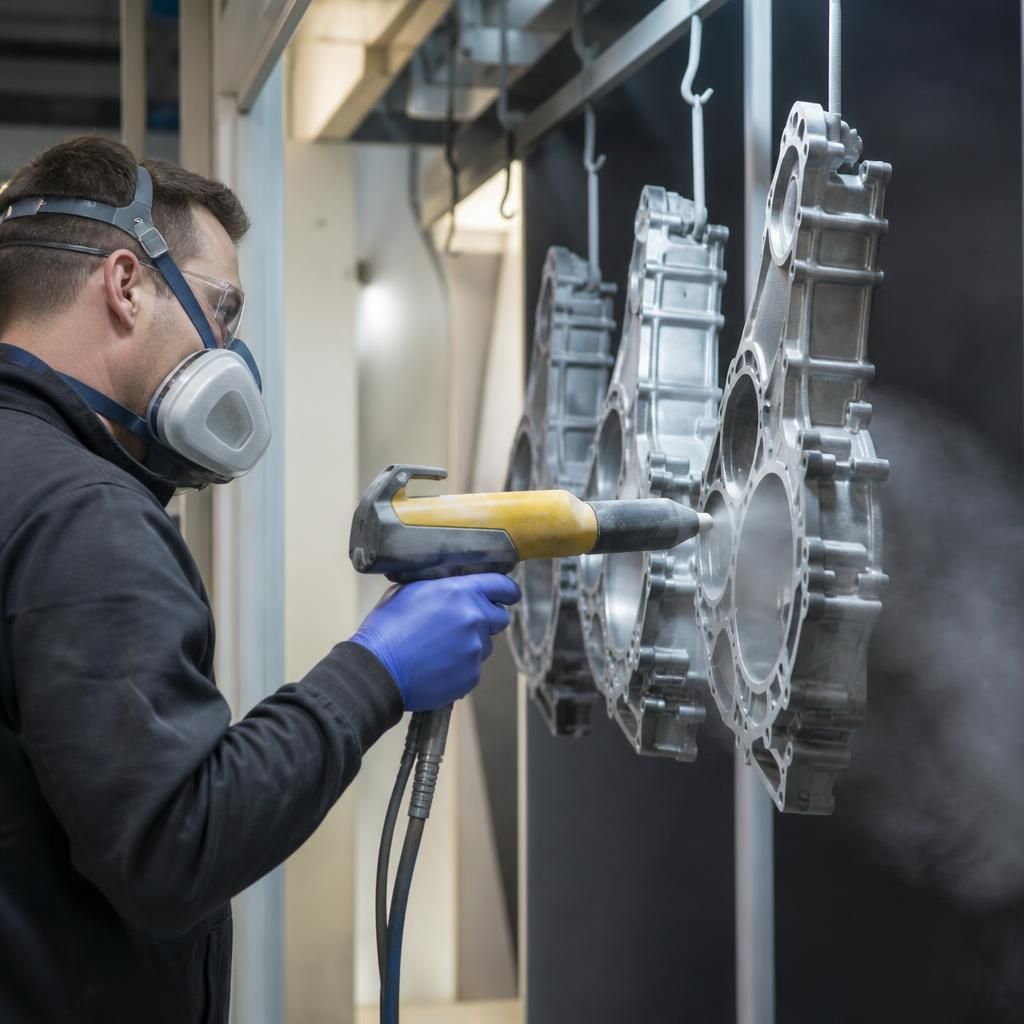
Powder coating relies on direct spray access, so an intricate aluminium shape is not automatically suitable for coating on every internal surface. Open recesses and stepped profiles can usually be reached by adjusting the spray direction, but blind cavities, sealed channels and fully enclosed sections may prevent powder from reaching the required area consistently.
Where internal coverage is essential, the design should provide suitable access for application and inspection. This may involve incorporating openings, separating connected sections into individual components or specifying coating only on the externally accessible faces. Defining which surfaces require protection helps establish whether the existing design is suitable for powder coating before production begins.
Discuss your intricate aluminium design with a coating specialist
Discuss your intricate aluminium design with a coating specialist before production to confirm its suitability and identify any coating or assembly considerations. A drawing or representative sample can help establish the appropriate approach for your component.