

What impact does the type of finish have on aluminium powder coating prices?
The finish type affects aluminium powder coating prices through the powder formulation, surface texture, gloss level and application requirements. Standard smooth finishes are generally more straightforward to process, while textured, specialist or highly durable finishes may cost more because they can require different materials, preparation or quality-control checks.
The type of finish affects aluminium powder coating prices by changing the powder specification, the number of coating stages, the level of process control and the amount of inspection required. A basic single-layer finish is usually easier to price than a finish involving special effects, multiple layers, tight colour tolerances or enhanced resistance to particular operating conditions.
Gloss level and surface appearance
Gloss is one part of the finish specification that can affect cost. Standard gloss levels are commonly easier to process because the appearance is more forgiving of minor variations. Very low-gloss, satin or highly reflective finishes can require closer control of film thickness, curing and cleanliness because small surface defects or inconsistencies are more visible.
This does not mean that a low-gloss finish will always be more expensive. The price depends on the powder selected, the condition and geometry of the aluminium, the quantity required and whether the chosen finish is a standard stock option or a special order. The important point is that the visual specification can affect both material selection and quality-control requirements.
Textured, hammertone and wrinkle finishes
Textured finishes create a deliberately uneven surface, which can alter how the coating flows over corners, recesses and other features. The coater must confirm that the specified texture is suitable for the component and that it will produce the required appearance across the batch. Intricate profiles may also need additional attention because texture can make coverage and inspection more difficult.
These finishes can sometimes disguise minor substrate marks more effectively than a smooth finish, but they should not be used to compensate for poor preparation. Deep scratches, oil contamination, corrosion or unsuitable repairs may still show through or affect adhesion. Any extra preparation needed to achieve the required appearance is a separate factor in the quotation.
Metallic and special-effect finishes
Metallic, pearlescent and other special-effect powders can involve tighter application controls than a conventional solid colour. The visual result may be influenced by spraying technique, film thickness, component orientation and how the powder particles distribute across the surface. Matching the appearance between separate items or production runs may therefore require more controlled processing.
Where a consistent appearance is important, the quotation should specify whether all parts are to be coated in one batch, whether an approved sample is required and how colour or effect variation will be assessed. These requirements can influence cost even when the parts themselves are unchanged.
Single-coat and multi-coat finishes
Some specifications can be achieved with one powder layer, while others use a primer, base coat, top coat or clear coat. Adding a layer increases material use and introduces another application and curing stage. It may also require more masking, handling and inspection, particularly where one area must remain uncoated or different areas require different finishes.
A multi-coat system may be selected to meet a performance requirement rather than for appearance alone. For example, the specification might call for improved resistance to weathering, chemicals, abrasion or corrosion. The relevant comparison is then not simply the coating price per component, but the cost of achieving the required service performance with the correct system.
Durability and performance specifications
Two finishes that look similar can have different prices if they are designed for different environments. A coating for an internal component may not require the same formulation or testing as one exposed to moisture, sunlight, industrial contamination or repeated handling. Aluminium parts used outdoors or in demanding applications may therefore need a finish selected for its performance characteristics as well as its colour and gloss.
The specification should identify the environment, expected wear and appearance requirements before a price is compared. Choosing a cheaper finish that is unsuitable for the application can create additional costs through premature recoating, replacement or remedial preparation.
What to include when requesting a comparison
- the exact colour reference and whether it is a standard or special colour;
- the required gloss level and surface texture;
- whether the finish is solid, metallic, pearlescent or another special effect;
- whether a primer, clear coat or other additional layer is required;
- the expected indoor or outdoor exposure and any resistance requirements;
- whether the parts must match an existing coated item; and
- any areas that must be masked, left bare or finished differently.
A coating quotation should therefore be assessed against the complete finish specification, not just the colour name. Providing a clear sample or written requirement helps the powder coater determine the appropriate system, identify any additional processing and compare like-for-like options. A Midlands specialist can then assess the aluminium components, proposed finish and batch requirements before confirming the relevant price.
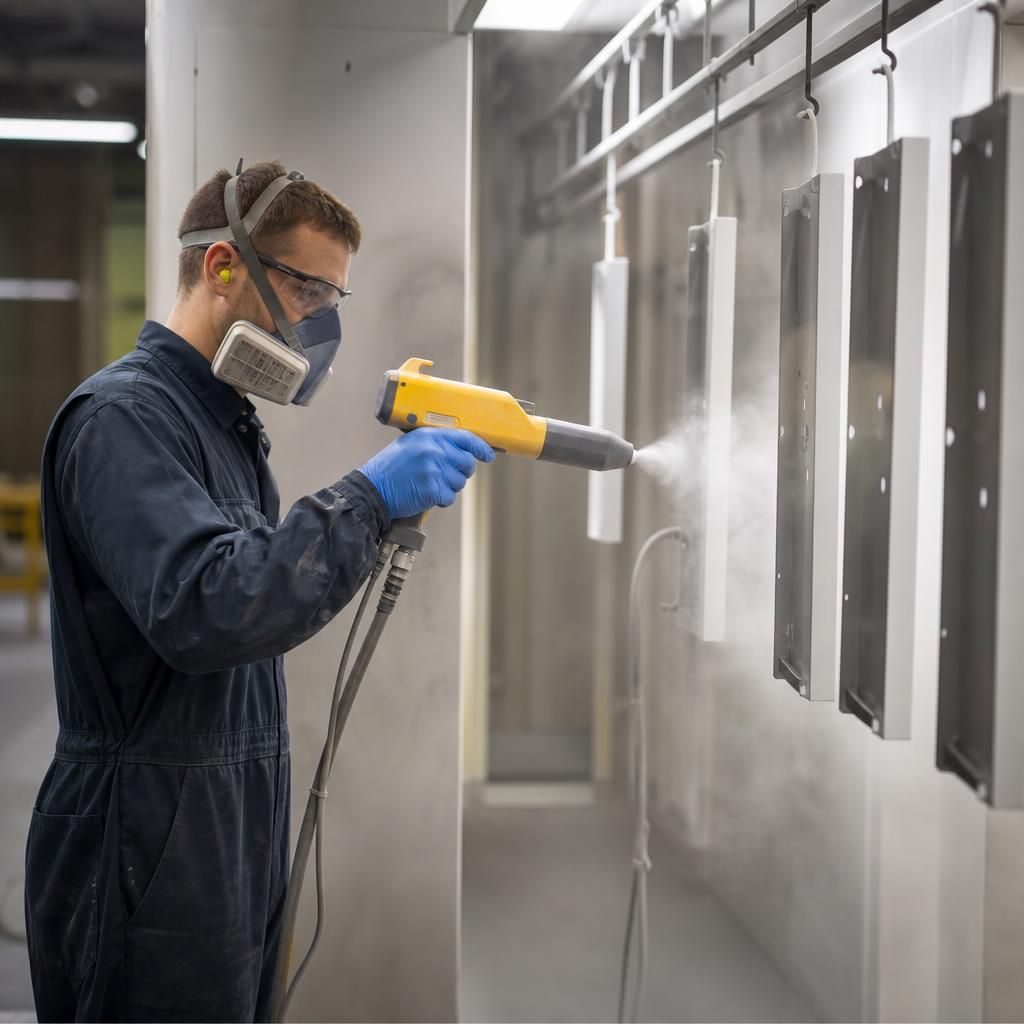
Finish type can affect the amount of powder used and how efficiently it can be applied. Textured or special-effect finishes may require a carefully controlled film build to achieve an even appearance, while certain powders may need separate handling rather than being combined with other materials. These factors can increase material usage and processing costs even when the aluminium components are unchanged.
For this reason, an aluminium powder coating quotation should distinguish between the price of the powder itself and the application requirements associated with the chosen finish. Confirming the finish specification before production helps the coater assess likely material consumption, equipment settings and any handling controls, giving a more accurate comparison between alternative finishes.
Discuss your aluminium finish requirements
Discuss your aluminium finish requirements with the coating team, including the intended use, appearance specification and any performance criteria. Providing these details allows the proposed finish and its processing requirements to be assessed accurately for your project.