

How does the powder coating process for aluminium frames differ for specialised applications?
For specialised applications, powder coating aluminium frames involves adapting the preparation, masking, coating specification and curing process to the frame’s operating environment and performance requirements. The coating may need to provide particular resistance to chemicals, abrasion, weathering or corrosion, with process controls and inspection suited to the intended use.
Powder coating aluminium frames for specialised applications involves specifying the complete coating system around the frame’s use, not simply applying a standard colour. The aluminium alloy, frame geometry, required tolerances, exposure conditions, cleaning regime and expected mechanical loading all influence the suitable preparation and finish. A specification-led approach is particularly important where the frame must remain dimensionally accurate, resist aggressive conditions or meet a particular functional requirement.
The substrate and frame design are assessed first. Aluminium can include different alloys, extrusions, cast sections, welds and machined areas, each of which may respond differently during preparation and heating. Weld zones, sharp edges, recessed corners and enclosed sections can also affect coating coverage. Where the frame incorporates threads, sliding interfaces, hinges, seals or close-fitting components, the expected coating build must be allowed for so that assembly and operation are not restricted.
Specialised applications require a coating chemistry suited to the actual exposure. A finish selected for an internal structural frame may not be appropriate for a frame exposed to ultraviolet light, moisture, industrial contaminants or frequent cleaning. Similarly, a frame subject to repeated impact or sliding contact may need a different performance balance from one where colour retention and appearance are the main priorities. Nylon and other specialist powder systems can be considered where a tougher, lower-friction or more chemically resistant surface is required, subject to compatibility with the aluminium and the operating conditions.
Some applications also require the coating to support a specific function:
- High-wear components: the specification should consider abrasion, impact, friction and contact with other materials.
- Frames used around chemicals or regular wash-down: resistance to the particular chemicals, concentrations, temperatures and cleaning methods should be checked rather than assumed from the coating name alone.
- Electrical or earthing-related assemblies: areas intended to make electrical contact may need precise masking or a defined uncoated zone, because powder coating is electrically insulating.
- Hygienic or easily cleaned equipment: the finish should be assessed for smoothness, cleanability, chemical exposure and the requirements of the surrounding process.
- Frames with close mechanical tolerances: coating thickness, edge build and masking accuracy become part of the engineering specification.
Preparation is also adapted to the aluminium rather than treated as a universal step. The surface must be free from oil, dirt, oxidation and residues that could interfere with adhesion. Weld spatter, sharp burrs and fabrication marks may need attention before coating, while porous or contaminated areas can require particular care to reduce the risk of pinholes, blistering or other defects. The chosen pretreatment should be compatible with the aluminium, the powder system and the intended environment.
Masking and racking are more precise on specialist work. Contact points, bores, threads, hinge locations, gasket seats, machined faces and identification surfaces may need to remain free of powder. Racking must provide reliable electrical contact for electrostatic application without marking visible areas or preventing access to recessed sections. Frame orientation can affect how powder reaches internal corners and whether excess material collects along lower edges, so the way the component is supported is part of the process design.
Curing must be based on the metal temperature required by the powder manufacturer, not simply on the oven air temperature. Aluminium transfers heat differently from heavier steel components, while thick joints, brackets and mixed-section frames may heat at different rates. Assembled frames may also contain seals, adhesives, bearings or other parts that cannot tolerate the curing cycle. These components may need to be removed before coating, protected where appropriate or considered when selecting the system.
For specialised work, the technical brief should establish:
- the aluminium alloy, component construction and areas that must remain uncoated;
- the service environment, including outdoor exposure, chemicals, moisture, abrasion and temperature;
- dimensional limits for mating faces, threads, holes, sliding parts and seals;
- the required appearance, such as colour, gloss, texture and acceptable visual variation;
- any electrical, hygienic, friction, cleanability or regulatory requirements; and
- the inspection and testing appropriate to the finished frame.
Inspection may include checking film thickness at representative locations, visual coverage, adhesion, cure and the condition of masked areas. The most useful checks depend on the application: a decorative architectural frame may place greater emphasis on colour consistency and appearance, while an industrial assembly may require closer attention to adhesion, edge coverage, dimensional fit or resistance to a specified cleaning or operating condition.
Consequently, the difference between standard and specialised powder coating for aluminium frames is mainly the level of engineering control around the coating system. The frame should be assessed as a finished component, with its material, geometry, assembly requirements and working environment considered together. Providing those details before processing allows the coating specification and process controls to be matched to the intended use rather than selected on appearance alone.
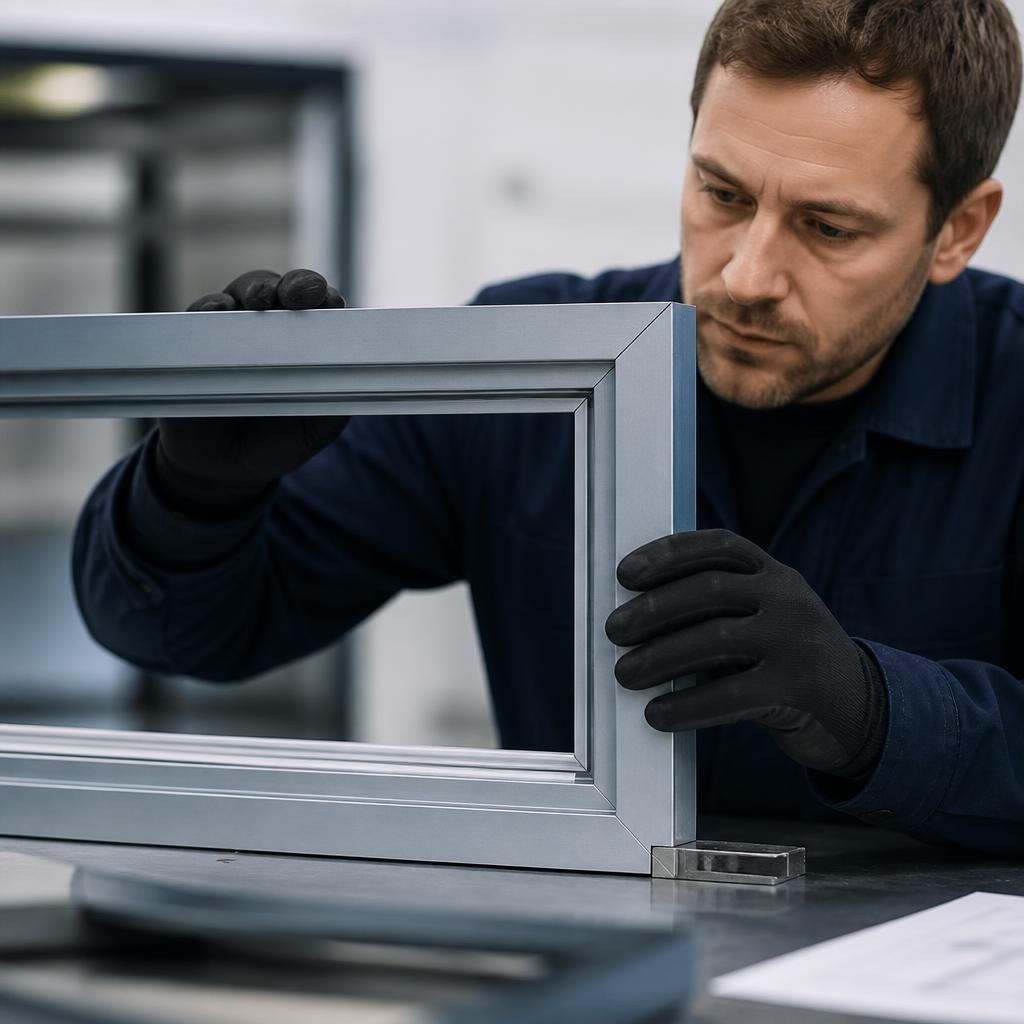
For a specialised aluminium frame, a trial coating on a representative section or sample component can confirm that the proposed finish is suitable before production processing begins. This is useful where the frame includes unusual profiles, tight mating areas, textured surfaces or materials that may react differently during preparation and curing.
The trial should be assessed for appearance, coverage, adhesion, fit and compatibility with adjoining components. Any changes to masking, racking, powder selection or curing can then be agreed before the complete batch is processed, reducing the risk of discovering an application-specific issue only after assembly.
Discuss your specialised aluminium frame coating requirements
Discuss your aluminium frame’s operating conditions, dimensional requirements and finish specification with the powder-coating team to establish a suitable process. Provide drawings or a representative sample where available so the proposed coating can be assessed before production.