

What role does chemical pretreatment play in preparing aluminium for powder coating?
Chemical pretreatment cleans aluminium, removes contaminants and modifies the surface so powder coating can bond more effectively. It also helps improve corrosion resistance and supports a more consistent, durable finish.
Chemical pretreatment is a controlled sequence of cleaning, deoxidising and surface-conditioning stages that prepares aluminium to receive powder coating. Its role is not simply to wash the component; it manages the chemically active aluminium surface, removes residues that can interfere with coating performance and creates a more suitable base for the powder film.
Aluminium quickly develops a thin oxide layer when exposed to air. This layer is protective in some environments, but it can vary in composition and may include hydrated oxide, handling residue or contamination from fabrication. Welding, machining, forming and storage can also leave behind oils, lubricants, marking materials, fingerprints and embedded particles. Pretreatment is selected to deal with these conditions without attacking the aluminium excessively.
A typical chemical route may include the following stages:
- Degreasing and cleaning: alkaline or mildly acidic cleaners break down oils, grease, workshop residue and other surface contamination.
- Rinsing: clean water rinses remove spent chemistry and loosened contamination before the next stage.
- Deoxidising or desmutting: an acidic treatment can remove the natural oxide layer and residues left by alloying elements or previous alkaline cleaning.
- Conversion treatment: a carefully controlled conversion coating changes the surface chemistry and provides a receptive interface for the powder coating.
- Final rinsing and drying: these stages remove remaining process chemicals and moisture before the component enters the coating process.
The deoxidising stage is particularly important where aluminium has been machined, welded or exposed to weathering. Different alloys can leave different residues after cleaning, sometimes referred to as smut. If this material remains, it may affect the appearance of the finish or create a weak interface beneath the coating. The treatment therefore needs to suit the alloy, its condition and the type of fabrication it has undergone.
Conversion coatings are used to condition the surface at a microscopic level. They can improve the interaction between aluminium and the powder coating and provide additional protection at areas where the coating may be thinner, damaged or interrupted. The chemistry may be based on chromate or on chromium-free alternatives, depending on the specification, regulatory requirements and the intended application. The correct treatment is determined by the component, the required performance and the coating system rather than by aluminium alone.
Process control is as important as the choice of chemical. Concentration, contact time, temperature, water quality and the condition of each bath all affect the result. Insufficient treatment can leave oxide or contamination in place, while excessive exposure can etch the metal, alter dimensions or create an uneven surface. Rinsing must also be effective: residues carried into later stages can cause staining, poor coating appearance, blistering or localised adhesion problems.
Drying completes the preparation before powder is applied. Aluminium must be free from visible moisture, trapped water and chemical residue, particularly around joints, recesses, drilled holes and folded sections. These areas can retain liquid after rinsing and later release it during heating, leading to surface defects or corrosion beneath the coating.
Chemical pretreatment is often used alongside mechanical preparation rather than viewed as a direct substitute for it. Blasting may be appropriate for removing heavier scale, existing coatings or physical contamination, whereas chemical treatment can condition complex shapes and reach areas that are difficult to prepare mechanically. The chosen sequence should account for the aluminium grade, component geometry, existing surface condition, expected exposure and powder coating specification.
For industrial aluminium components, a suitable pretreatment specification should identify the cleaning method, conversion chemistry, rinsing requirements, drying conditions and inspection criteria. Visual checks can identify staining, residue, water marks and incomplete coverage, while process records help confirm that the treatment has remained within its intended operating range. This disciplined approach reduces variation between batches and gives the powder coating a properly prepared substrate on which to form its finish.
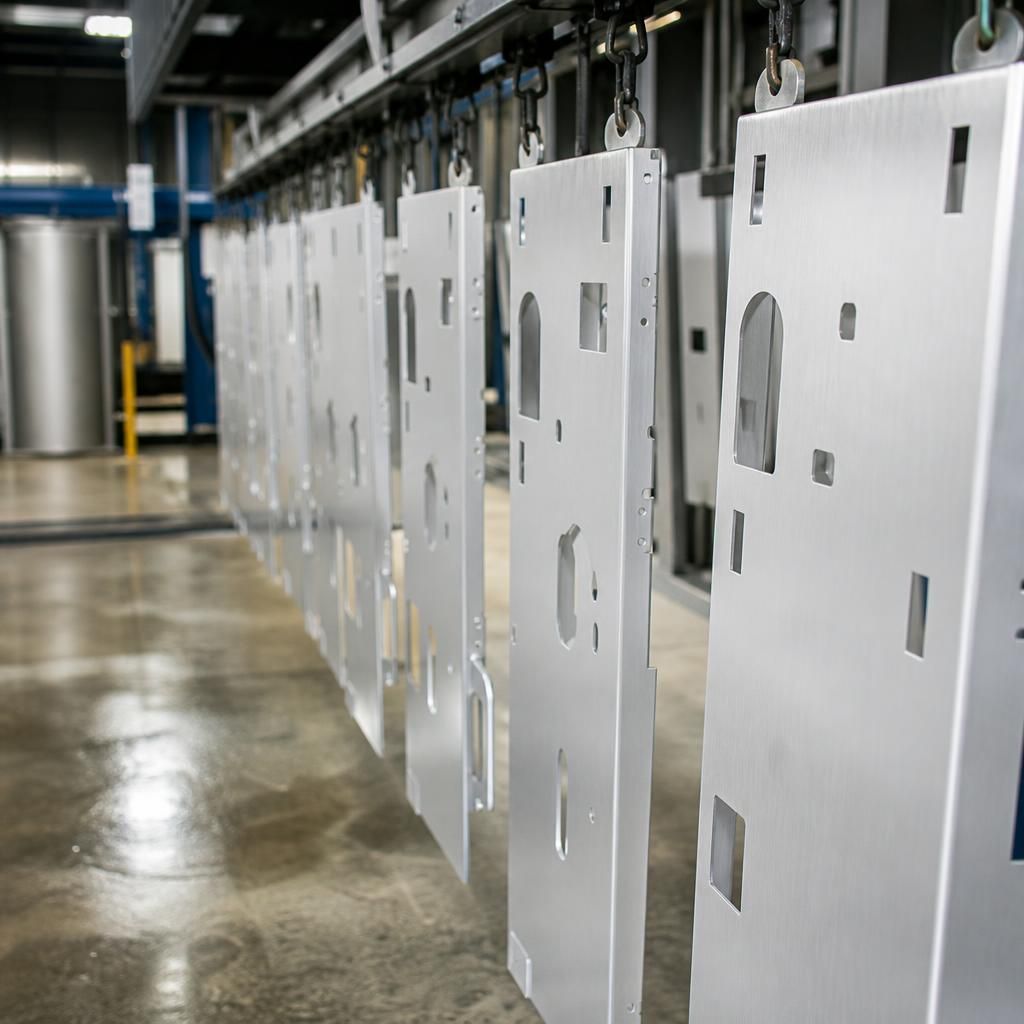
Chemical pretreatment prepares the aluminium surface, but it is only one part of the coating system. The powder must still be applied at the specified film thickness and cured according to the coating manufacturer’s requirements. Incorrect curing, trapped moisture or contamination introduced after pretreatment can undermine the finished coating even when the aluminium was prepared correctly.
This is why the treated component should move into coating without unnecessary handling or exposure to dust, moisture and fingerprints. Particular care is needed with machined faces, joints, recesses and assembled sections, where contamination can be introduced or retained after cleaning. Pretreatment provides the correct chemical foundation; controlled handling and application preserve that condition until the powder film is formed.