

How does the integration of automated powder coating lines impact turnaround times and production schedules for repair operations?
Integrating an automated powder coating line can shorten repair turnaround by reducing manual handling and moving components through preparation, coating and curing in a more consistent sequence. It also makes production schedules easier to plan, although batch size, coating specification, colour changes and repair complexity still affect the overall timeline.
Automated powder coating lines affect repair turnaround by making the movement, processing and curing of repeatable component batches more predictable. Their main scheduling benefit is not simply faster conveyor movement; it is the ability to organise work around defined stages, line capacity and changeover requirements. This helps repair operations establish more reliable production plans, provided that incoming work is suitable for the line and preparation requirements are controlled.
Throughput becomes easier to assess. A conveyor line creates a measurable route through loading, surface preparation, powder application and curing. Supervisors can therefore plan work according to available hanging space, oven capacity, coating requirements and the number of components in each repair batch. This is more precise than scheduling solely by labour availability, particularly where several batches must be processed during the same production period.
However, the conveyor does not remove every constraint. The slowest or most heavily loaded stage can determine the practical output of the whole line. Preparation may take longer than coating, complex parts may require additional masking, and oven capacity may restrict the number or size of components that can be processed together. A sound schedule should allow for these limitations rather than assuming that the line’s nominal speed represents the repair operation’s complete turnaround time.
Repair work needs careful prioritisation. Unlike standard production, repair orders can arrive with different levels of damage, preparation requirements and completion priorities. A line schedule can group compatible work, such as components requiring the same powder type or finish, while reserving capacity for items that need additional inspection or preparation. This reduces disruption to planned batches and makes it easier to identify where an urgent or technically complex repair may affect other work in the queue.
Line loading also influences turnaround. Parts must be positioned securely and spaced appropriately so that all surfaces receive the required coating and can pass through the curing stage correctly. Poor loading decisions can create rework, require parts to be processed again or leave unused hanging capacity. Standard loading instructions and checks before the line starts help the planned sequence reflect the work that can actually be completed.
Changeovers are a significant scheduling consideration. Switching between colours, powder types or coating specifications can require cleaning, inspection and adjustments to the application equipment. If every repair is introduced individually, these interruptions can reduce productive line time. Grouping compatible jobs into sensible production runs can reduce unnecessary changes, but this must be balanced against the need to avoid delaying high-priority repairs. The best sequence is usually based on both technical compatibility and the required completion order.
Automated lines can also make work-in-progress more visible. Each batch has a defined position within the process, allowing operators to identify whether an item is awaiting preparation, coating, curing, inspection or dispatch. This supports more accurate communication between production, quality control and the customer-facing team. It also helps reveal recurring causes of delay, such as incomplete repair information, unsuitable masking or parts arriving without the required preparation.
Quality control has a direct effect on turnaround. A consistent line process can reduce variation between components, but inspection remains necessary after curing. Checks may include coverage, finish, adhesion requirements where specified and evidence of damage or contamination. Identifying defects at the appropriate stage is important: a problem found before a batch leaves the process can often be managed within the existing schedule, whereas late discovery may require additional preparation, recoating and rebooking of line capacity.
Maintenance must be included in the production plan rather than treated as an unexpected interruption. Conveyor components, application equipment, filters, booth areas and curing equipment all require inspection and servicing. Planned maintenance may temporarily reduce available capacity, but it allows schedules to account for the interruption and helps avoid unplanned stoppages that can leave parts part-processed or cause work to accumulate between stages.
For repair operations, the most useful scheduling approach combines the following controls:
- Classify work by coating specification, component size, preparation requirement and priority.
- Confirm that parts can be loaded, coated and cured safely before assigning them to the automated route.
- Sequence compatible batches to manage colour and powder changes efficiently.
- Allow capacity for inspection, masking, rework and non-standard repairs.
- Track work at each process stage so bottlenecks are identified before they affect downstream activities.
- Include planned cleaning, servicing and line adjustments in the production calendar.
Automation is therefore most effective when repair work has enough repeatability to benefit from a defined process. A small number of unique parts, extensive hand preparation or frequent specification changes may be better handled through a mixed arrangement in which suitable batches use the conveyor and exceptional items follow a more flexible route. This avoids forcing irregular repairs into a system designed for repeatable movement.
Overall, an automated powder coating line can make repair schedules more structured, visible and consistent. The resulting turnaround depends on the complete process, including preparation, loading, changeovers, curing, inspection, maintenance and the handling of exceptions. When those factors are measured and built into the plan, the line supports dependable production control rather than merely increasing conveyor speed.
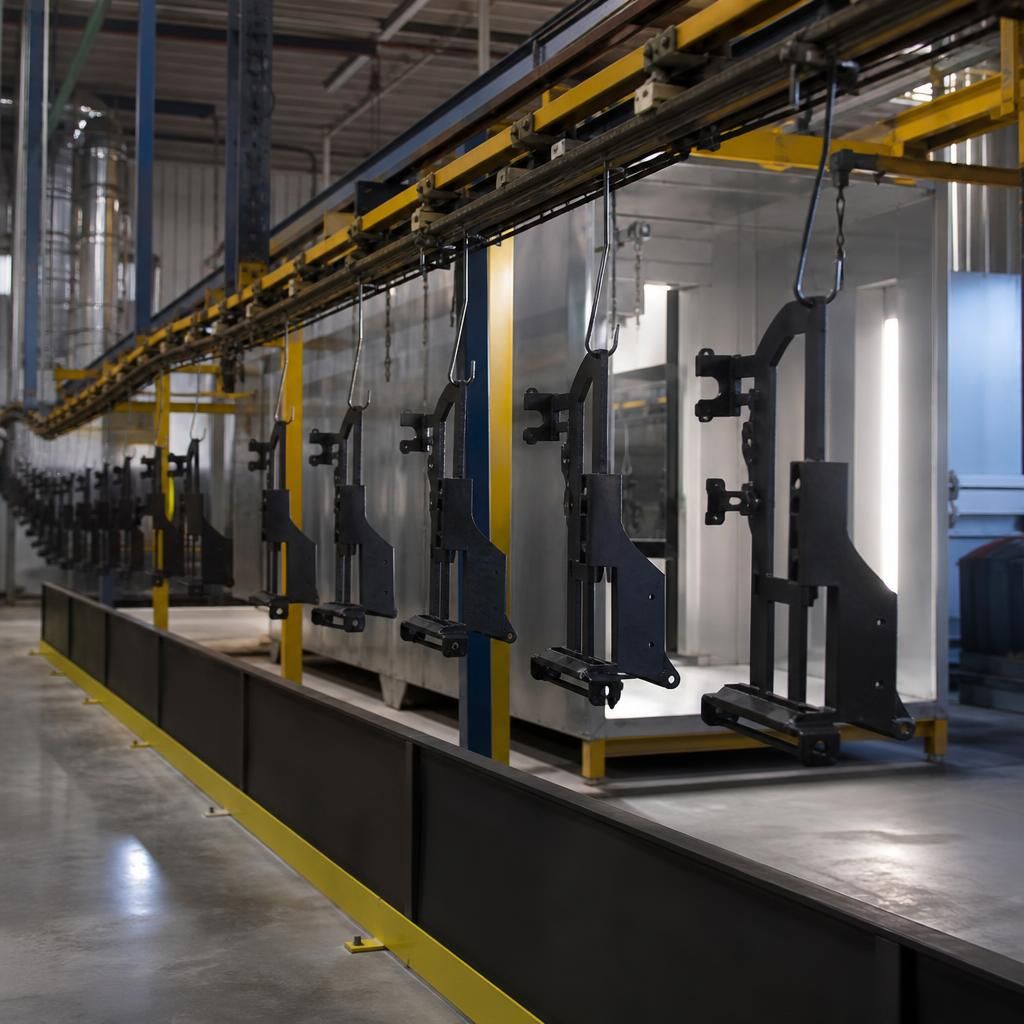
Automated powder coating lines improve repair scheduling when controlled staging points are used between major process stages. These buffers separate preparation, coating, curing and inspection sufficiently to absorb short interruptions without immediately stopping the whole operation, while still keeping work moving towards completion.
Buffer capacity should be managed rather than treated as spare storage. If it is too limited, a delay in preparation can leave the coating stage without work, while a delay after coating can restrict oven or conveyor capacity. If it is excessive, unfinished repairs may accumulate and make the schedule appear busier than the available inspection or dispatch capacity allows. Clear rules for what may enter each staging area help supervisors protect priority work, prevent mix-ups between repair batches and identify delays before they affect promised completion dates.