

How does electrostatic recoating compare to traditional liquid coating methods for metal parts?
Electrostatic recoating applies electrically charged powder to a grounded metal part before heat-curing it, producing a durable, even finish with little overspray. Traditional liquid coating uses a wet paint applied by spray, brush or other methods, making it more suitable where air-drying, fine colour matching or coating heat-sensitive components is required.
Electrostatic recoating is generally the stronger option for bare or previously coated metal parts that can tolerate an oven-curing cycle, while traditional liquid coating remains more adaptable for heat-sensitive components, local repairs and highly specific colour or finish requirements. The better method depends on the part’s substrate, condition, geometry, required performance and production process rather than on the coating type alone.
Durability and protection
Powder coatings usually produce a hard, continuous film with good resistance to abrasion, impact, moisture and many commonly encountered chemicals. This makes them suitable for industrial components, fabricated metalwork, equipment housings and parts exposed to regular handling or demanding service conditions. The final performance still depends on correct preparation, coating selection, film thickness and curing.
Liquid coatings can also provide durable protection, particularly when a suitable primer and topcoat system is specified. They offer a wide range of resin and formulation options for corrosion protection, flexibility, chemical resistance and specialist operating environments. However, performance can be more dependent on application conditions, solvent or water evaporation, and the compatibility of each layer in the coating system.
Surface preparation and recoating condition
Neither method can compensate for poor preparation. Oil, grease, corrosion, scale, moisture and loose existing coating must be removed before recoating. The existing finish should also be assessed for adhesion and compatibility. If it is unstable, heavily contaminated or damaged beneath the visible surface, partial recoating may not provide a reliable result and more extensive removal may be required.
Powder recoating often suits components that can be thoroughly cleaned and processed as a complete part. Liquid coating can be more convenient where only a small area needs attention, where dismantling is impractical, or where the repair must blend into an existing finish without placing the entire component through an oven.
Application and coverage
Electrostatic powder application is well suited to repeatable production work because the application equipment can deliver a consistent coating across batches when settings, preparation and curing are controlled. It can be particularly effective on accessible metal surfaces and components with a straightforward shape.
Liquid coating provides greater flexibility for manual application and for parts with awkward details, internal areas or mixed materials. A skilled applicator can adjust spray technique, use different products for separate areas and build a multi-layer system where required. Neither method automatically guarantees complete coverage: recesses, sharp edges, corners, welds and shielded areas require careful process control.
Finish, colour and film requirements
Both coating families can provide smooth, textured, matt, satin or gloss finishes, although the available choices depend on the specified product. Liquid systems are often preferred where very close colour matching, subtle visual adjustment or a particular wet-paint appearance is important. They can also be useful when a part needs a thin, flexible or layered coating system.
Powder is often selected where a robust, uniform finish is required across a production batch. It is important to specify the required colour standard, gloss level, texture and coating thickness before work begins. A change in powder type, curing conditions or substrate temperature can affect the final appearance.
Heat and component compatibility
The principal limitation of powder recoating is the curing temperature required by the selected system. The complete part must be able to withstand that temperature without distortion, loss of mechanical properties, damage to seals, contamination from lubricants or harm to electrical and non-metallic components. Assemblies may therefore need to be stripped before treatment.
Liquid coating is often the practical choice for heat-sensitive metal parts, assembled equipment and components containing materials that cannot enter a curing oven. Some liquid products require controlled drying or baking, but others are formulated for ambient curing. The product data sheet and the component manufacturer’s limits should be checked before selecting the process.
Environmental and workplace considerations
Powder systems do not rely on the same solvent evaporation stage as many conventional liquid paints, which can simplify certain handling and extraction requirements. Overspray may also be collected and managed as part of a controlled process, subject to the coating material and equipment used. Powder application still requires suitable ventilation, housekeeping, personal protective equipment and control of airborne particles.
Liquid coatings may contain water or organic solvents, depending on the formulation. Their use can therefore involve solvent vapour control, drying management and specific waste-handling procedures. The environmental profile should be judged from the full product system and application method, not from the coating category alone.
Production suitability
For repeat batches of compatible metal parts, powder recoating can support a consistent workflow because preparation, application and curing can be defined as repeatable stages. It is most efficient when parts can be grouped by colour, coating specification and curing requirements.
Liquid coating is often more adaptable for mixed one-off work, small repairs, components with different curing requirements and jobs that need several products in a particular sequence. It can also be preferable where masking, blending or on-site touch-up is more important than processing the entire part.
Practical selection criteria
- Choose electrostatic powder recoating when the metal part can tolerate curing temperatures, requires a hard and consistent finish, and is suitable for controlled batch processing.
- Choose liquid coating when the component is heat-sensitive, needs a local repair, contains materials that cannot be oven-cured, or requires a specialised multi-layer or colour-matched finish.
- Review the existing coating before either process, including its adhesion, contamination, thickness and compatibility with the proposed system.
- Consider the part’s service environment, including abrasion, moisture, chemicals, ultraviolet exposure, temperature changes and handling during installation.
- Confirm the specification for preparation, primer, colour, gloss, texture, film thickness, curing or drying and inspection before recoating begins.
For industrial metal parts, electrostatic recoating is usually favoured when repeatable protection and a durable finish are the priorities and the component is suitable for oven processing. Traditional liquid coating remains the more versatile option for heat-sensitive, irregular, assembled or locally damaged parts. A coating specialist can assess the existing finish and part construction to determine whether complete powder recoating, a liquid system or a hybrid repair approach is technically appropriate.
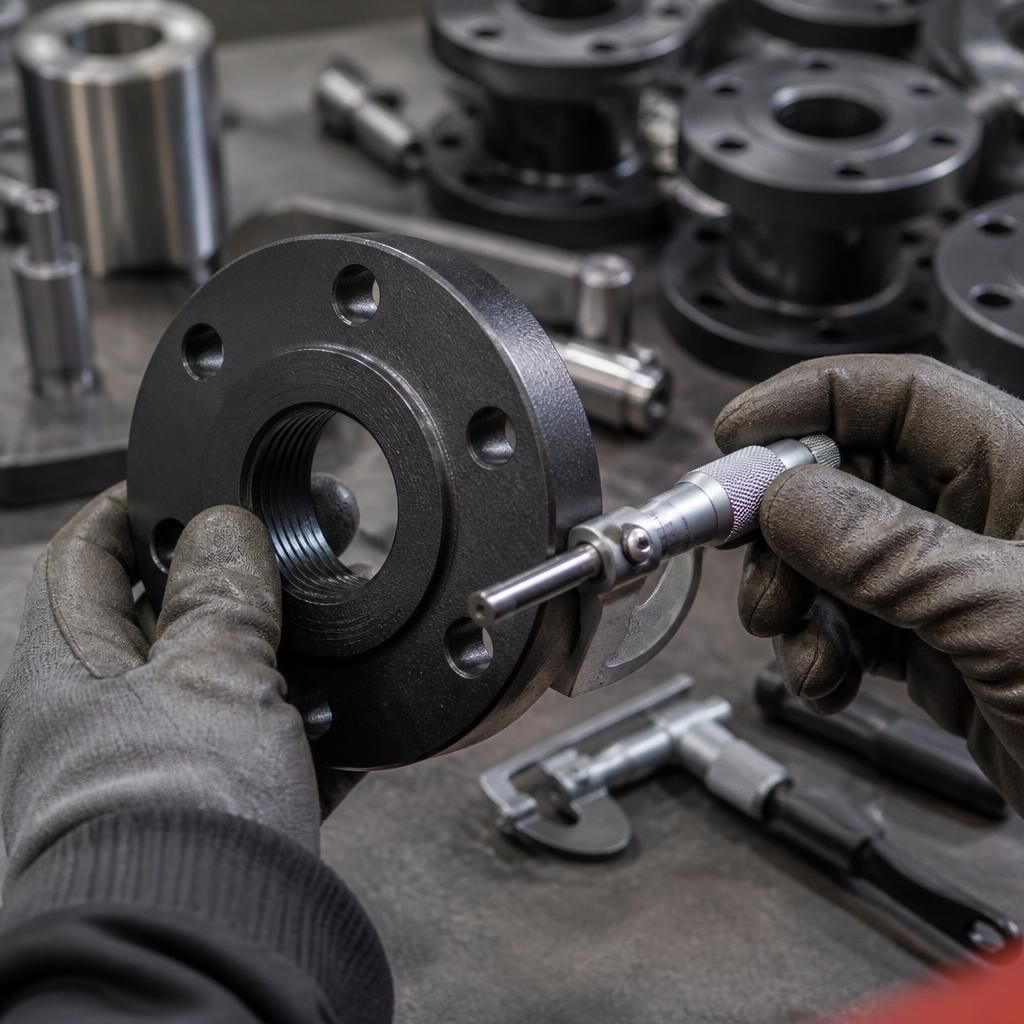
For metal parts with close-fitting interfaces, coating build-up is an important difference between electrostatic powder recoating and liquid coating. Powder commonly forms a more substantial film, so bores, threads, shafts, mating faces and locating points may need masking or clearance checks before processing. Liquid systems can be specified in thinner layers where maintaining tight tolerances is critical, although primer and topcoat thickness still needs control. The coating specification should therefore identify areas that must remain uncoated and include a dimensional inspection after application.
Discuss the right recoating method for your metal parts
Share the part’s material, dimensions, existing coating and service conditions with a powder-coating specialist to establish whether electrostatic recoating or liquid coating is the more suitable specification. Include any areas requiring masking or tight dimensional control so the proposed process can be assessed accurately.