

What are the specific challenges in applying a 2-coat powder coating repair to large-scale industrial components?
Applying a 2-coat powder coating repair to large industrial components is challenging because their size, weight and geometry make thorough preparation, controlled handling and even powder coverage more difficult. The repair must also achieve reliable adhesion between the existing finish, primer and topcoat while maintaining suitable curing conditions across the full component without damaging unaffected areas.
The main challenges in applying a 2-coat powder coating repair to large industrial components are determining the true repair boundary, achieving a visually consistent transition with the existing finish, protecting interfaces and maintaining dimensional accuracy. These issues can be more difficult than coating a new component because the repair has to work with an existing surface, established tolerances and areas that must remain untouched.
Defining the extent of the repair is an important first step. Damage may extend beneath apparently sound coating through corrosion, impact deformation, chemical attack or loss of adhesion. Treating only the visible defect can leave weak material around the repair and produce an edge that fails prematurely. Conversely, removing too much coating increases the treated area and may affect identification markings, machined surfaces or adjacent features. The repair specification therefore needs to distinguish between the visibly damaged area, the affected coating system and any underlying metal damage.
Matching the existing finish can be difficult, particularly where the original coating has weathered, faded or changed gloss. A new primer and topcoat may be technically compatible but still appear different from the surrounding finish. Texture, sheen, colour and film build all influence the result. On a large component, even a small variation can be noticeable across a broad visible surface. The selected repair system should therefore be assessed against the existing coating rather than judged only from the powder manufacturer’s standard reference.
Masking and protecting interfaces requires careful planning. Large industrial parts may include threaded holes, bearing seats, machined faces, electrical contact points, seals, moving joints and areas that must retain precise clearances. Powder on these surfaces can interfere with assembly or function. Masking materials must also tolerate the coating process without leaving residue, lifting at the edge or allowing powder to reach protected areas. When the repair is localised, the masking plan must balance a clean boundary with sufficient access for proper application.
Maintaining dimensional control is another challenge. Two coating layers add material to the component, and excessive build at edges, corners, holes or mating faces can affect fit. Repairs around close-tolerance features need controlled application and inspection rather than relying solely on a visual check. The part may also require temporary plugs, inserts or other process aids so that the restored finish does not compromise later assembly.
Managing the existing coating system can be complex where its chemistry, age or previous repair history is unknown. A new protective primer may not bond reliably to every existing finish, and contamination from oils, salts, process chemicals or handling can remain even when the surface looks clean. Testing or a controlled trial may be appropriate when the substrate or old coating cannot be positively identified. This is especially relevant when the component operates in a corrosive, wet, abrasive or chemically exposed environment.
Thermal exposure must be considered carefully. The repair system needs a suitable cure, but the component may contain heat-sensitive inserts, seals, adhesives, bearings, wiring or finished sections that cannot tolerate the same conditions. Repeated heating can also affect the existing coating or alter the properties of certain substrates. Before processing, the component should be reviewed for removable parts, restricted temperature zones and any manufacturer or project limits that govern the coating specification.
Access and powder deposition present practical difficulties on fabricated assemblies. Recesses, internal corners, deep channels and shielded faces can receive less powder than exposed areas, while edges may attract a heavier deposit. Faraday-cage effects can further restrict powder penetration into enclosed sections. The application plan may need different gun angles, staged access or a revised repair boundary to produce a consistent protective layer without excessive build on adjacent edges.
Large-part logistics can affect the repair itself. The component must be suitable for safe movement, stable support and correct orientation throughout preparation, coating, curing and inspection. Racking points should be selected so they do not damage finished areas or create unacceptable contact marks. Lifting arrangements, centre of gravity, removable sections and packaging requirements should be agreed before work starts, particularly where the part has projecting or vulnerable features.
A reliable repair specification should consequently record:
- the substrate and condition of the existing coating;
- the required primer and topcoat compatibility;
- the acceptable repair boundary and appearance;
- surfaces requiring masking or dimensional protection;
- temperature restrictions and removable components;
- critical dimensions, contact faces and inspection points; and
- the required checks for coverage, adhesion, finish and cure.
For complex industrial components, the best approach is to resolve these constraints before coating begins. Inspection records, photographs, drawings and a clear finish specification help prevent an apparently minor repair from creating assembly, appearance or service-life problems later. A specialist powder coating provider can also advise whether a localised 2-coat repair is appropriate or whether a wider strip-and-recoat treatment is needed to achieve a consistent and durable result.
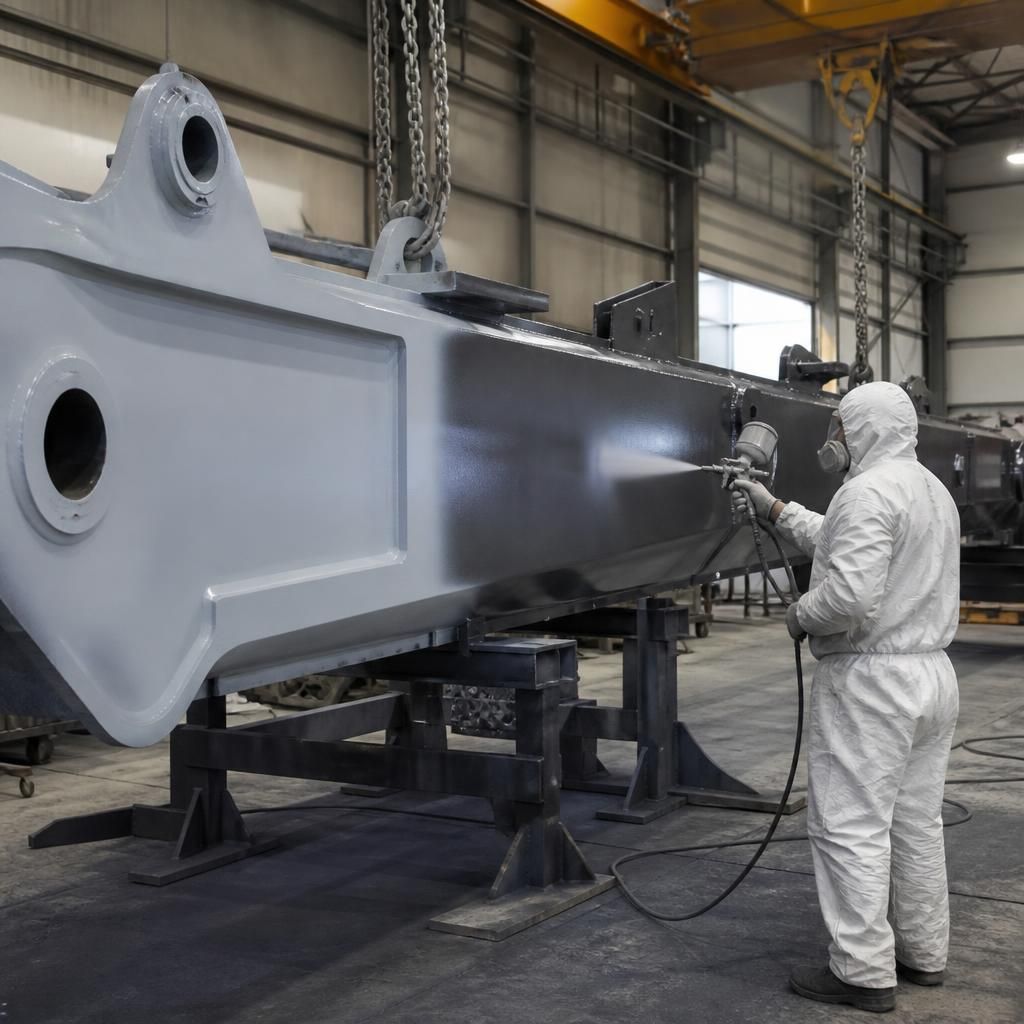
A critical challenge in a large-scale 2-coat powder coating repair is controlling the transition between the primer and topcoat. The primer must achieve the condition specified for the coating system before the second layer is applied; applying the topcoat too early, after contamination, or outside the permitted recoat conditions can affect bonding and appearance.
Large components make this sequence harder because the coated item may need inspection, repositioning or controlled handling between coats. Contact points, lifting equipment and temporary supports can mark the primer or introduce debris before the topcoat is applied. The process plan should therefore define how the component is supported between stages, which areas require reinspection and what checks confirm that the primed surface is suitable for the final coat.
Discuss Your Large-Scale 2-Coat Powder Coating Repair Requirements
Discuss your large-scale 2-coat powder coating repair with the team, providing component drawings, substrate details and any coating or dimensional requirements. This information helps establish whether a localised repair is suitable and what preparation and inspection controls are needed.