

What are the environmental benefits of using shot blasting for coating removal?
Shot blasting removes defective coatings mechanically, which can reduce reliance on chemical strippers and the associated liquid waste. Reusable or recyclable abrasive media, efficient coating removal and controlled collection of spent material can also help limit waste during preparation for recoating.
Shot blasting can provide environmental benefits by allowing metal components to be refurbished and recoated rather than discarded and replaced. Its main advantage is therefore a lower life-cycle impact: the existing component remains in use, reducing demand for new metal, manufacturing inputs and the transport associated with replacement parts.
Removing a defective coating in a controlled mechanical process can also help prevent otherwise serviceable components from becoming scrap. This is particularly relevant to fabricated assemblies, structural parts, vehicle components and industrial items where the underlying metal remains sound. Reusing the component preserves the energy and raw materials already invested in its manufacture.
- Reduced demand for virgin materials: extending the working life of a metal part can reduce the need for newly produced steel, aluminium or other alloys.
- Lower manufacturing impact: refurbishment may avoid some of the melting, forming, machining and finishing required to make a replacement component.
- Less associated transport: retaining a component can reduce the movement of raw materials, replacement parts and discarded items through the supply chain.
- Better use of existing assets: coating removal can make repair, inspection and recoating practical where the substrate is still suitable for service.
The environmental outcome also depends on what happens during and after the blasting operation. Industrial equipment should be configured to contain dust and prevent particulate matter from spreading into the surrounding workplace or external environment. Extraction, filtration and suitable housekeeping procedures help keep the process controlled. The removed coating may contain substances that require particular handling, so its composition should be considered before processing and the resulting waste managed through the appropriate route.
Shot blasting has an energy requirement, including power for the blast equipment, air movement, extraction and associated handling systems. A responsible assessment should therefore consider the complete process rather than assuming that mechanical removal is automatically impact-free. Appropriate equipment selection, avoiding unnecessary blasting, and using a method suited to the coating and substrate can reduce avoidable energy use while protecting the component from damage.
Preparation for recoating can have further environmental value when it helps a replacement finish perform as intended. A soundly prepared substrate gives the new coating a suitable foundation, which can reduce the likelihood of premature failure, unnecessary remedial work and repeated processing. The benefit is greatest when the metal is inspected before and after blasting so that only components suitable for refurbishment proceed to the next stage.
For businesses assessing a shot blasting service, useful environmental questions include:
- How are dust and airborne particles contained during blasting?
- How is the removed coating identified, segregated and directed to the correct waste stream?
- Can the process be adjusted to remove the coating without unnecessarily eroding or damaging the underlying metal?
- What measures are used to limit contamination between different jobs or materials?
- Is the component assessed for refurbishment, rather than treated as disposable by default?
For manufacturers, fabricators, construction firms and automotive businesses across the Midlands, these considerations are relevant when comparing collection, processing and delivery arrangements for metal components. The strongest environmental case comes from combining controlled blasting with sound decisions about component reuse, coating selection, waste handling and eventual end-of-life recycling.
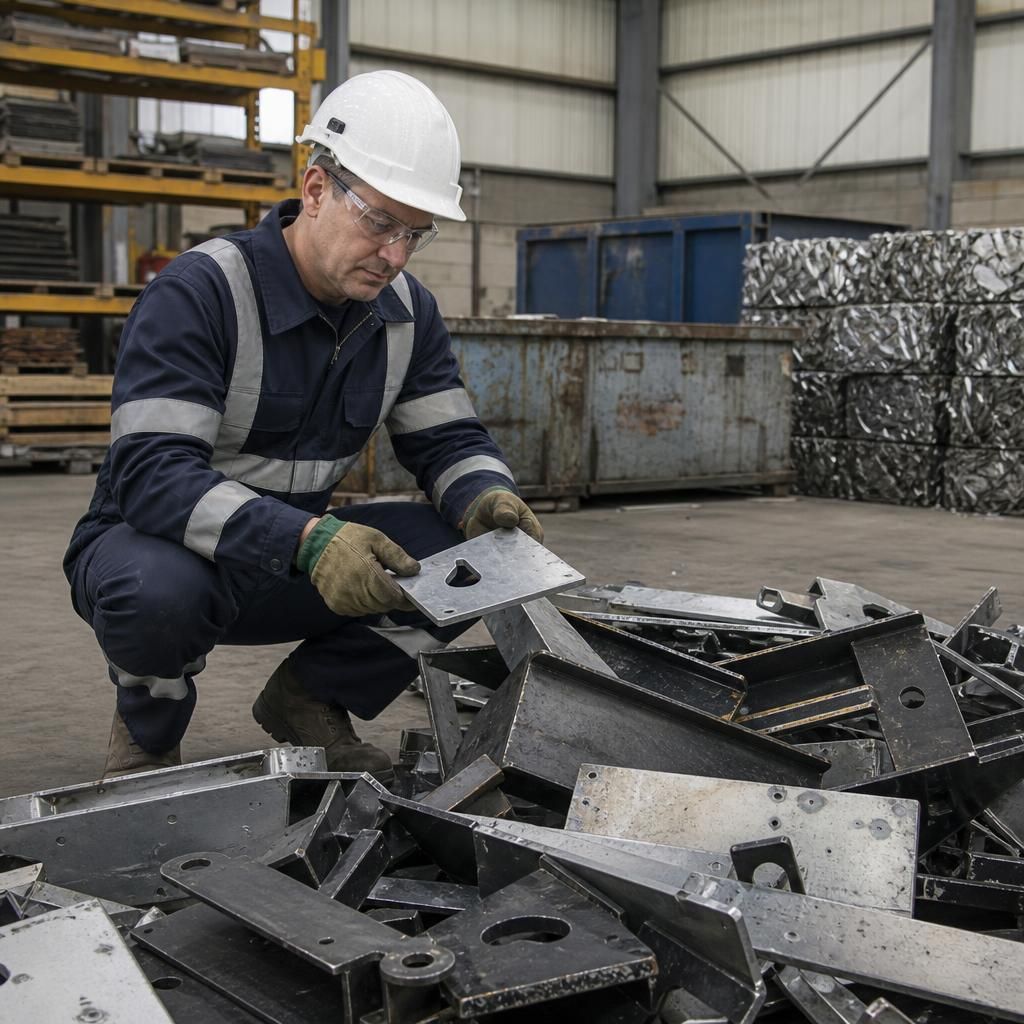
A further environmental benefit is that controlled coating removal can support the correct recycling route when a metal component finally reaches the end of its service life. Removing accumulated coating helps expose the underlying substrate, making it easier to identify and separate steel, aluminium and other metals where the material specification is known.
This does not make every blasted component automatically suitable for recycling. The removed coating, abrasive residue and any contamination still need to be kept separate and managed appropriately. However, clear separation of the metal substrate from process residue can help prevent otherwise recoverable material from being treated as mixed waste.