

How do I choose the right powder coating repair service provider?
Choose a powder coating repair service provider that can assess the damage accurately, match the repair to the existing coating and apply suitable preparation and curing methods. For business-critical metal components, also check their experience with your component type, ability to handle batch requirements, quality-control procedures and collection or delivery arrangements across the Midlands.
The right powder coating repair service provider should be selected on technical diagnosis, coating compatibility, documented quality controls and a clear understanding of the component’s operating conditions. A low quotation alone is not enough: a suitable provider must be able to explain what caused the failure, whether local repair is appropriate and how the proposed treatment will restore protection without creating a weak transition between the repaired area and the original coating.
Start by checking the proposed scope of work. Ask the provider to distinguish between cosmetic damage, loss of adhesion, corrosion beneath the coating and substrate damage. Small chips or scratches may be suitable for local treatment, whereas widespread blistering, peeling or contamination can indicate that the coating system has failed more extensively. In those cases, stripping and recoating may be more reliable than applying isolated touch-ups. The quotation should state which areas will be repaired, which operations are included and what assumptions have been made about the condition of the metal.
Look for a method based on the existing coating, not a generic repair process. The provider should consider the original powder type, film condition, colour, gloss level, texture and any pretreatment used on the metal. A repair material that is chemically or mechanically unsuitable can show poor adhesion, visible colour variation or premature failure. This is particularly important where the component has a textured, metallic, protective or nylon coating, because the repair technique may need to account for different surface behaviour and application requirements.
Ask how compatibility will be assessed. Useful evidence may include a physical inspection, photographs, coating records, information from the original specification or a small test area. Where the original coating is unknown, a competent provider should identify the resulting uncertainty rather than presenting an exact colour or finish match as automatic. For visible components, ask how the repaired area will be blended and how differences in gloss, texture or film build will be controlled. A test panel or sample approval can be appropriate when appearance is commercially important.
Consider the component’s working environment. The correct repair depends on more than the visible defect. Relevant factors include exposure to moisture, chemicals, sunlight, abrasion, impact, heat, road contaminants and handling during installation. Components used outdoors or in demanding industrial settings may need a repair system selected for protection as well as appearance. The provider should also understand whether the item will be exposed to galvanic contact, regular cleaning or mechanical movement, since these conditions can affect the choice of preparation and coating.
Examine how the provider controls preparation. Most repair failures originate from inadequate removal of loose material, contamination or corrosion rather than from the powder itself. Ask how the affected area will be cleaned, abraded or stripped, how corrosion products will be treated and how exposed substrate will be protected before recoating. The method should avoid damaging sound surrounding coating unnecessarily. It should also account for edges, recesses, drilled holes, welds and joints, where coating breakdown and insufficient coverage can be difficult to detect.
Check curing and process records. Powder coating performance depends on the coating reaching the correct cure for the product and the metal’s actual temperature, rather than simply the oven being set to a particular temperature. A provider should be able to explain how curing is controlled for the component’s size, geometry and material. Ask whether batch details, coating materials, preparation stages and inspection results are recorded. Traceability is especially useful when repaired parts form part of a production run or when a defect needs to be investigated later.
Assess inspection standards before work begins. The provider and customer should agree what will be inspected and what constitutes an acceptable repair. Depending on the application, checks may cover:
- surface cleanliness and removal of loose or corroded coating;
- coverage at edges, corners, recesses and difficult-to-reach areas;
- visual consistency of colour, gloss and texture;
- adhesion and film-build requirements where these are specified;
- signs of pinholes, runs, blistering, contamination or incomplete cure; and
- packaging and handling controls that prevent fresh damage after coating.
Review the quotation and communication carefully. A useful quotation should identify the inspection assumptions, preparation method, coating system, finish requirements, exclusions and any need for customer approval. It should also make clear how damaged or unsuitable components will be reported once examined. This prevents a repair proceeding on the basis of an incorrect diagnosis and helps the customer compare providers on equivalent terms rather than comparing headline prices only.
Use relevant evidence rather than broad claims. Ask for examples of comparable components, coating types or operating environments, while respecting confidentiality. Photographs can show finish quality, but they do not prove adhesion, cure or corrosion protection. More useful evidence includes a clearly explained process, inspection documentation and answers that address the particular failure mode. A provider who identifies limitations and recommends replacement or full recoating where local repair is unsuitable is generally demonstrating better technical judgement than one who treats every defect in the same way.
For a business selecting a powder coating repair provider, the final decision should balance technical suitability, inspection discipline, traceability, communication and the practical handling of the components. The strongest choice is the provider whose proposed repair can be justified against the existing coating, the metal substrate and the conditions the finished part will face.
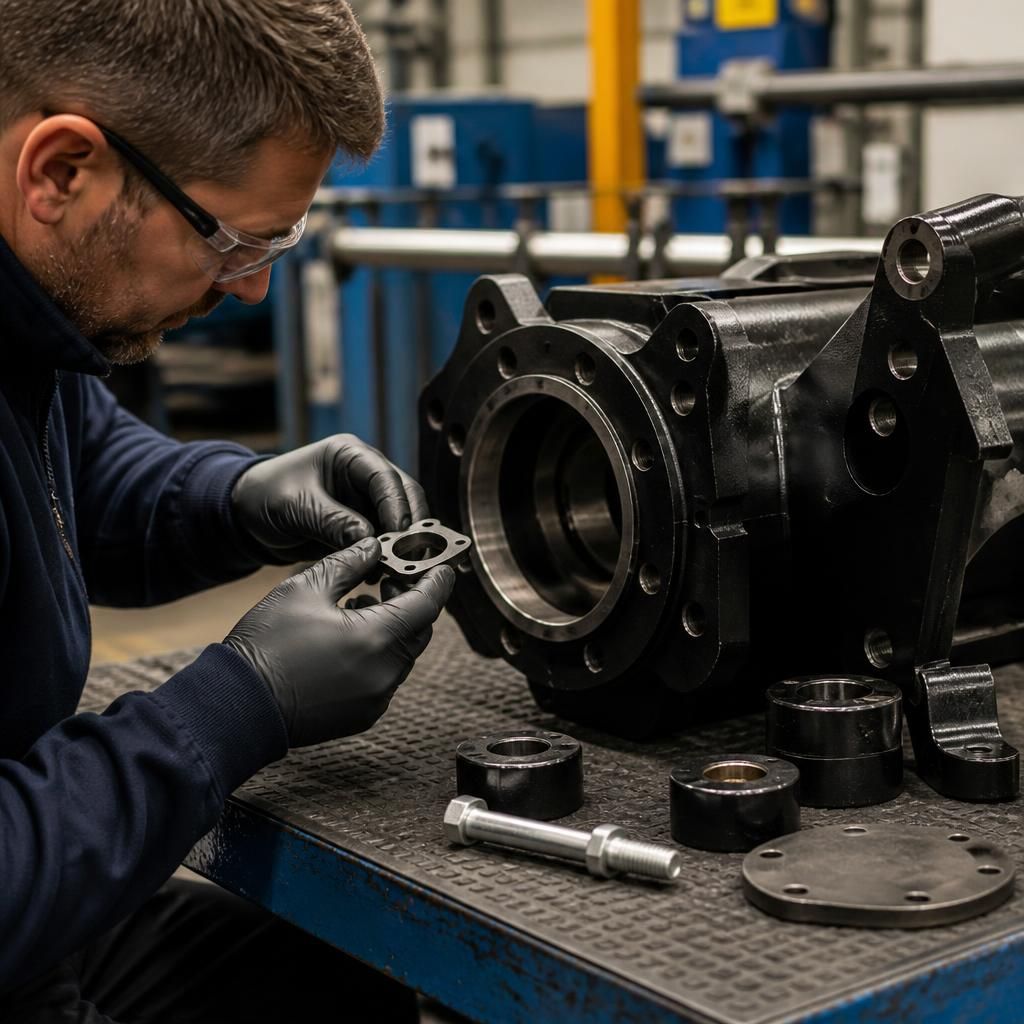
A further consideration is how the provider will manage component access before coating work begins. Ask whether the part needs to be removed, disassembled or masked, and how threaded holes, bearing seats, mating faces and other close-tolerance areas will be protected. Powder coating can affect fit and assembly if these surfaces receive unintended film, while inaccessible areas may remain contaminated or corroded if the component cannot be prepared properly.
The provider should identify these restrictions before the repair is approved and explain any customer responsibilities, such as removing seals, fasteners or attached materials. This helps establish whether the proposed repair is technically practical and whether the finished component can be returned to service without additional remedial work.