

What are the specific industries that benefit the most from using Rilsan Nylon 11 coating on metal surfaces?
Rilsan Nylon 11 coating is particularly beneficial to manufacturers, metal fabricators, construction firms and automotive businesses that need durable protection for metal components exposed to wear, corrosion or demanding service conditions. It is well suited to components where a tough, chemically resistant polymer finish can extend protection beyond conventional metal surfaces.
Rilsan Nylon 11 coating is most valuable in industries where metal components face a combination of abrasion, impact, moisture, chemicals, salt or repeated handling. The strongest applications are fluid handling, chemical processing, oil and gas, water and wastewater, agriculture, automotive, construction and industrial manufacturing, provided the component and operating conditions are suitable for the coating process.
Fluid handling and pump equipment
Pumps, valves, pipe fittings, manifolds and other fluid-handling parts can benefit from a tough polymer barrier between the metal and the surrounding liquid. Rilsan Nylon 11 is considered where components need resistance to wear, moisture and exposure to a range of chemicals. It can also provide a smoother surface than an uncoated metal component, which may be useful on parts where friction, flow contact or repeated movement affects service performance.
The precise suitability depends on the fluid, temperature, pressure, concentration and duration of exposure. A coating specification should therefore identify the process medium rather than relying on the general term “chemical resistance”.
Chemical processing and process plant
Chemical processing equipment often combines corrosive environments with mechanical wear. Rilsan Nylon 11 can be used on suitable metal parts such as fittings, supports, housings and handling equipment where a continuous protective layer is required. Its value is greatest when the coating can isolate the substrate from splashes, humidity or contact with aggressive materials while also coping with knocks and surface abrasion.
It is not a universal solution for every chemical service. Chemical compatibility, operating temperature, coating thickness, edge coverage and the condition of the base metal must be assessed before specifying it.
Oil, gas and energy-related equipment
Equipment used around fuel, hydrocarbons, brine, outdoor exposure and heavy handling may require more than a decorative finish. Nylon 11 coating can be considered for metal components that need protection from corrosion, impact and wear in demanding industrial environments. It is particularly relevant to parts where damage to the metal surface could create a route for moisture or contaminants to reach the substrate.
For these applications, the coating system should be selected against the actual service environment. Exposure to heat, pressure cycling, solvents and ultraviolet light can influence the choice of material and the required preparation.
Water and wastewater infrastructure
Water-handling and wastewater equipment is routinely exposed to moisture, immersion, suspended particles and potentially corrosive substances. Rilsan Nylon 11 can help protect suitable metal components used in valves, pipework accessories, screens, brackets and mechanical equipment. Its resistance to wear is relevant where grit or moving parts could gradually damage an unprotected surface.
Parts intended for potable water or other regulated uses may require specific compliance evidence for the complete coating system. That requirement should be confirmed separately from the general technical properties of Nylon 11.
Agricultural and off-road machinery
Agricultural machinery, material-handling equipment and off-road plant are exposed to mud, water, fertilisers, oils, impacts and abrasive debris. Coating suitable metal parts can reduce direct exposure of the substrate and provide a resilient finish for components that are cleaned, moved or handled repeatedly. Typical candidates may include guards, brackets, frames, housings and other fabricated parts, subject to their size, geometry and service temperature.
Automotive and transport manufacturing
Automotive components can benefit where a combination of corrosion protection, abrasion resistance and a consistent appearance is needed. Potential applications include brackets, housings, underbody-related parts, clamps and other metal components exposed to road moisture, dirt or mechanical contact. Nylon 11 may also be considered where electrical insulation or a lower-friction polymer surface is useful.
Automotive specification is application-specific. Components exposed to exhaust heat, fuel, brake fluids or significant flexing need assessment against those exact conditions, as well as any dimensional tolerances and masking requirements.
Construction, fabrication and general manufacturing
Construction equipment and fabricated metalwork can use Nylon 11 coating where parts encounter outdoor weather, handling damage, damp conditions or repeated contact with other materials. It is relevant to protective guards, brackets, supports, fixtures and engineered components that need a functional finish rather than paint alone.
For manufacturers and fabricators, the coating is often most appropriate when the component design, batch quantity and required finish can be controlled before treatment. Welds, sharp edges, recesses and inaccessible areas should be reviewed during specification because geometry affects cleaning, coverage and the final result.
Electrical and industrial equipment
Some electrical and industrial components use a polymer coating to provide a non-metallic surface, additional protection from moisture and resistance to handling wear. Suitable applications may include housings, brackets, guards and parts where contact between metal surfaces should be reduced. The required dielectric properties, clearances and temperature range must be established for the individual design.
Across all of these sectors, Rilsan Nylon 11 is most suitable when its properties match the complete duty cycle rather than one isolated exposure. The assessment should cover the metal substrate, preparation method, coating thickness, operating temperature, chemicals, abrasion, impact, immersion and any regulatory requirements. For projects in the Midlands and surrounding areas, a specialist powder-coating provider can also advise on whether the component is suitable for batch processing, collection and delivery, and the practical preparation needed before coating.
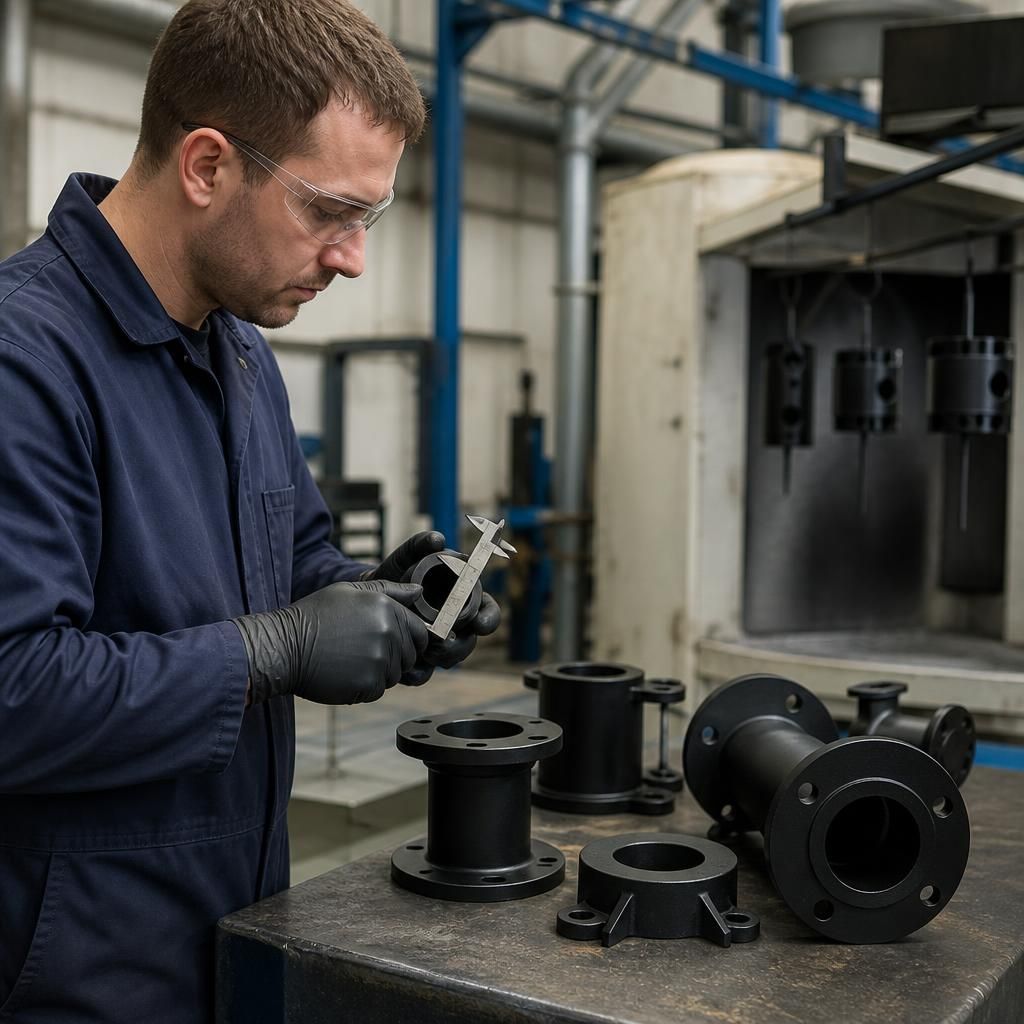
The industries that benefit most from Rilsan Nylon 11 coating are not defined solely by the sector they operate in, but by the service conditions faced by particular metal components. The strongest candidates typically combine moisture or chemical contact with abrasion, impact, repeated handling or contact with moving parts.
This makes component selection important. Within the same factory, one part may require a functional polymer coating while another may need a different finish because of temperature, dimensional tolerances, chemical exposure or regulatory requirements. Rilsan Nylon 11 should therefore be specified against the component’s complete operating environment rather than applied as a general coating for every metal item.
A practical assessment should consider the substrate, surface preparation, coating coverage and thickness alongside the substances, temperatures and mechanical forces involved. This approach identifies where Nylon 11 provides a meaningful technical advantage and prevents unsuitable parts from being selected simply because they belong to an industry commonly associated with demanding service conditions.
Discuss Whether Rilsan Nylon 11 Suits Your Industry
Review your component drawings, service conditions and coating requirements with a Rilsan Nylon 11 specialist to determine whether the specification is suitable. This assessment can identify preparation, coverage and processing considerations before the parts are sent for coating.