

What advantages do high temp powder coatings offer when applied to stainless steel in automotive and construction sectors?
High temperature powder coatings provide stainless steel components with a durable, uniform finish that can withstand elevated operating temperatures, thermal cycling and the mechanical demands common in automotive and construction applications. They also help protect the substrate from abrasion, chemicals and environmental exposure, supporting longer service life where components face demanding conditions.
High temperature powder coatings give stainless steel components a heat-resistant protective finish while retaining the manufacturing advantages of powder application. In automotive and construction, their main benefits are dependable adhesion when correctly specified, consistent coating coverage across production batches, reduced reliance on solvent-based application, and a finish that can be selected for the component’s operating environment.
Suitability for heat-exposed components: Stainless steel is often used where components experience heat, but the steel itself does not automatically protect surrounding surfaces or preserve the required appearance. A suitable high temperature powder coating can provide an additional barrier on parts exposed to engine-bay heat, exhaust-adjacent conditions, heating equipment or other hot assemblies. The coating must be matched to the expected continuous and peak temperatures, as well as to the heating and cooling pattern of the component.
Consistent results for manufactured parts: Powder coating is well suited to repeat production because the application process can be controlled around factors such as powder charge, spray distance, film build, curing and masking. This helps manufacturers and fabricators produce batches of stainless steel brackets, guards, housings, supports and similar components with a consistent specification. Controlled application is particularly useful where coated parts must fit with adjoining components or maintain clearance around moving, heated or assembled parts.
Reduced use of liquid carriers: Powder is applied as a dry material rather than as a liquid coating containing a conventional solvent carrier. This can reduce solvent-related handling and emissions associated with liquid application, although the environmental profile still depends on the powder formulation, curing method, preparation chemicals and overall process. Overspray management and recovery may also support efficient material use where the equipment and powder system are suitable for it.
Protection without changing the role of stainless steel: A correctly selected coating supplements stainless steel rather than replacing its underlying properties. It can provide colour, identification or a specified surface appearance while the stainless substrate supplies the base material characteristics required by the design. This is useful where a project needs coated components to coordinate with surrounding metalwork, distinguish different parts or meet a defined visual finish.
In automotive applications, the benefit is most relevant where a stainless steel part must operate near heat sources while also meeting requirements for repeatable manufacture, part identification and resistance to workshop or road-related contamination. In construction, the same approach can be appropriate for metal components associated with heating plant, service installations and other areas where elevated temperatures or demanding site conditions influence the coating specification.
Correct preparation remains essential: The advantages depend on the coating being bonded to a properly prepared stainless steel surface and cured according to the powder manufacturer’s requirements. Stainless steel can retain oils, polishing residues and other contaminants, and its relatively passive surface may require a preparation process designed specifically for adhesion. Poor preparation, unsuitable film thickness or inadequate curing can lead to defects regardless of the powder’s stated temperature capability.
For that reason, specification should consider the stainless grade, component geometry, service temperature, exposure to fuels, oils, cleaning agents or construction chemicals, required appearance and the way the part will be handled after coating. A specialist powder coater can use these details to determine whether a high temperature powder system is appropriate and which preparation, masking and curing controls are needed for the intended automotive or construction application.
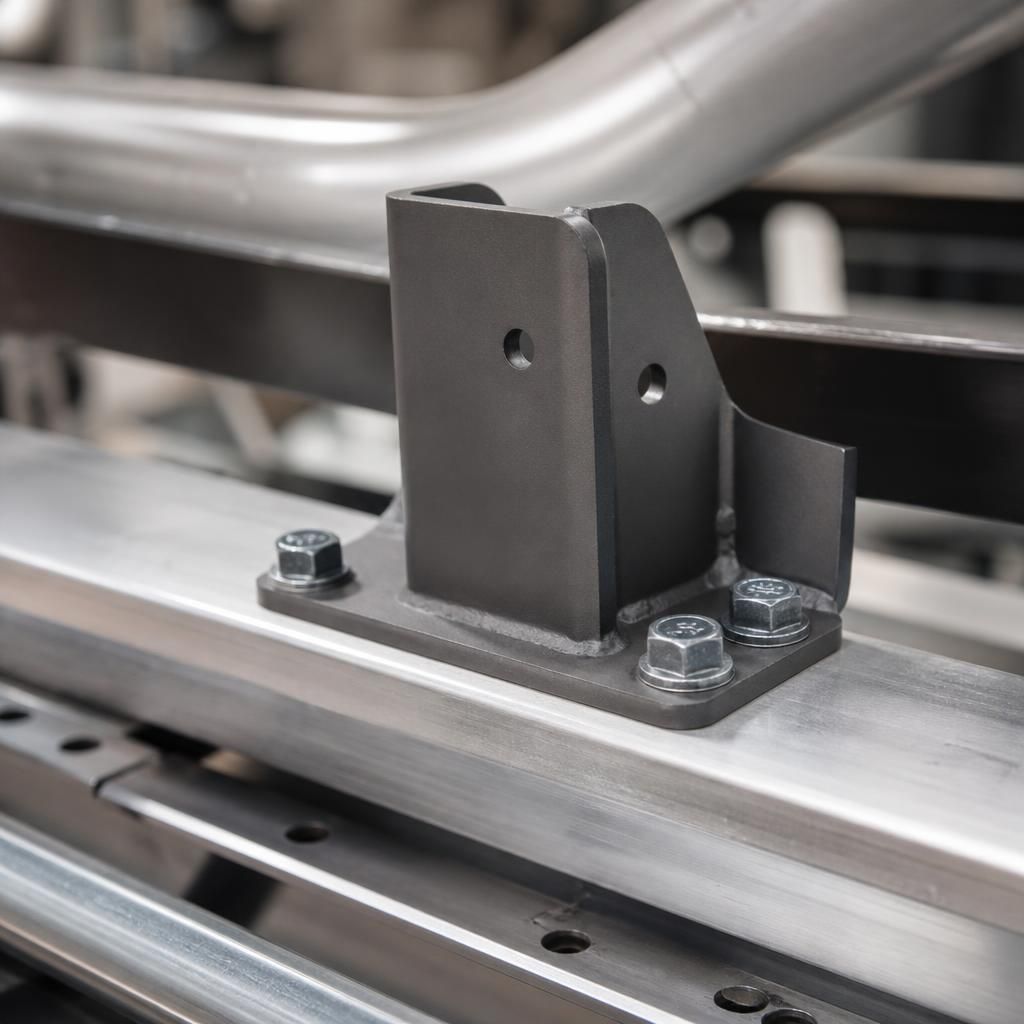
One additional advantage of a high temperature powder coating on stainless steel is electrical separation from dissimilar metals. Where a coated stainless steel bracket, support or enclosure contacts aluminium, galvanised steel or another metal, an intact powder film can reduce direct metal-to-metal contact and help limit galvanic corrosion at the interface.
This benefit depends on continuous coverage and correct detailing around fixings, edges and joints. Areas intended for electrical earthing or bonding must remain uncoated where required, and the coating system still needs to suit the component’s operating temperature and exposure. In automotive and construction assemblies, this makes high temperature powder coating useful not only as a surface finish, but also as part of a wider corrosion-control strategy.
Discuss High Temp Powder Coating for Your Stainless Steel Components
Discuss your stainless steel component’s grade, operating conditions and finish requirements with Powder-coatings.co.uk to assess a suitable high temperature powder coating specification. Share the relevant automotive or construction application details for informed guidance on the next stage.