

How does high temperature powder coating contribute to the protection of metal components from corrosion?
High temperature powder coating protects metal components from corrosion by forming a continuous, heat-resistant barrier that limits contact between the substrate and moisture, oxygen, salts and other corrosive contaminants. When correctly selected, applied and cured for the operating conditions, the coating also helps maintain surface protection where conventional finishes could degrade under elevated temperatures.
High temperature powder coating contributes to corrosion protection by interrupting the electrochemical reactions that cause metal to deteriorate. Its cured film separates the metal from the conditions needed for corrosion, while the formulation and application method determine how well that protection is retained during heating, cooling, handling and service.
How corrosion develops
Corrosion occurs when a metal surface interacts with an electrolyte, such as water containing dissolved salts or contaminants. Differences in surface chemistry can create anodic and cathodic areas, allowing metal ions to leave the substrate and form corrosion products. A properly applied coating reduces the availability of moisture and ionic contaminants at the surface, helping to prevent these reactions from starting or spreading.
High temperature systems are particularly relevant where ordinary organic coatings may soften, discolour, embrittle or lose adhesion during operation. If the coating remains stable at the component’s service temperature, it can continue to separate the substrate from corrosive conditions rather than becoming a new route for moisture ingress.
Protection depends on the complete coating system
- Surface preparation: Oil, mill scale, rust, oxides, dust and other residues can prevent proper contact between the powder and the metal. Cleaning and suitable mechanical or chemical preparation expose a sound surface and remove contaminants that could promote corrosion beneath the film.
- Pre-treatment: A compatible conversion or pre-treatment layer can improve adhesion and provide additional resistance at the metal-coating interface. The correct treatment depends on the substrate, the expected environment and the powder chemistry.
- Film formation: Powder must be applied at a suitable, consistent thickness and fully fused during curing. Thin areas, pinholes, craters and inclusions may provide pathways for water or salts, even where the surrounding finish appears sound.
- Edge and joint coverage: Corners, welds, drilled holes, folded edges and recesses are common points of weakness. These areas require attention during preparation, application and inspection because coating coverage may be less uniform there.
- Repair quality: Damage caused by transport, machining or installation can expose bare metal. Prompt repair with a compatible system limits the exposed area and helps prevent corrosion from progressing beneath adjacent coating.
Resistance to heat cycling
Industrial components may repeatedly move between ambient and elevated temperatures. This expansion and contraction places stress on the coating and on the bond between the film and substrate. A suitable high temperature formulation should tolerate the intended thermal cycle without excessive cracking, blistering, loss of adhesion or embrittlement. Preventing these failures is important because even a small defect can allow moisture and contaminants to reach the metal.
Operating temperature should therefore be assessed as a cycle rather than as a single maximum value. The duration of exposure, rate of heating and cooling, contact with hot process materials, and the temperature of adjoining parts can all influence corrosion protection. The curing schedule also matters: insufficient cure may leave the film with reduced mechanical and chemical resistance, while excessive heat can damage the substrate or alter the coating’s performance.
Protection in different environments
The risk of corrosion is determined by more than temperature. Outdoor exposure, condensation, humidity, industrial pollutants, cleaning chemicals, road salts and process residues can all affect the coating. Components used in humid or contaminated settings need a system selected for those conditions, rather than one chosen solely for its heat resistance.
High temperature performance and corrosion performance are related but separate properties. A powder may withstand heat yet be unsuitable for immersion, frequent wash-down, aggressive chemicals or a salt-laden atmosphere. The specification should consider the substrate, exposure conditions, expected service temperature and cleaning regime together. Where a component combines severe heat with a particularly corrosive environment, a multi-layer or specialist protective approach may be more appropriate than a single decorative finish.
Common causes of premature corrosion
- Applying powder over residual oil, rust, scale or moisture.
- Using a pre-treatment that is incompatible with the substrate or coating.
- Allowing inadequate coverage in recesses, edges and weld zones.
- Failing to account for outgassing from cast or porous metal, which can create pinholes or blisters during curing.
- Exceeding the coating’s recommended service conditions or exposing it to chemicals not considered during selection.
- Damaging the finish during assembly and leaving exposed metal untreated.
These problems are often attributed to the powder when the underlying cause is preparation, design, application or service exposure. Corrosion protection is consequently best treated as a process-control issue: the metal must be prepared correctly, the coating must be compatible with the component and the finish must be checked for continuity and defects before use.
Assessing whether the protection is suitable
For an industrial component, the assessment should begin with the corrosion hazards and thermal profile expected in service. Specify the metal type, surface condition, operating and peak temperatures, exposure to moisture or chemicals, and any requirements for cleaning or abrasion resistance. The selected system can then be evaluated through relevant adhesion, film appearance, thickness and corrosion-resistance checks, alongside thermal exposure testing where the application justifies it.
High temperature powder coating therefore supports corrosion control most effectively when heat stability, surface preparation, pre-treatment, application quality and environmental compatibility are considered as one system. It does not remove the need for design drainage, suitable handling or inspection, but it can provide durable protection for correctly prepared metal components exposed to elevated temperatures and corrosive conditions.
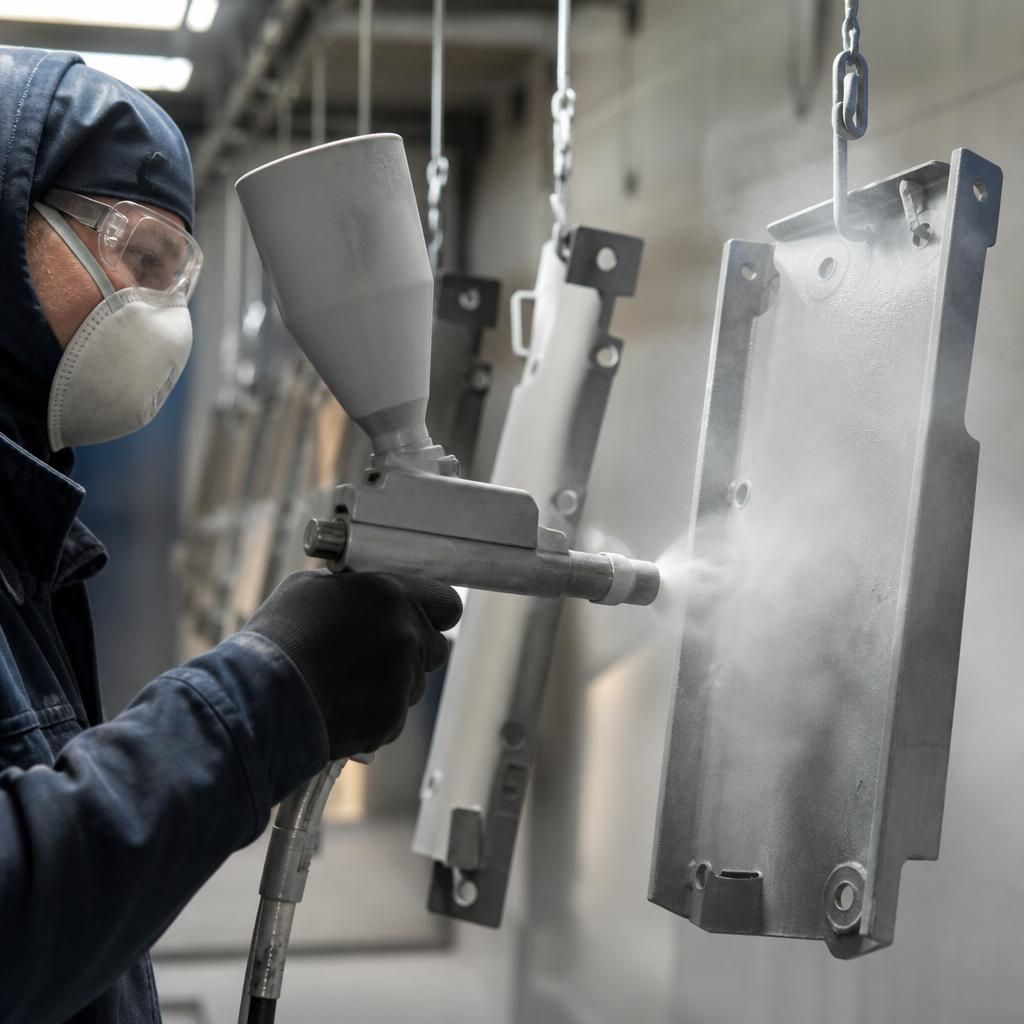
Metal component design contributes to corrosion protection because a high temperature powder coating cannot fully compensate for water traps, inaccessible cavities or poorly managed joints. Draining moisture away from coated surfaces helps prevent prolonged exposure that can undermine protection, particularly where components are exposed to condensation, wash-down or outdoor conditions.
Designers should avoid narrow crevices and unsealed overlaps where water and contaminants can collect. Hollow sections may need suitable drain and vent holes, while joints should be arranged to allow adequate coating access and inspection. Contact between dissimilar metals also requires consideration, as it can create galvanic corrosion if moisture bridges the two materials. Addressing these details before coating helps the finished system provide more consistent protection in service.