

What are the most common challenges faced during the high temp powder coating process?
The most common challenges in high temperature powder coating are selecting a coating suited to the operating temperature, preparing the metal correctly, controlling the curing profile and achieving an even film thickness. Variations in part geometry, thermal expansion, contamination and oven temperature can cause defects such as incomplete curing, adhesion failure, uneven coverage or premature degradation.
Beyond temperature selection, surface preparation, curing control and film thickness, high temperature powder coating can be affected by masking, grounding, powder handling, part design and post-cure inspection. These issues are particularly important for industrial components because small process deviations can affect fit, electrical continuity, coating coverage or long-term performance.
Masking and protection of uncoated areas
Many components have threads, mating faces, bearing seats, drain holes or electrical contact points that must remain free of coating. High-temperature masking materials must withstand the oven conditions without shrinking, leaving residue or allowing powder to creep underneath. Poorly fitted plugs or tapes can cause blocked holes, damaged threads and excess powder at an edge.
Masking also creates a risk of sharp coating lines. If the powder builds up against the mask, removing it may chip the edge or leave a raised section that interferes with assembly. The masking plan should therefore be agreed from the component drawing, with attention to tolerances, areas requiring conductivity and surfaces that will be joined after coating.
Racking, grounding and electrical contact
Powder application relies on an electrical relationship between the spray equipment, the powder and the grounded metal part. If the rack contact is poor because of existing coating, oxidation or an unsuitable hanging point, powder attraction can become inconsistent. This may cause light coverage, excessive powder on some areas or difficulty coating recessed sections.
Racking is also a practical challenge for large or heavy components. The support must hold the part securely during spraying, transfer and oven movement while exposing as much of the surface as possible. Contact marks are normally unavoidable, so their position should be placed on a concealed or subsequently machined area where the specification permits.
Faraday cage effects and difficult access areas
Deep recesses, narrow channels and internal corners can repel charged powder or receive less material than exposed faces. This is known as the Faraday cage effect. It is not simply a matter of applying more powder, since excessive application to the outer edges may produce runs, roughness or an over-thick film before the recess is adequately covered.
Operators may need to adjust spray distance, gun settings, application angle and the order in which surfaces are coated. In some cases, the component design or racking arrangement must be reviewed so that the powder can reach the required areas without compromising the rest of the finish.
Powder storage and material condition
Powder coating material can be affected by moisture, heat and unsuitable storage. Powder that has absorbed moisture or partially fused in its container may flow poorly, clog equipment or produce an irregular finish. Old or incorrectly identified material can also create colour, gloss or performance problems.
Each batch should be kept identifiable and handled according to its technical requirements. Reclaimed powder, where used, needs controlled management because changes in the blend can affect appearance and application behaviour. Different powders should not be mixed casually, particularly where the component has a defined heat-resistance or chemical-resistance requirement.
Colour, gloss and appearance variation
High temperature exposure can alter the appearance of some coating systems. The finished colour or gloss may differ if the material experiences a different thermal history, if the film is outside its intended range or if adjacent parts do not receive equivalent treatment. This can be noticeable when parts from separate batches are assembled together.
Appearance can also vary across a single component because of viewing angle, surface texture, powder distribution and the orientation of the part during application. A visual reference should be assessed under consistent conditions, while functional requirements such as adhesion, coverage and resistance should be judged against the relevant specification rather than appearance alone.
Dimensional change and assembly fit
A powder coating adds a measurable layer to the component, which can matter on close-fitting assemblies. Threads, slots, bores, locating faces and sliding interfaces may become difficult to assemble if they are not masked, machined or allowed sufficient clearance. The issue is more serious where several coated parts fit together and their individual coating build-up accumulates.
Engineering drawings should identify critical dimensions and surfaces before processing. Where post-coating machining is required, the coating system must be suitable for that approach, since cutting through the finish can expose the underlying metal and may require additional protection.
Substrate-related variation
Different metals and metal conditions do not always behave alike during powder coating. Castings may contain pores that release gases during heating, while welded areas, repairs and mixed-metal assemblies may respond differently in the oven. Outgassing can create pinholes, bubbles or small craters in the finish.
The risk can be reduced through suitable component design, controlled preparation and, where appropriate, a preheating or outgassing stage. However, this must be considered alongside the coating system and the part’s dimensional limits. A treatment that helps one substrate may be unsuitable for another.
Handling, cooling and damage after coating
A coating can be sufficiently cured but still vulnerable to marking while the part is hot or being transferred. Contact with hooks, racks, packaging or adjacent components may cause impressions, scratches or edge damage. Heavy parts can also flex during handling, placing stress on areas that have not fully stabilised.
Suitable supports and separation materials should be used, and parts should be handled in a way that avoids contact with visible or functional faces. Packaging must prevent rubbing and impact during storage or transport. Damage discovered after handling should be distinguished from a defect created during application, as the corrective action will differ.
Inspection and process records
Inspection can be difficult when a component contains concealed surfaces, complex geometry or areas that cannot be measured without damaging the coating. A robust check normally considers visual appearance, coverage, adhesion, film build where specified and the condition of masked features. Heat-resistant applications may also require testing relevant to the intended service environment.
Process records help identify whether a problem relates to the powder batch, equipment settings, rack contact, masking, part orientation or oven exposure. Recording the component specification and any approved deviations is especially useful for repeat production, where consistency between batches matters more than a single acceptable-looking part.
How these challenges are managed
The most effective approach is to review the component before coating rather than treating defects as an application problem alone. The review should cover uncoated zones, critical dimensions, hanging points, substrate condition, powder identification, inspection requirements and the expected thermal environment. For complex or high-value parts, a trial component or agreed sample can help confirm the masking, racking and finish requirements before batch production begins.
For businesses sending metal components for high temperature powder coating, clear drawings and written requirements are valuable. They should identify the operating temperature, areas that must remain uncoated, appearance expectations, assembly tolerances and any testing required. A specialist coater can then assess whether the proposed process is suitable and flag practical risks before production starts.
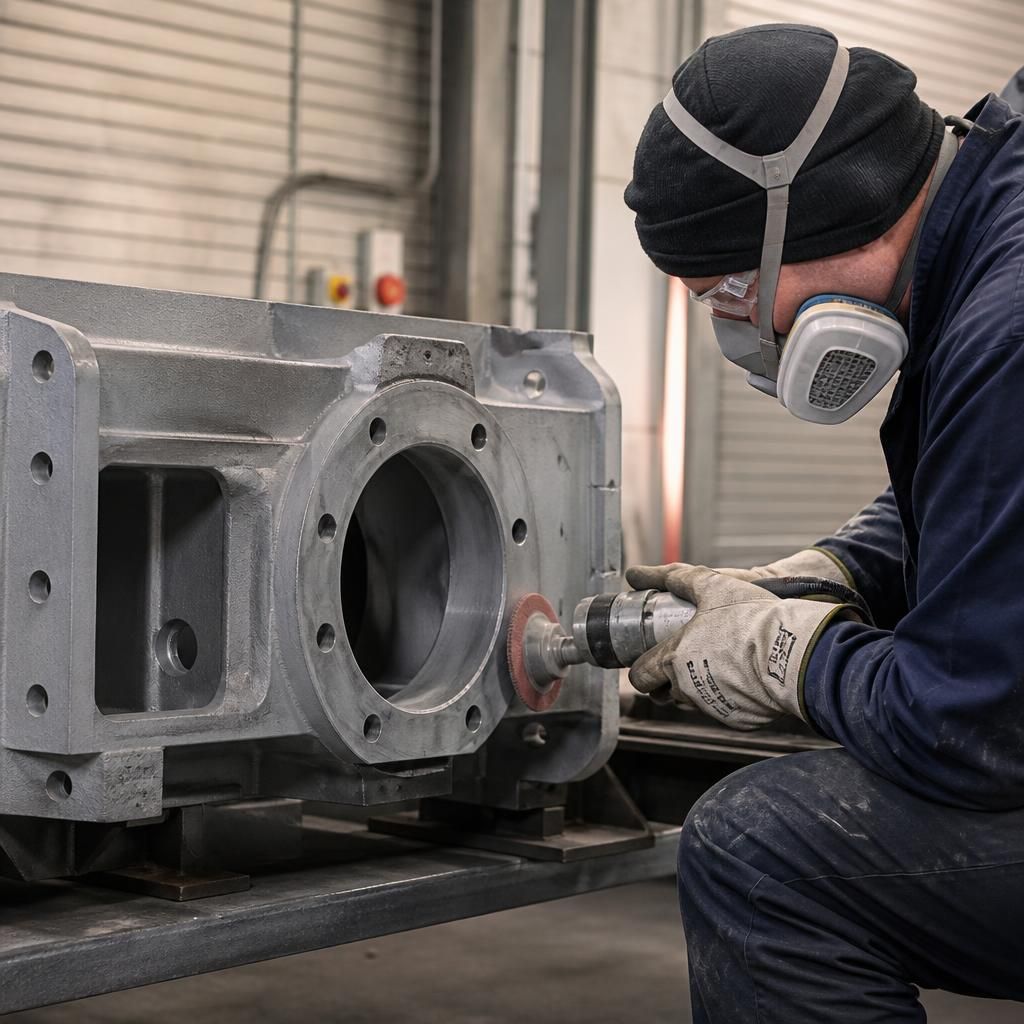
Rework can be a significant challenge when a defect is found after curing. High-temperature powder coatings are designed to resist demanding service conditions, so removing a faulty finish may require a controlled stripping method that will not distort the component, damage the substrate or alter critical dimensions. Abrasive removal, chemical stripping or thermal treatment can each affect the metal differently.
After stripping, the component must be checked for residue, surface damage and dimensional change before it is prepared and coated again. Local repair is not always suitable because differences in film thickness, texture or thermal history can remain visible and may affect performance. The rework route should therefore be agreed against the component specification, particularly where the part has close fits, concealed surfaces or a defined heat-resistance requirement.