

What procedures are involved in repairing a powder coating system to maintain optimal performance?
Repairing a powder coating system involves safely isolating the equipment, diagnosing faults across the application, curing, extraction and control systems, then repairing or replacing affected components. The system is recalibrated and tested afterwards to confirm consistent powder application, correct curing conditions and reliable operation.
A proper powder coating system repair is a controlled process that restores the condition of the equipment, removes the cause of the fault and verifies that the system can produce repeatable results. It involves more than changing a failed part: technicians must establish what has changed, inspect related equipment, correct underlying wear or contamination, and confirm that the repaired system operates within the requirements of the coating process.
1. Review the fault and operating history
The repair should begin with a review of the reported symptoms, recent maintenance, process records and any changes to powder, components or production settings. Useful information includes:
- When the problem was first noticed and whether it affects every component or only particular shapes, sizes or positions.
- Whether the fault concerns transfer efficiency, film appearance, adhesion, curing, overspray, powder recovery or equipment movement.
- Any unusual alarms, pressure changes, vibration, noise, heat or loss of airflow.
- Recent changes to powder formulation, colour, substrate preparation, hanging arrangements or line speed.
This establishes whether the failure is isolated or whether several symptoms may have a common cause, such as restricted airflow, moisture in the compressed air or unstable powder delivery.
2. Inspect the system methodically
A visual and physical inspection should cover the complete process route rather than focusing only on the component that appears to have failed. Technicians may check hoses for cracking, kinks or powder build-up; guns and nozzles for wear; pumps and injectors for blockage; cables and connectors for damage; and moving parts for looseness or excessive play.
The booth should be inspected for accumulated powder, damaged filters, poor sealing and obstructions that could disturb airflow. The powder recovery path also requires attention, including cyclones, filters, ducts, sieves and collection vessels. Build-up in these areas can restrict extraction, contaminate colours or return inconsistent powder to the application equipment.
Mechanical checks can include conveyor alignment, hanger contact, booth access doors, oven seals and the condition of bearings, belts and drive components. Poor earth continuity through hooks or the conveyor can affect electrostatic application even when the spray equipment itself is functioning correctly.
3. Check utilities and process conditions
Many apparent equipment faults originate in the services supporting the system. The compressed-air supply should be checked for suitable pressure, stable delivery, oil, water and other contamination. Moisture can interfere with powder transport and cause erratic output, while contaminated air may affect finish quality and damage pneumatic components.
Extraction performance should be assessed against the system’s design requirements. A blocked filter, damaged duct or incorrectly positioned damper may alter booth airflow and affect both powder containment and coating consistency. Electrical supplies, earthing, sensors and control signals should be checked for loose connections, damaged wiring or intermittent operation.
4. Clean and remove contamination correctly
Cleaning is often a repair action in its own right. Powder deposits should be removed from guns, hoses, pumps, booth surfaces, recovery equipment and other areas where they can obstruct flow or contaminate a different colour. The cleaning method must suit the equipment and the powder being used; unsuitable tools or aggressive products can damage seals, insulating parts and finished surfaces.
Where colour changes or specialist coatings are involved, the inspection should distinguish between normal process residue and cross-contamination. Nylon and other specialist powders may require particular attention to dedicated contact parts, hose condition and recovery arrangements. Any damaged seals, filters or flexible lines found during cleaning should be renewed rather than returned to service.
5. Repair or replace defective parts
Replacement decisions should consider the cause and extent of the failure. A worn nozzle, injector, hose, bearing, seal, filter or sensor may be replaced as an individual item. If a part has failed because of misalignment, abrasion, excessive heat, contamination or incorrect loading, that surrounding condition must also be corrected or the replacement may fail again.
Repairs should preserve the original safety functions and operating characteristics of the system. Electrical enclosures, interlocks, guards, extraction controls and emergency-stop arrangements must not be bypassed as a temporary solution. Components that influence powder flow, airflow, temperature or movement should be fitted securely and checked for correct orientation, connection and adjustment.
6. Restore mechanical and electrical settings
After the physical work, the system may require alignment, tensioning, lubrication or adjustment. Conveyor tracking, gun position, reciprocator movement and hanger contact can all affect coating uniformity. Electrical connections should be checked for secure termination, and sensors should be positioned so that they detect components reliably without being exposed unnecessarily to powder deposits or heat.
Control parameters should be returned to an approved process setting rather than adjusted by trial and error. Relevant settings can include powder feed, atomising air, electrostatic output, reciprocator travel, conveyor movement, extraction balance and oven control parameters. The correct values depend on the equipment, powder and component, so they should be checked against the system’s technical documentation and process requirements.
7. Verify the oven and curing process
A repair affecting the oven, sensors, burners, heaters, fans or airflow should be followed by a detailed review of the curing process. The displayed temperature is not necessarily the same as the temperature reached by the metal component, particularly where parts vary in thickness or are densely loaded. Temperature measurement equipment can be used to compare actual component conditions with the powder manufacturer’s curing requirements.
The inspection should also consider air circulation, burner or heater operation, door seals and the cleanliness of the oven interior. Uneven heat distribution, restricted circulation or inaccurate sensing can produce under-cured or over-cured coatings even when the control panel appears normal.
8. Test the system progressively
Testing should proceed in stages. First, individual repaired functions can be checked without production material, followed by operation of the relevant subsystems together. The system can then be assessed using representative components and the intended powder, with attention given to coverage, film build, finish, colour consistency, edge coverage and powder recovery.
Test pieces should be assessed using suitable quality checks for the application. Depending on the specification, these may include visual inspection, film thickness measurement, adhesion assessment and confirmation that the coating has cured correctly. If results vary across the component or along the line, the test should identify whether the cause is application, grounding, movement, airflow, powder condition or heat distribution.
9. Record the repair and identify follow-up work
The completed repair should be documented with the fault reported, findings, parts repaired or replaced, settings checked, tests performed and any remaining recommendations. Records help distinguish recurring failures from isolated incidents and provide evidence of how the system was returned to service.
Where the same defect has occurred repeatedly, the final stage should be a root-cause review rather than another like-for-like replacement. The solution may involve changing a cleaning routine, improving filtration, correcting loading practice, protecting a cable or hose, replacing a worn assembly, or revising the maintenance schedule. This approach reduces repeat faults and helps preserve consistent coating quality across future production batches.
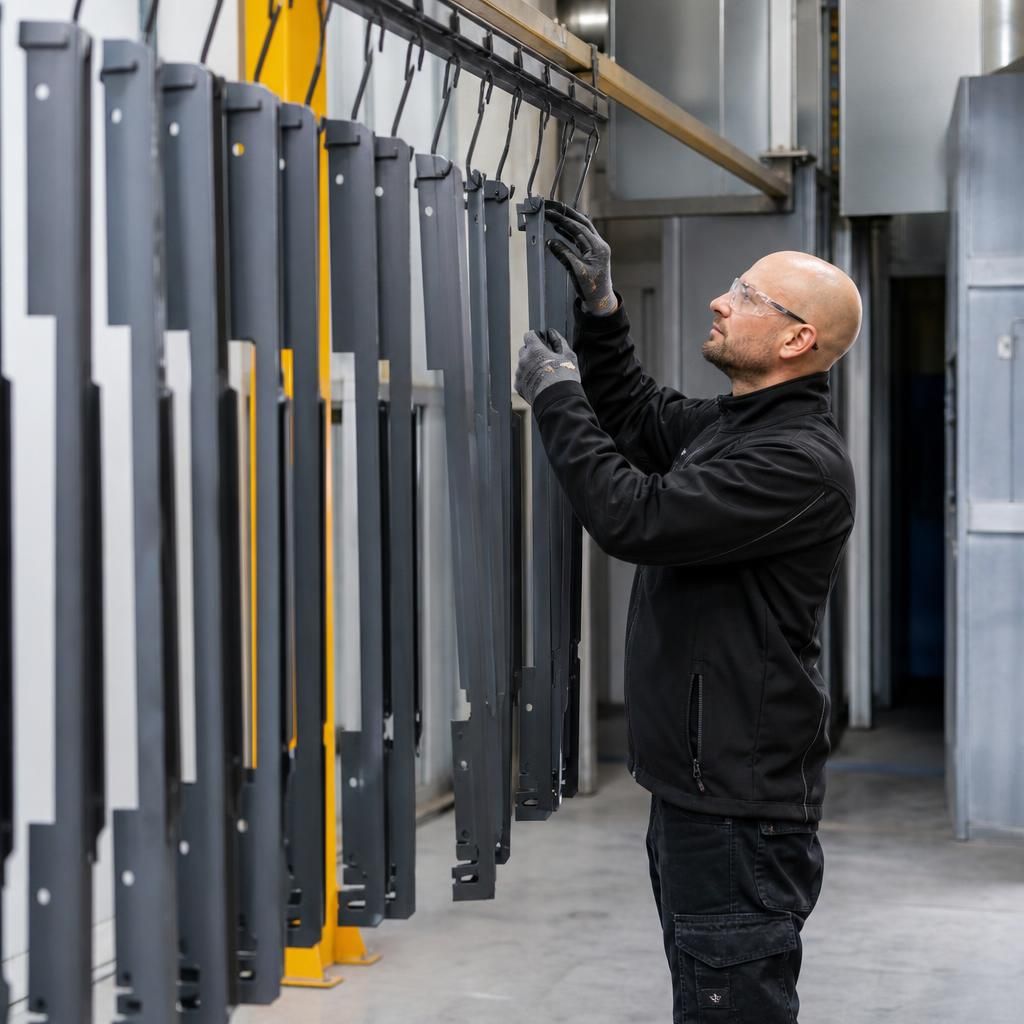
Component changes may require process revalidation. A replacement part with a different control range, response characteristic or material specification can alter powder delivery, airflow, temperature control or movement. Before fitting an alternative, its compatibility with the existing system and coating process should be confirmed.
Where a repair changes the system’s operating characteristics, the repair procedure should include an engineering review and documented revalidation. This may involve comparing the revised settings with the approved process, checking representative coated components and updating maintenance or operating instructions. Treating significant modifications in this way helps prevent a technically functional repair from introducing a new quality problem.