

What is the process for preparing metal surfaces before applying thermoset powder coatings?
Preparing metal surfaces for thermoset powder coating involves removing oil, dirt, rust, mill scale and other contaminants before application. The component is typically cleaned, degreased, abrasive blasted or otherwise mechanically prepared, then given a suitable chemical pre-treatment and dried to promote strong adhesion and a durable, even finish.
Preparing a metal component for thermoset powder coating is a controlled process of assessing the substrate, correcting surface defects, selecting compatible pre-treatment and protecting areas that must remain uncoated. The objective is to present a chemically compatible, physically sound surface so the cured powder film can bond consistently and perform as specified.
1. Assess the component and coating requirements
Preparation starts with reviewing the component’s material, previous use, fabrication method and required service conditions. Mild steel, aluminium, galvanised steel and previously coated parts can require different preparation routes. The specification should also identify the intended appearance, film build, corrosion resistance, masking requirements and any areas that must remain conductive, threaded or dimensionally unchanged.
Components are checked for conditions that could affect the finished coating, including:
- Weld spatter, sharp edges, burrs and poorly finished joints
- Deep scratches, dents, laminations, pits or other substrate damage
- Trapped debris, moisture-retaining cavities and inaccessible internal surfaces
- Silicone, adhesive, marker, sealant or fabrication residues
- Existing paint, plating, galvanising or other finishes that may affect compatibility
Preparation cannot reliably correct a manufacturing defect or poor joint design. Where practical, welds should be continuous and suitably finished, sharp edges should be eased, and drainage or ventilation should be provided for hollow sections. These measures reduce the risk of pinholes, uneven coverage, edge weakness and contamination released during heating.
2. Select a route for the particular substrate
The preparation method must suit both the metal and the final coating system. Steel may require a corrosion-control pre-treatment designed for ferrous substrates, while aluminium requires a process that removes its surface oxide without damaging the underlying metal. Galvanised or zinc-coated parts need particular care because aggressive treatment can alter the zinc layer and affect the appearance or adhesion of the powder film.
Previously coated or repaired components require an additional assessment. The existing finish may need complete removal, or it may be retained only if its adhesion, chemical compatibility and heat resistance are known to be suitable. Unknown coatings should not be treated as a dependable foundation for a new thermoset system.
3. Control the pre-treatment stages
After the initial preparation route has been selected, the component passes through a controlled sequence appropriate to its material. This can include an alkaline stage, an acidic stage, conversion treatment and one or more rinsing stages. Each stage has a specific purpose: loosening residues, conditioning the surface, reducing corrosion risk or creating a more suitable base for powder adhesion.
Process control is important because under-treatment may leave interfering residues, whereas over-treatment can attack the substrate or create an unstable surface. Concentration, temperature, contact time, rinsing effectiveness and the condition of process solutions should be monitored against the coating specification. The final surface must be free from visible residues and should not be handled with bare hands after preparation, as fingerprints can introduce contamination.
4. Deal with edges, cavities and masking
Powder behaves differently around corners, recesses and narrow openings than it does across broad, flat faces. Edges can receive less effective coverage, while recesses may retain process chemicals or collect excess powder. Components should therefore be positioned and prepared so that internal areas can be treated, inspected and adequately coated.
Threads, bearing seats, electrical contact points, machined faces and identification surfaces are normally protected with suitable plugs, caps or masking materials. Masking must tolerate the coating cycle and must not shed material onto the prepared surface. Drain holes and hanging points should be planned before processing; otherwise masked areas or trapped residues can cause defects during curing.
5. Manage handling and transfer
Once the surface has been prepared, the component should be transferred to the coating stage using clean supports and appropriate gloves or handling equipment. Contact points need to be selected carefully: they must provide secure suspension and, where required, a reliable electrical path for powder application without damaging visible faces.
Prepared parts should be protected from workshop dust, moisture and contact with unprepared items. Delays or unsuitable storage can allow flash corrosion on steel, renewed oxidation on aluminium or contamination from nearby processes. The correct interval between preparation and coating depends on the metal, environment and pre-treatment system, so it should be defined in the process specification rather than assumed.
6. Verify the surface before powder application
Inspection should take place before the powder is applied, not only after curing. A competent check looks for visible staining, remaining residues, corrosion, damaged masking, handling marks, water retention and areas that were not reached by the preparation process. The component’s identity and preparation route may also be recorded so that any coating issue can be traced to the relevant batch or process stage.
Where the application is subject to an industrial specification, verification may include documented checks of pre-treatment conditions, surface cleanliness, coating-system compatibility and the suitability of the component design. The exact acceptance criteria depend on the metal, coating type, required appearance and operating environment.
Good preparation is therefore not a single cleaning operation but a linked sequence covering component design, substrate assessment, material-specific conditioning, masking, controlled handling and inspection. When these stages are matched to the metal and the intended thermoset powder system, they provide a stable foundation for consistent application and curing.
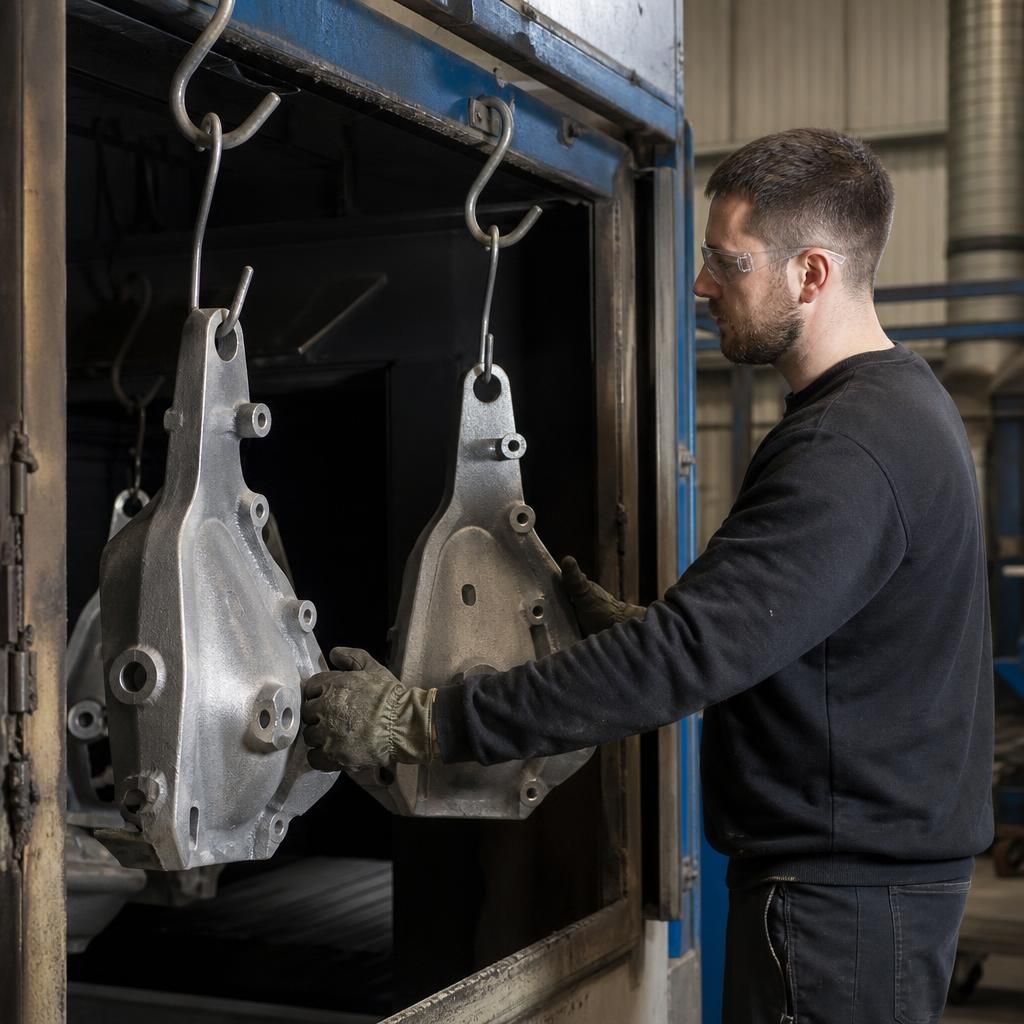
Porous castings and fabricated parts can release trapped air, moisture, oil or machining fluids when they are heated during powder coating. This outgassing can create pinholes, blisters or small craters in the cured thermoset film, even when the visible surface appears clean.
Preparation should therefore consider the component’s porosity and manufacturing history, not just its external appearance. Where the coating specification allows, a controlled pre-bake or degassing stage may be used before final cleaning and powder application. The process should be selected carefully because excessive heat can affect the substrate, existing finishes or dimensional tolerances. Castings with persistent porosity may also require sealing or design review before coating.
Discuss your thermoset powder coating preparation requirements
Discuss your thermoset powder coating preparation requirements with the team, including the substrate, component design, existing finishes and any areas requiring protection. Providing drawings, photographs or coating specifications can help establish a suitable preparation route for your parts.