

What types of finishes are available for UV and high-performance powder coatings?
UV and high-performance powder coatings are available in smooth or textured finishes, with gloss, satin and matt appearances selected to suit the component and application. These options allow the coating to provide a specified visual effect while maintaining the durable surface protection required for demanding indoor or outdoor environments.
Finish options for UV and high-performance powder coatings extend beyond the basic surface appearance. They can include solid colours, metallic and special-effect appearances, fine or pronounced textures, clear protective layers and carefully specified surface profiles. The appropriate choice depends on the required visual result, exposure conditions, cleaning regime, component design and the performance specification of the coating system.
Solid colours are the most straightforward option for industrial components. They provide a consistent, uniform appearance and can be selected to support identification, corporate colour schemes or integration with surrounding equipment and structures. For production work, the colour should be specified using an agreed reference or sample, as the apparent result can be affected by the substrate, coating thickness, curing conditions and viewing light.
Metallic and special-effect finishes can create a visual depth that is not present in a standard solid colour. Metallic effects may contain reflective particles, while other finishes can produce pearlescent, sparkle or colour-shifting characteristics. These effects often require tighter control of application and batch consistency because the orientation of particles can influence how the surface looks from different angles. Components that will be assembled together should therefore be considered as one finish specification rather than treated as unrelated parts.
Textured finishes are available in different degrees of surface definition. A fine texture gives a restrained pattern, while a heavier texture produces a more pronounced tactile effect. Textures can help disguise minor visual variation in a fabricated component and may be useful where a less reflective, more industrial appearance is required. They can, however, make narrow recesses, threaded areas, sharp corners and mating surfaces more difficult to coat consistently, so the part design and masking requirements need to be reviewed before the finish is selected.
Wrinkle, mottled and hammered effects provide more distinctive surface profiles than a conventional decorative coating. These are generally chosen for appearance or to create a robust industrial look rather than as a substitute for correct preparation and coating thickness. Their deeper profiles may retain dust or process residue more readily than a flatter surface, which makes the cleaning requirements of the finished component an important consideration.
Clear finishes may be used where the underlying appearance needs to remain visible or where a specified coating system includes a clear protective layer. A clear coat can alter the perceived depth, reflectivity and colour of the layer beneath it. It should be assessed as part of the complete system, since compatibility, curing and adhesion between layers affect the finished result. A clear finish is not automatically suitable for every outdoor or chemically exposed application.
Low-reflection and light-management finishes can be useful where glare, visible reflections or the visual prominence of a component need to be limited. This consideration may be relevant to external housings, equipment panels and architectural metalwork. The finish should be assessed under the lighting conditions in which the component will be viewed, as a sample seen indoors may appear different in strong daylight or at an angle.
The appearance of a high-performance powder coating should not be considered separately from its protective role. A finish specification should account for:
- Exposure: ultraviolet radiation, moisture, temperature changes, pollutants and other environmental factors can influence the suitability of the coating formulation.
- Surface preparation: cleaning, removal of contamination and appropriate pre-treatment are essential to coating adhesion and long-term performance.
- Component geometry: holes, recesses, welds, edges, folds and assembled interfaces can affect coverage and the final appearance.
- Cleaning and handling: textured or effect finishes may need different cleaning methods from flatter surfaces, particularly where dirt could collect in the profile.
- Batch matching: colour, texture and special effects can vary between production runs, so related components should be planned and specified consistently.
- Coating system: the primer, base coat, topcoat or clear layer must be compatible with the intended exposure and with one another.
For metal parts used in demanding environments, the finish should therefore be recorded as more than a colour name. A useful specification identifies the colour reference, surface effect, texture level, sheen requirement, coating system and any areas that must remain uncoated. Samples or approved panels can help confirm the expected appearance before a batch is processed, particularly for metallic, pearlescent or heavily textured finishes.
UV and high-performance powder coatings can consequently be tailored for both appearance and service conditions. The most suitable option is the one that provides the required visual character without compromising coverage, maintainability or the protective performance expected from the complete coating system.
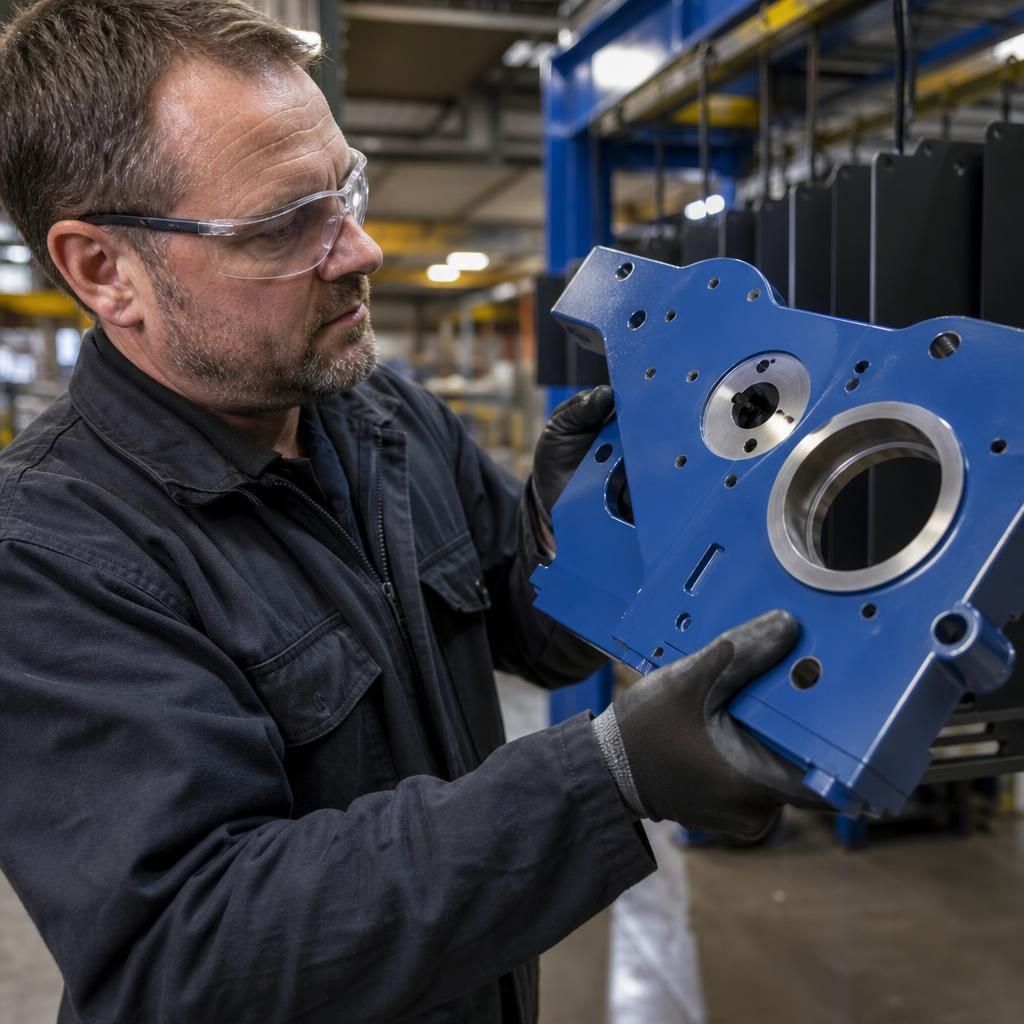
Finish selection must also account for functional contact areas, not just the visible appearance. Powder coating can affect electrical continuity, fastener engagement and close-tolerance fits, so earth points, threaded holes, bearing seats and mating faces may need to remain uncoated or be masked during application.
These requirements should be identified before processing and shown on the coating specification or component drawing. A part may therefore combine a high-performance decorative finish on its exposed surfaces with carefully defined untreated areas where assembly, bonding or electrical performance depends on direct metal contact.