

What maintenance is required to maximise the lifespan of nylon and speciality powder-coated surfaces?
Maximising the lifespan of nylon and speciality powder-coated surfaces requires regular inspection, gentle cleaning and prompt repair of chips, scratches or areas of exposed metal. Use non-abrasive methods and cleaning agents compatible with the coating, while controlling contact with chemicals, heat, moisture and mechanical abrasion in line with the coating specification.
Effective maintenance of nylon and speciality powder-coated surfaces is a planned, coating-specific regime that protects the finish, preserves its performance characteristics and prevents small defects from developing into substrate corrosion or coating failure. The required approach depends on the powder chemistry, film thickness, pre-treatment, service temperature, exposure conditions and the chemicals or loads encountered in use.
Use the coating specification as the controlling document. The technical data sheet should identify suitable cleaning agents, chemical resistance, temperature limits and any restrictions on immersion or prolonged exposure. Nylon and speciality coatings are not interchangeable: a cleaner suitable for one formulation may soften, stain or embrittle another. Where the original coating specification is unavailable, identify the coating system before selecting a maintenance product rather than relying on a general-purpose solvent or degreaser.
- Remove loose dust and grit before wiping, so particles are not dragged across the finish.
- Apply the approved detergent at the recommended dilution using clean equipment.
- Pay particular attention to ledges, recesses, drainage points, joints and areas where deposits can remain trapped.
- Rinse away detergent and dissolved contaminants thoroughly, especially on components exposed to salts or process chemicals.
- Dry the component or allow water to drain fully before it is returned to service.
Avoid unapproved solvents, aggressive alkaline or acidic cleaners, abrasive pads, wire brushes and high-pressure techniques that can force contamination into joints or damage the coating at edges. Do not use a cleaning method merely because it is effective on bare steel or another finish. Test any unfamiliar product on a concealed area and check the result after drying, looking for softening, whitening, gloss change, tackiness or colour transfer.
Inspect high-risk details as well as exposed faces. Coating damage often begins at sharp edges, drilled holes, welds, corners, fasteners, mating surfaces and points where water or chemicals collect. Check for rust staining, blistering, lifting, cracking, chalking, unusual fading, loss of gloss and localised wear. On nylon-coated parts, also look for cuts, gouges, compression marks and areas where repeated movement has exposed the underlying metal. These signs should be assessed in relation to the coating’s intended function; a cosmetic colour change is not equivalent to loss of adhesion or exposure of the substrate.
Keep supporting equipment and adjacent components from creating avoidable damage. Prevent metal-on-metal impact during handling, use suitable separators when parts are stacked, and protect coated surfaces from sharp edges on pallets, jigs, clamps and lifting equipment. Where a coated component moves against another part, confirm that the contact pressure, alignment and movement are compatible with the coating. Persistent rubbing can wear through even a durable film, particularly at a fixed contact point.
Moisture management is especially important on assemblies rather than isolated parts. Maintain clear drainage paths, avoid designs or installation positions that create water traps, and inspect interfaces where seals, washers and fixings meet the coating. If a component is exposed to salt, process residue, oils or other contaminants, remove deposits in accordance with the coating specification rather than allowing them to remain until the next planned service activity.
Repair defects according to their depth and cause. A superficial mark may need no more than approved cleaning and monitoring, while a chip through to the metal requires a compatible repair system and investigation of why the damage occurred. Before applying a touch-up material, the area normally needs to be clean, dry and free from loose coating and corrosion. The repair product must be compatible with the existing powder coating, the substrate and the operating environment; an unsuitable paint or solvent can create a weak boundary or a visible mismatch. Extensive damage, widespread adhesion loss or corrosion beneath the film may require removal and re-coating rather than local treatment.
Record the coating system, cleaning products, inspection findings, defect locations and remedial work. This creates a useful maintenance history and helps distinguish isolated handling damage from a wider issue such as chemical attack, excessive operating temperature, inadequate drainage or movement at a joint. If the finish performs a specialist function, such as chemical resistance, electrical insulation or protection against corrosion, include the relevant performance checks in the asset’s maintenance plan rather than treating appearance as the only measure.
Maintenance intervals should be risk-based. Components in sheltered indoor service may need a different regime from parts exposed to outdoor weather, coastal contamination, industrial chemicals, heat cycling, abrasion or frequent handling. Reassess the regime when the operating environment changes, when a new cleaning chemical is introduced or when repeated defects appear. For valuable or safety-critical components, obtain advice from the original coater or a suitably qualified coating specialist before carrying out extensive cleaning, stripping or re-coating.
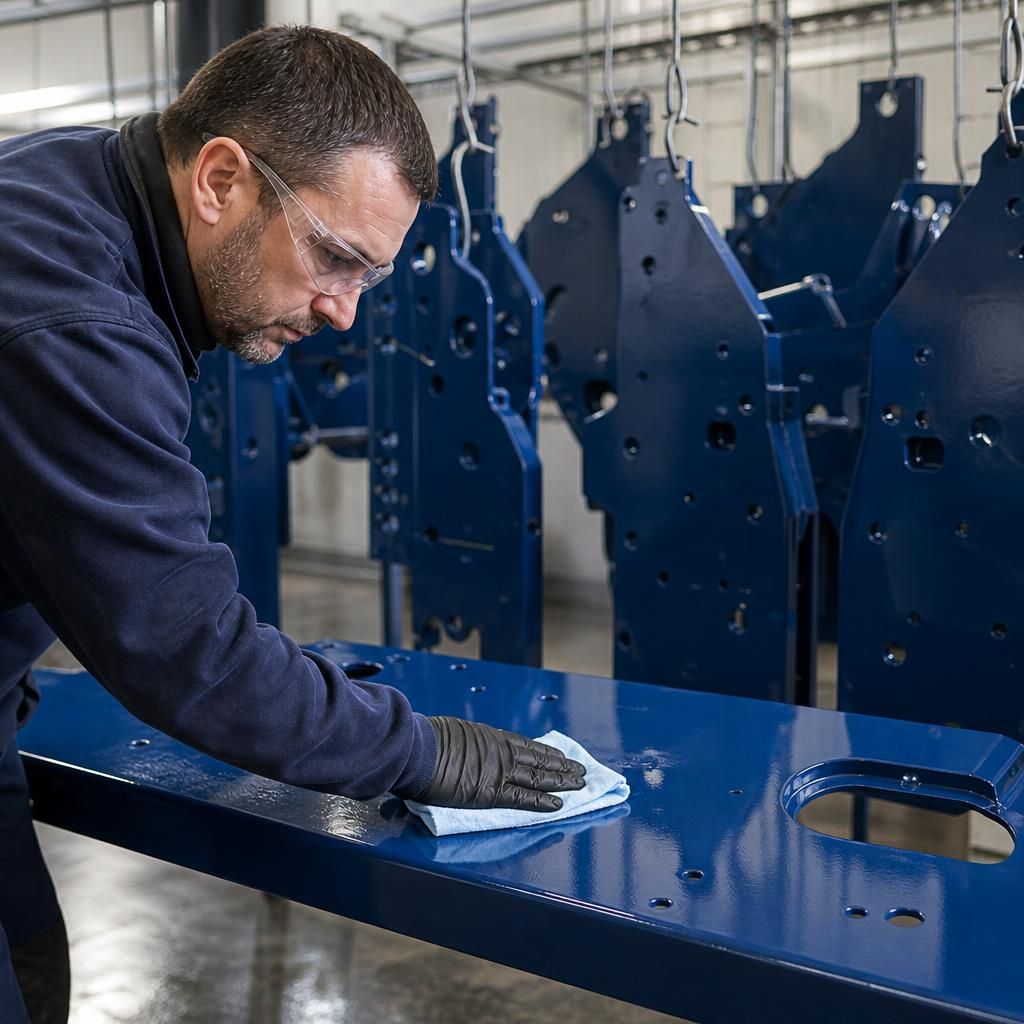
Cleaning and inspection should be carried out under controlled conditions, not while the component is still hot, under load or exposed to active chemicals. Allow heated parts to cool to a safe temperature, isolate equipment where necessary and remove residues before they are spread across the coating. This reduces the risk of cleaner reaction, smearing, thermal shock or accidental mechanical damage during maintenance.
- Check that the surface temperature is suitable for the approved cleaning product.
- Use clean cloths, brushes and rinse water so removed grit and process residue are not reintroduced.
- Protect freshly cleaned surfaces from contact with contaminated gloves, lifting gear or work benches.
- Confirm that joints, recesses and drainage points are dry before the component returns to service.
Discuss your powder-coated surface maintenance requirements
Discuss your nylon or speciality powder-coated components with our coating specialists to review the operating environment, maintenance requirements and suitable repair or re-coating options. Provide details of the substrate, coating function and service conditions so the recommended approach is specific to the application.