

What factors should be considered when selecting a thermoplastic powder coating for specific industrial applications?
Select a thermoplastic powder coating by matching its performance to the substrate, service environment and application requirements, including resistance to impact, abrasion, chemicals, moisture, corrosion and temperature variation. Also consider the required finish, coating thickness, application method, part geometry, regulatory needs and whether the coating can be repaired or recoated during the component’s service life.
Selecting a thermoplastic powder coating is primarily a specification exercise: the coating must be chosen for the component’s failure risks, operating conditions, production route and required service life rather than by colour or resin name alone. A sound selection process identifies the dominant duty, compares suitable polymer chemistries and confirms the choice through application trials and measurable acceptance criteria.
Start with the main failure mode. Industrial components rarely experience one type of stress in isolation. A conveyor guide may prioritise low friction and abrasion resistance, whereas a fabricated enclosure may place greater emphasis on corrosion protection and appearance. Components used in material handling may need a coating that tolerates repeated contact and flexing. Separating the primary failure mode from secondary requirements prevents an attractive but unsuitable specification.
Match the polymer family to the duty. Thermoplastic coatings differ significantly in behaviour:
- Polyamide coatings are commonly considered where abrasion, wear, impact and sliding contact are important. Their moisture behaviour and dimensional requirements should be checked for the particular application.
- Polyolefin coatings can be appropriate where chemical resistance, moisture resistance and flexibility are required, subject to the operating temperature and adhesion system.
- Thermoplastic polyurethane coatings are useful where flexibility, impact absorption and resistance to repeated movement are important. Their hardness and resistance to the specific chemicals involved should be confirmed.
- Fluoropolymer coatings such as PVDF are considered for demanding outdoor or chemically exposed applications where weathering and colour retention are significant factors.
These categories are starting points rather than automatic recommendations. The precise grade, formulation and coating system can change the result, so technical data should be checked against the actual duty.
Consider how the component is loaded in service. Static exposure is different from repeated impact, vibration, sliding contact or flexing. A rigid coating may perform well on a stable frame but be less suitable where a part bends or receives concentrated impacts. Similarly, a coating that resists a bulk chemical may still be affected by a combination of heat, pressure, abrasion and prolonged contact. The assessment should therefore describe the real loading cycle, not simply list the substances present.
Assess interfaces and assembly requirements. Coating selection affects more than the exposed surface. Check whether coated parts must fit into bearings, threads, seals, clips, hinges or press-fit assemblies. Define areas that must remain uncoated and consider masking, edge coverage and the effect of the coating on mating tolerances. If components are welded, bonded or electrically earthed after coating, the specification should state how those interfaces will be prepared and protected.
Check preparation and adhesion requirements. The powder is only one part of the system. Surface cleanliness, profile, conversion treatment and primer compatibility can determine whether the coating remains attached during service. Existing mill scale, oil, weld residue, sharp edges and embedded contaminants may require specific preparation. For difficult substrates or unusual geometries, a trial should establish whether the proposed system gives consistent coverage and adhesion.
Define the finish in measurable terms. “High quality finish” is not sufficiently precise for industrial procurement. The specification can identify gloss level, colour tolerance, texture, edge appearance, acceptable visual defects and the areas visible after assembly. Where appearance is secondary, a more functional acceptance standard may be appropriate. Agreeing these points before production reduces disputes and makes inspection more consistent.
Include production and handling constraints. The component’s size, mass, shape and throughput can affect whether a powder system is practical. Recesses, narrow channels and Faraday areas may require particular attention during application. The coating must also tolerate the handling, packing and assembly steps that follow curing. For repeat orders, assess whether the selected system can be applied consistently across different batches and whether colour or surface variation will be acceptable.
Review compliance and end-use controls. Some sectors require documented restrictions on substances, specified testing, traceability or suitability for contact with particular materials. Construction, automotive, food-related and safety-critical applications may each have different documentation expectations. Identify the relevant legal, customer or sector standard at the specification stage and request evidence for the exact coating grade, rather than relying on a general statement about the polymer family.
Validate the choice before committing to production. A representative sample or test panel can reveal problems that data sheets cannot predict, particularly with complex geometry or unusual preparation. Validation may include adhesion, impact, abrasion, chemical exposure, dimensional checks and visual inspection, selected according to the component’s duty. The acceptance criteria should record the test method, exposure conditions and permitted change so that the result is useful for future batches.
Finally, compare options on total suitability rather than powder price alone. Include preparation, application, inspection, masking, rejects, handling and the consequences of recoating or replacing the part. A coating that meets the duty reliably with a straightforward process may be the better industrial choice even when another option appears cheaper at the initial specification stage.
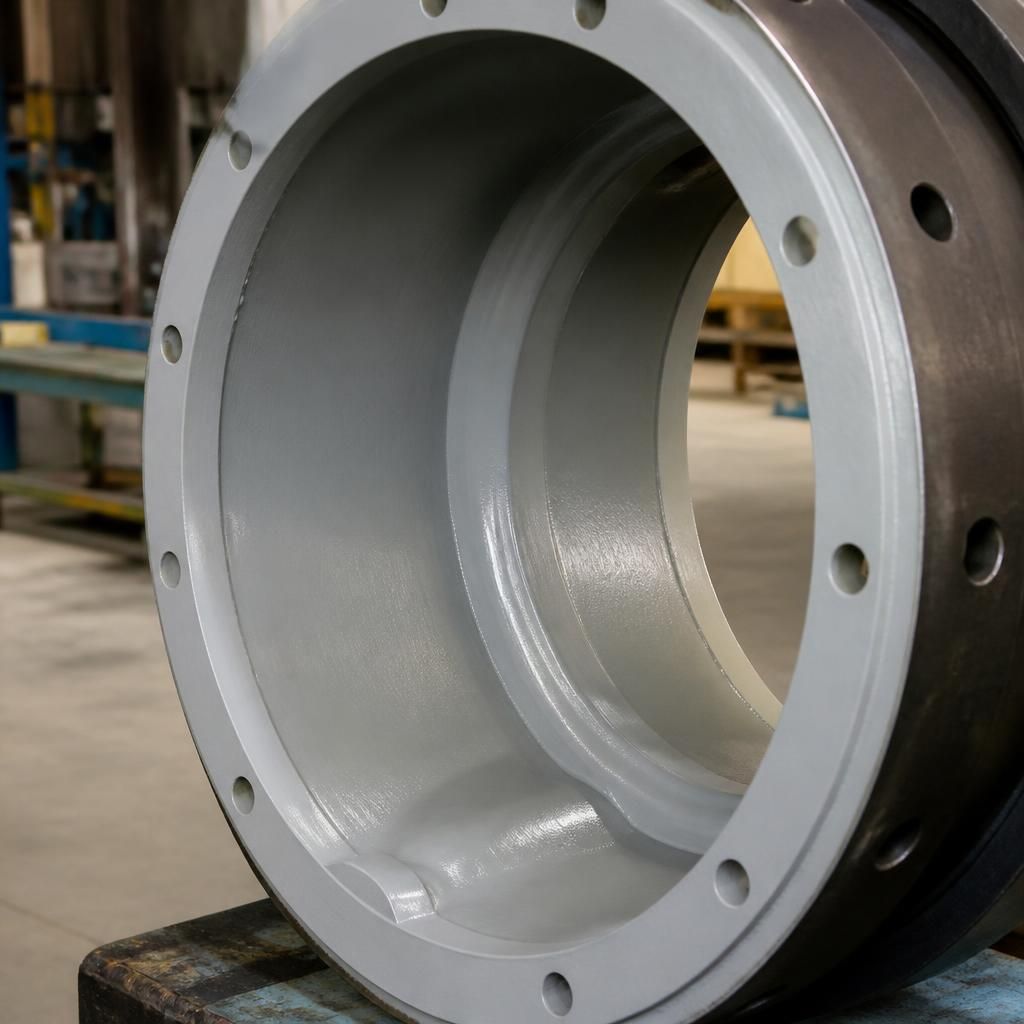
Account for thermal expansion between the coating and the substrate, particularly where a component experiences repeated heating and cooling or combines dissimilar materials. A coating that performs well at a steady operating temperature may still crack, lose adhesion or allow moisture beneath the film if the metal and polymer expand and contract at different rates.
Selection should therefore consider the full temperature cycle, not only the maximum temperature. Review the coating’s flexibility, adhesion system and resistance to thermal shock against the component’s geometry and expected movement. Trial panels or representative parts can help confirm that the chosen system remains intact around corners, joints, welds and other areas where thermal stresses may concentrate.