

How do I estimate the cost of powder coating for a large batch project?
Estimate the cost of a large batch powder coating project by accounting for surface preparation, coating requirements, component size and geometry, batch volume, packing, handling, and collection or delivery. A reliable estimate requires a detailed parts schedule and specification so the coater can assess the work and provide a tailored batch quotation.
A dependable estimate for a large batch powder coating project comes from converting the parts schedule into a defined production scope, then separating one-off preparation and setup costs from the repeat cost of processing each component. The estimate should be based on the actual component geometry, coating specification, batch pattern and quality requirements rather than on a simple price per item.
Start with a complete costing schedule. List every component or part family separately, even where the parts appear similar. For each item, record the quantity, dimensions, approximate weight, material, drawing reference and whether it is supplied assembled or as separate pieces. Include the expected number of production batches and identify any parts that must be kept together as matched sets. This prevents a low unit estimate for one component from disguising additional handling or processing requirements elsewhere in the order.
Where possible, provide surface area or enough dimensional information for the coater to calculate it. Two parts with the same weight can present very different coating areas, and a hollow, folded or highly formed component may require more handling than a flat plate. Drawings, photographs and a representative sample can help clarify features that are difficult to describe in a spreadsheet.
Separate fixed and variable elements. A useful working model divides the estimate into:
- initial review, masking design, colour or finish setup and other work that may apply to the project as a whole;
- preparation and coating costs that vary with the parts processed;
- inspection, protection and packing requirements;
- any special handling, storage or transport requirements agreed for the order; and
- additional operations or corrective work that are outside the standard specification.
This distinction matters because a large quantity may spread a setup cost across more components, while a complex part can still carry a higher processing cost than a straightforward item. If the order will be released in several smaller batches, ask for the estimate to show whether setup or preparation is charged per release rather than once for the complete project.
Define the coating specification before applying a unit rate. State the required colour, gloss level, texture, coating type, film thickness or thickness range, and any performance requirement relevant to the application. If the parts need enhanced resistance, a specialist protective coating or nylon coating, explain the service conditions rather than relying on a general description such as “hard-wearing”. Exposure to weather, chemicals, abrasion, heat or frequent contact can affect both the selected coating system and the preparation required.
Also state whether appearance is critical. A coating intended for a visible architectural or automotive-facing surface may require tighter controls over blemishes, colour consistency and handling marks than a concealed industrial bracket. If an approved colour standard, finish sample or reference panel exists, include it with the enquiry. The quotation should identify whether colour matching, sample approval or a first-off inspection is included.
Assess the parts for processing difficulty. Add notes for features that can change the estimate, including:
- blind holes, threaded holes, bores and close-fitting interfaces that need masking;
- areas that must remain uncoated for electrical contact, welding, assembly or dimensional reasons;
- deep recesses, narrow channels, overlapping sections and enclosed areas;
- lifting points, rack locations or visible contact points that affect how the parts can be positioned; and
- components that need to be dismantled, reassembled or protected from contact with one another.
These details influence preparation time, powder access, hanging arrangements and inspection. They can also identify a need for additional masking materials or bespoke handling arrangements before the work begins.
Build an estimate using comparable units. For internal budgeting, calculate a provisional cost per component family, per batch and for the complete project. Cost per part is useful when every item is similar; cost per square metre can be more meaningful for panels or large surfaces; and a batch-level figure may be the most practical basis where handling and setup dominate. Do not combine unlike parts into one average unless their preparation, geometry and finish requirements are genuinely comparable.
Use the first quotation or trial batch to test the assumptions in the model. Compare the estimated and actual quantities processed, preparation time, powder usage, rejected or reworked items and packing needs. If the specification or batch composition changes, update the estimate rather than carrying forward the original unit cost. A change in colour, finish, masking or release size can affect the calculation even when the total part count remains unchanged.
Clarify what happens if parts arrive outside the agreed condition. The estimate should state the assumed starting condition of the metal and identify whether existing paint, oil, rust, weld spatter, labels, adhesive, burrs or other contamination must be removed before coating. It should also explain how unexpected defects, unsuitable repairs or additional preparation will be treated. This avoids treating unknown preparation work as if it were included in the standard coating rate.
Check the quotation on a like-for-like basis. When reviewing a large-batch price, confirm the quantities, part references, coating system, finish, preparation standard, inspection level, packing method and number of batch releases used in the calculation. Check whether prices are stated per item, per batch or for the full order, and whether minimum charges or separate line items apply. Confirm the treatment of taxes, transport, samples, rework, storage and any work caused by changes to the supplied parts.
For a practical enquiry, send the parts schedule with drawings or photographs, material information, expected quantities, batch structure, finish requirements, masking details and the intended use of the coated components. A Midlands-based specialist such as Powder-coatings.co.uk can then assess the specification and return a quotation tailored to the actual batch rather than relying on a generic rate.
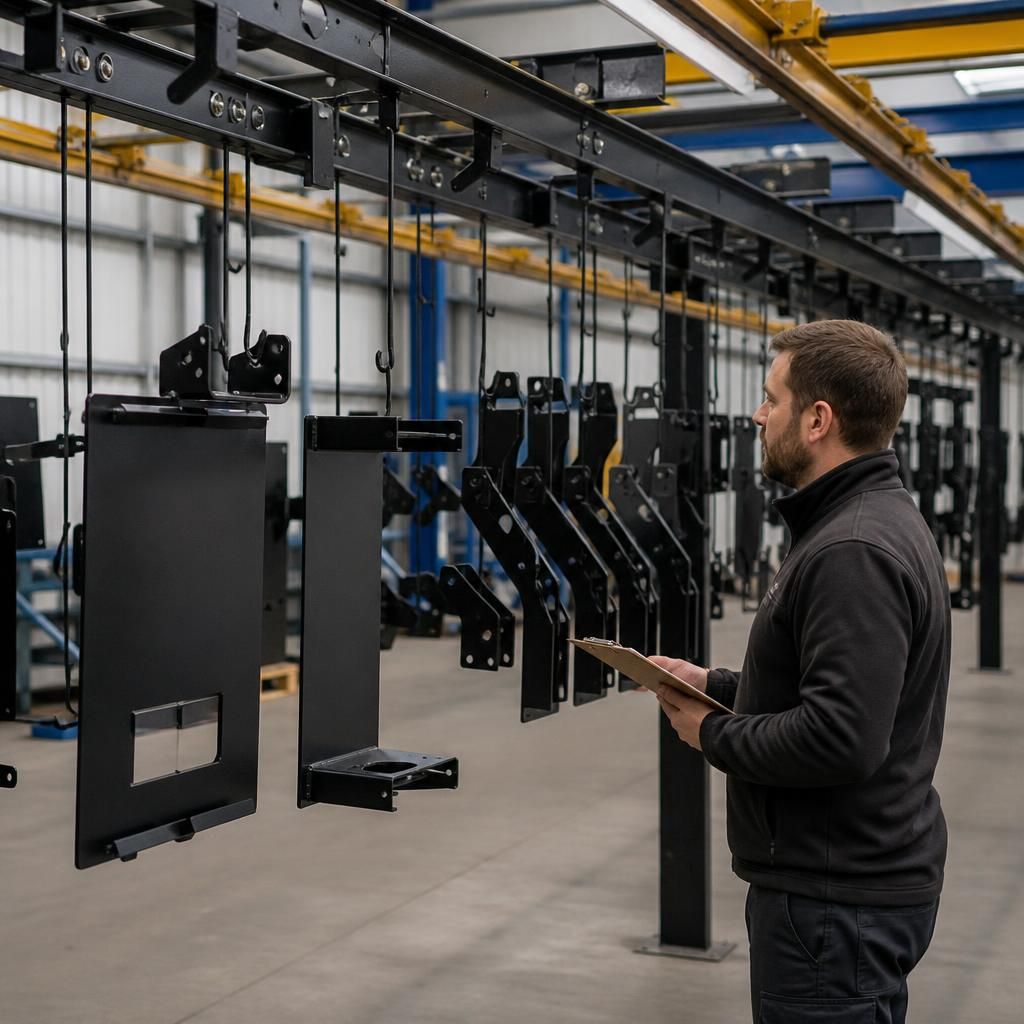
For a large batch, estimate how efficiently the components can be loaded for processing rather than relying on the part count alone. Parts that require generous spacing, individual hanging points or different orientations may occupy more rack capacity than their size suggests, increasing the number of processing cycles and the handling involved.
To improve the estimate, group components by similar dimensions, hanging method and coating requirements. Ask the coater to consider:
- how many parts can be safely loaded together;
- whether different part families can share a batch;
- which surfaces need to remain accessible for coating and curing; and
- whether contact points, balance or delicate features limit the loading arrangement.
This gives a more realistic view of the batch cost, particularly where a high item count does not translate into efficient rack utilisation.
Request a tailored large-batch powder coating estimate
For a tailored large-batch estimate, send Powder-coatings.co.uk your parts schedule together with relevant drawings, photographs and coating requirements. The proposed scope can then be assessed against the actual project details for a suitable quotation.