

What types of specialist powder coatings are available for industry-specific applications?
Specialist powder coatings for industry-specific applications include nylon coatings and protective finishes selected for the component’s operating conditions. The appropriate coating depends on factors such as exposure, wear requirements, corrosion risk and the type of metal part being treated.
Specialist powder coatings for industrial applications include thermoplastic nylon and protective coating systems selected for the component’s service conditions. Unlike a general-purpose finish, a specialist coating is specified according to the demands placed on the part, such as repeated contact, impact, abrasion, chemical exposure, electrical requirements or outdoor use.
Nylon powder coatings are thermoplastic finishes used where a tough, resilient surface is required. Nylon can provide a combination of impact resistance, low friction and resistance to wear, making it suitable for components that rub, slide or come into repeated contact with other parts. Typical applications can include handling equipment, industrial fixtures, rollers, guides, brackets and components where a less abrasive contact surface is useful.
The appropriate nylon grade and application method depend on the component’s material, dimensions, geometry and intended duty. Complex shapes may require particular attention to coverage around edges, recesses and internal surfaces. The specification should also consider operating temperature and compatibility with any oils, cleaning agents or other substances the finished part will encounter.
Protective powder coatings are selected to help shield metal components from the conditions that cause deterioration. Depending on the application, the coating specification may prioritise resistance to corrosion, abrasion, impact, moisture, chemicals or general environmental exposure. Protective finishes are therefore relevant to fabricated assemblies, structural components, equipment housings, industrial plant and parts used in construction, manufacturing and automotive environments.
Protection is not determined by the powder alone. Surface preparation, the condition of the substrate, coating coverage and the suitability of the curing process all affect the performance of the finished system. Where corrosion resistance is important, particular care is needed around welds, sharp edges, joints and areas where contamination or insufficient preparation could compromise adhesion.
Specialist coatings can also be considered for more specific functional requirements:
- Wear-resistant finishes: used where components are exposed to sliding contact, friction or repeated handling.
- Impact-resistant finishes: considered for parts likely to receive knocks during use, assembly or transport.
- Chemically resistant systems: specified where cleaning products, oils, solvents or process chemicals may contact the coating.
- Outdoor protective systems: selected for components exposed to moisture, changing weather conditions or other environmental factors.
- Insulating coatings: considered where the electrical behaviour of the coated component forms part of the design requirement, subject to the relevant technical specification.
These descriptions identify the performance requirement rather than a universal coating recipe. A finish that is suitable for an indoor machine guard may not be suitable for a component exposed to road debris, constant abrasion or aggressive chemicals. The operating environment, expected service life, cleaning regime and acceptable appearance should all be established before the powder is selected.
Industry-specific selection is particularly important because different sectors place different demands on coated metalwork. Manufacturers may require repeatable coverage across batches of components. Fabricators may need a finish that accommodates varied shapes, welds and fabricated assemblies. Construction-related parts may require protection against outdoor exposure, while automotive components can face abrasion, oils, impact and temperature changes. The coating must be matched to the part’s actual use rather than chosen solely by colour or visual finish.
The substrate also influences the specification. Steel, galvanised steel, aluminium and other metals can behave differently during preparation, application and curing. Masking may be needed to keep coating away from threads, bearing seats, earth points, mating faces or other areas that must remain dimensionally accurate. Parts should be designed or prepared with coating build-up and access for coverage in mind.
For a specialist powder coating project, useful information includes the base metal, component dimensions, drawing requirements, expected coating thickness, operating temperature, exposure conditions, areas requiring masking and any required appearance standard. Samples or technical drawings can help establish whether nylon, a protective system or another specialist specification is appropriate. This approach reduces the risk of selecting a finish that looks suitable but does not match the component’s functional requirements.
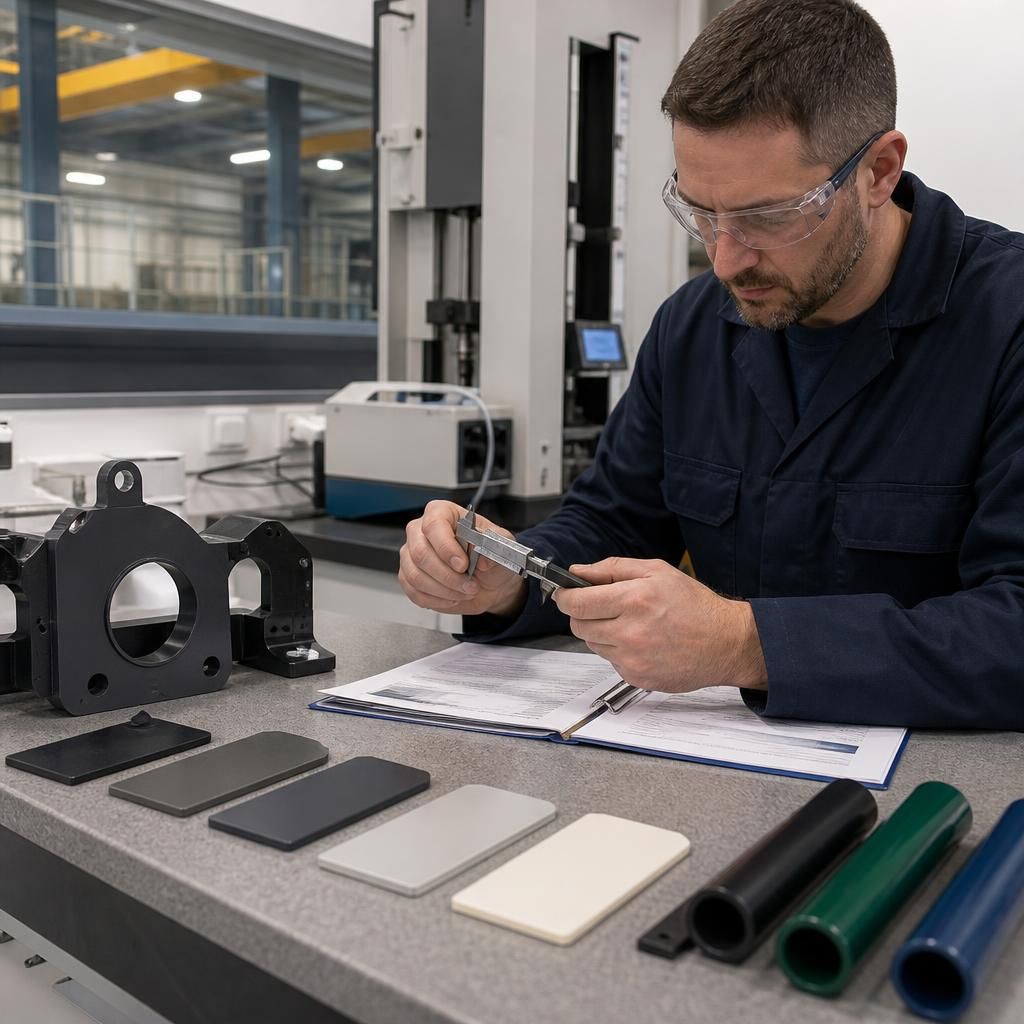
Specialist powder coating selection should be supported by technical evidence for the intended duty, rather than by the coating name alone. Product data may describe properties such as adhesion, impact resistance, abrasion resistance, chemical resistance and temperature tolerance, but these results only have meaning when compared with the component’s actual operating conditions.
For critical industrial parts, the specification should define the required performance tests, acceptance criteria and inspection method before production begins. A representative trial piece or approved sample can then be used to check the appearance and function of the chosen finish. This gives manufacturers and fabricators a clear basis for confirming that the selected specialist coating is suitable for its application.