

What are the environmental benefits of using powder coating processes for industrial applications?
Powder coating can reduce the environmental impact of industrial metal finishing by using little or no solvent, producing low volatile organic compound (VOC) emissions and allowing overspray to be collected rather than discarded. Its durable finish can also reduce the need for frequent recoating, helping to limit material use and waste over a component’s service life.
Powder coating can support a lower-impact industrial finishing process by removing the need for a liquid solvent carrier, reducing the environmental risks associated with solvent handling and allowing the metal component to retain its recyclability. Its overall environmental performance still depends on the powder formulation, surface preparation, curing energy, collection arrangements and the way the finished component is used and maintained.
Reduced solvent-related environmental impact
Unlike many liquid coating systems, powder coating is applied as a dry powder and does not depend on large volumes of organic solvent to keep the coating in a sprayable form. This reduces the need to store, handle and dispose of solvent-based materials during production. It can also reduce solvent use for equipment cleaning, although the precise cleaning requirements depend on the coating system and colour changes involved.
Lower solvent use can be relevant to the wider environmental controls at an industrial site. It reduces the potential for solvent vapours to enter the atmosphere and limits the risks associated with leaks, spills and contaminated containers. A responsible coating operation will still need suitable extraction, housekeeping, storage and waste procedures; powder coating is not an exemption from environmental management requirements.
Compatibility with metal recycling
Powder coating is applied to a metal substrate rather than replacing it with a composite material. At the end of a component’s useful life, the underlying steel, aluminium or other suitable metal can generally enter established recycling streams. The coating may be removed or processed as part of the recycler’s normal preparation methods, so the suitability of a particular finish should be considered alongside the intended recycling route.
This is useful for industrial parts that may be dismantled, refurbished or recycled rather than sent directly to disposal. Design choices still matter: mixed materials, bonded inserts and contaminants can affect recyclability independently of the powder coating itself.
Water and surface preparation considerations
The coating application stage is a dry process, so it does not require a liquid paint bath or a water-based carrier. However, many metal components require cleaning, degreasing, blasting or chemical pretreatment before coating. These preparation stages may use water, generate spent solutions or create abrasive residues.
For that reason, the environmental assessment should cover the complete finishing sequence rather than the powder application alone. Questions worth considering include:
- Which preparation method is appropriate for the metal and the service environment?
- How are spent cleaning solutions, rinse water and blasting media controlled?
- Can preparation stages be limited without compromising adhesion and corrosion protection?
- How are rejected or contaminated materials segregated and managed?
Energy use and curing
Powder coating requires heat to melt and cure the powder into a continuous film. The curing oven is therefore an important part of the process’s environmental profile. Energy demand varies according to the component’s mass, geometry, loading pattern, cure schedule and oven design. A coating process should not be described as automatically lower-carbon simply because it uses powder.
Energy use can be managed through correctly specified cure profiles, appropriate batch loading, insulation, maintenance and recovery of usable heat where the equipment allows it. Coaters may also review the powder specification and component design to avoid using a higher-temperature or longer cure than necessary. The correct cure remains essential: insufficient curing can lead to premature failure, while unnecessary heat input uses more energy than the application requires.
How the choice of finish affects the result
Environmental performance should be considered alongside the technical requirements of the component. A finish selected for its appearance alone may be unsuitable for outdoor exposure, chemicals, abrasion or repeated handling. If the coating does not match the operating conditions, the part may require repair, stripping or replacement, increasing its overall resource impact.
Industrial powder coating is therefore most environmentally responsible when the coating specification, preparation method and cure schedule are matched to the component’s actual use. Manufacturers and fabricators should provide information about the substrate, operating environment, required appearance and any end-of-life or recycling requirements so that the process can be assessed as a complete system.
For industrial work, an informed environmental review should include the coating material, preparation chemicals, energy used in curing, packaging, transport and waste controls. Powder coating can provide significant environmental advantages within that wider assessment, but the strongest conclusions come from examining the full process rather than relying on the coating type alone.
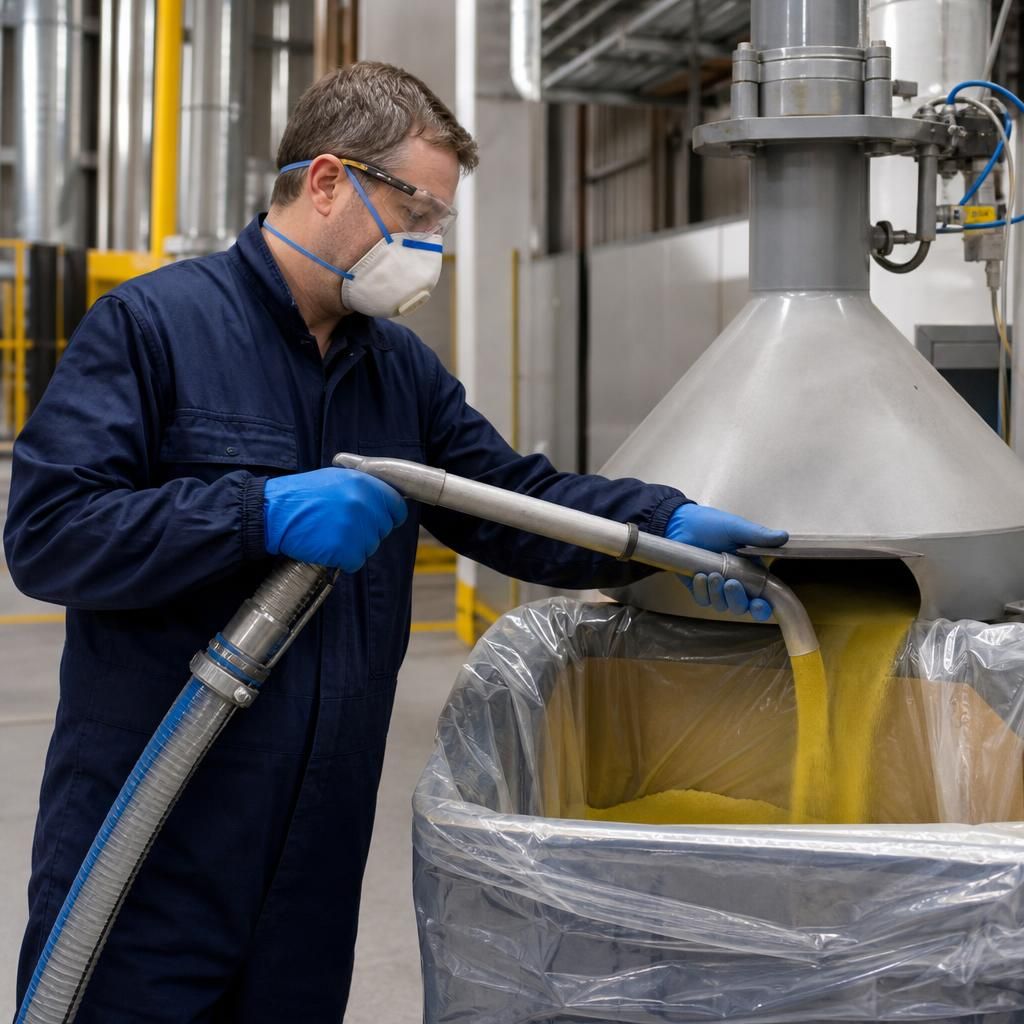
Powder recovery systems can reduce the amount of usable coating material sent to waste, but recovered powder is not automatically suitable for every application. Its use depends on the collection equipment, colour and product specification, and whether contamination has occurred. Clear segregation between virgin and recovered material helps prevent unsuitable blends from affecting the finish.
For industrial batches, environmental control therefore includes more than capturing overspray. The coating specification should define whether reclaimed material may be used, how it is stored, and when it must be treated as waste. These controls help maintain finish quality while ensuring that material recovery does not create additional rejected parts or unnecessary rework.
Discuss the environmental benefits of powder coating for your application
Discuss your component’s substrate, service environment and end-of-life requirements with the powder-coating.co.uk team to assess whether powder coating is an appropriate lower-impact finishing option for your industrial application.