

What types of coatings are best suited for application with small powder coating machines?
Small powder coating machines are best suited to powders that match the part’s material, service environment and curing capability, including polyester, epoxy-polyester hybrid and epoxy formulations for many industrial applications. Nylon and other specialist powders can also be used where greater abrasion, chemical or impact resistance is required, provided the equipment can apply and cure them correctly.
The most suitable coating for a small powder coating machine is one that can be charged consistently, applied within the equipment’s spray range and cured at a temperature the oven can maintain uniformly. The correct choice therefore depends not only on the required appearance, but also on the metal substrate, service conditions, film thickness, part geometry and production volume.
Thermosetting powders are generally the most practical option for small spray systems. They melt during curing and form a chemically cross-linked film, so the finished coating does not simply soften again when reheated. Within this broad group, the formulation should be selected according to the part’s expected exposure:
- Exterior-grade formulations are appropriate for components exposed to weather, sunlight and changing temperatures, provided the substrate is correctly prepared and the specified cure is achieved.
- Interior and general-purpose formulations can suit equipment, brackets, enclosures and fabricated components that are not exposed to prolonged outdoor conditions.
- Primers or primer-compatible systems are useful where corrosion protection is more important than appearance alone. The primer and topcoat must be chemically compatible and cured in accordance with the powder supplier’s instructions.
- Textured and fine-textured powders can help conceal minor surface irregularities and provide a particular tactile finish, although textures may require more careful control of film build than smooth finishes.
Thermoplastic powders can also be suitable, but they require closer consideration of the application method and heating process. Nylon-based coatings, for example, are selected for demanding wear, impact, friction or chemical-resistance requirements. They may need a different deposition or curing approach from conventional thermosetting spray powders, so the machine, oven and part-handling process must be assessed as one system. A small machine should not be assumed to handle every thermoplastic product simply because it can apply standard powder.
Powder particle characteristics affect application quality. A product intended for electrostatic spraying should charge effectively and remain fluid enough for consistent delivery. Powders that are unsuitable for the gun, hopper or recovery arrangement may produce uneven transfer, excessive overspray or blockages. Fine powders can be more sensitive to handling and may create dust-management challenges, while heavily textured or specialist products may need settings that differ from those used for smooth powder.
Cure requirements are a decisive selection factor. Check the powder’s stated metal temperature, time at temperature and permitted cure range against the actual oven performance. The relevant temperature is the temperature reached by the component, not merely the air temperature shown on the oven control. Thick or heavy parts take longer to heat than small thin sections, while recessed areas may receive less direct airflow. If the machine is used for mixed batches, the selected powder should have a cure schedule that can be applied consistently across the parts being processed.
Low-temperature or low-bake powders may be useful where the equipment has limited heating capacity or where the substrate is sensitive to heat. They are not automatically the best option: the lower cure requirement must still be achieved throughout the component, and the coating’s resistance properties should match the end use. Conversely, using a high-temperature powder in an oven that cannot heat the part evenly can lead to under-cure, reduced adhesion and poor durability.
The substrate also influences the best coating choice. Mild steel, galvanised steel, aluminium and previously coated components each present different adhesion and preparation requirements. Oils, welding residue, mill scale, rust, moisture and conversion-treatment residues can all interfere with the coating. A powder selected for strong chemical resistance will not compensate for contamination or inadequate preparation. On galvanised surfaces, attention should also be given to outgassing and the possibility of surface defects during curing.
For small machines, finish selection should take account of the part’s geometry. Faraday-cage areas such as internal corners, boxed sections and narrow recesses are more difficult to coat electrostatically than open faces. A powder with suitable flow and the correct gun settings may improve coverage, but application technique remains important. Excessive film build can cause runs, loss of texture or poor edge definition; insufficient build can leave weak coverage on corners and exposed edges.
Appearance requirements should be specified alongside performance requirements. Gloss level, colour, texture and visual uniformity can affect the choice of product, particularly when parts are coated in separate batches. Reusing powder from different products or mixing colours can compromise both appearance and application behaviour. Thorough cleaning of the gun, hopper, hoses and booth between changes is especially important on compact systems, where residual powder can represent a larger proportion of the next batch.
When comparing products, request the technical data for:
- recommended substrate and preparation method;
- application method and suitable equipment settings;
- cure schedule, including the required component temperature;
- recommended film thickness and tolerance;
- resistance to weather, chemicals, abrasion, impact or heat;
- storage, handling and reclaim limitations; and
- compatibility with any primer or existing coating.
A practical trial on the actual substrate is preferable to choosing solely from a colour card. Inspect the cured sample for coverage, adhesion, gloss, texture, edge definition and any pinholing or outgassing. For production parts, the trial should include the most difficult geometry and the heaviest section likely to pass through the small coating system. This provides a more reliable indication of suitability than testing a flat, easily coated sample.
For B2B work involving varied metal components, a small machine is best paired with a controlled range of powders rather than one universal product. A general-purpose powder may cover routine work, while exterior-grade, primer-based, abrasion-resistant or nylon systems can be reserved for parts whose service conditions justify them. Where the required coating needs specialised equipment or curing control, using an experienced powder coating service can be more appropriate than adapting a small machine beyond its intended capability.
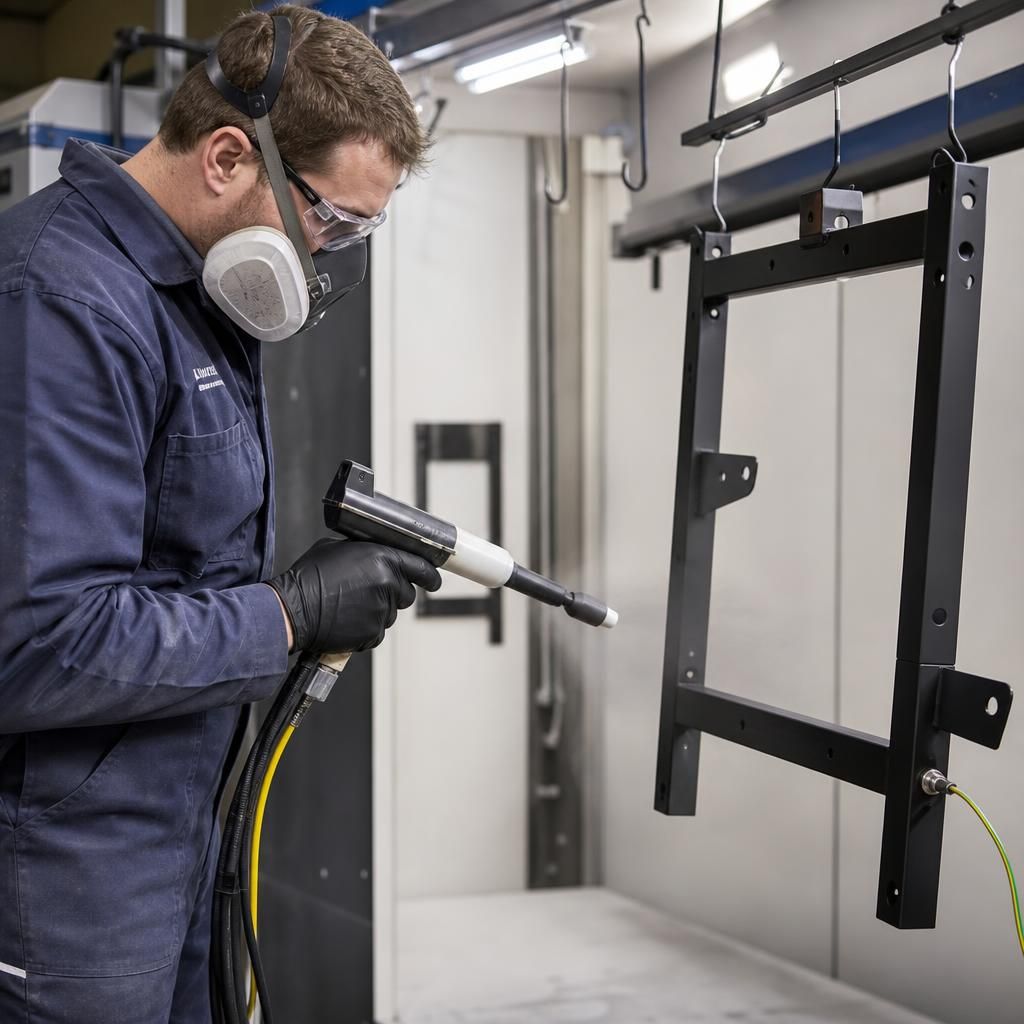
Grounding is an important part of assessing whether a powder is suitable for a small coating machine. During electrostatic application, the metal component must provide a reliable earth so charged powder is attracted evenly to its surface. Poor grounding can result in weak transfer, uneven coverage and increased overspray, even when the powder formulation and curing schedule are correct.
Check the earth path from the component and hanging fixtures through to the machine before judging the coating itself. Contact points should be clean and free from cured powder, paint and heavy contamination. Previously coated or partially insulated parts may need particular attention because the existing surface can interrupt the electrical path. A simple application trial should therefore assess transfer and coverage on the actual hanging arrangement, not just the powder’s technical data.
Discuss Your Small Machine Coating Requirements
Discuss your small machine coating requirements with our powder coating specialists to assess whether your proposed powder, equipment and production needs are compatible. We can help you determine when a specialist coating service may be more suitable than adapting a small machine.