

What maintenance is required to ensure my powder coating equipment package operates at peak efficiency?
Regular maintenance should combine daily cleaning and inspection with scheduled checks of powder delivery, guns, hoses, filters, recovery equipment, electrical connections and curing controls. Follow the equipment manufacturer’s maintenance schedule, replace worn or contaminated parts promptly, and keep records of inspections, faults and corrective work to maintain consistent coating quality and efficient operation.
Peak efficiency depends on a planned preventive-maintenance system that preserves process control, not simply on cleaning equipment when faults appear. The most important measures are maintaining calibration, verifying air and temperature conditions, checking mechanical movement, controlling the powder environment and testing the complete coating process after maintenance work.
Set maintenance responsibilities and acceptance criteria. Create a schedule that separates operator checks, competent maintenance tasks and specialist servicing. Each task should identify the equipment covered, the condition to be checked, the acceptable reading or operating behaviour, and the action required if it falls outside that limit. Use the equipment documentation for approved procedures, tolerances, replacement parts and isolation requirements rather than relying on informal adjustments.
Keep application settings under control. Powder coating guns and controllers should be checked for calibration and repeatability so that voltage, current, powder output and air settings remain consistent with the approved process. Confirm that programmed settings have not been altered unintentionally, particularly after a controller reset or component replacement. A known test component or agreed process check can help distinguish a genuine equipment fault from a change in the powder, substrate or application technique.
Verify compressed-air quality. Moisture, oil and pressure instability can affect powder transport, fluidisation and gun performance. Inspect the air-treatment system, drains, regulators and hoses, and investigate pressure fluctuations rather than compensating for them by changing application settings. The air supply should meet the equipment specification, with condensate managed safely and any filters replaced according to their condition and service requirements.
Check booth airflow and recovery performance. Airflow should remain balanced enough to contain powder without disturbing the coating pattern or drawing excessive powder away from the workpiece. Look for changes in extraction behaviour, unusual noise, vibration or pressure indication. Recovery equipment should be assessed for blockages, leaks and loss of separation efficiency, with recovered powder handled in accordance with the approved process. Do not mix powders or reclaim material unless the process has been specifically designed and validated for it.
Maintain curing control as a process, not just an oven setting. The displayed air temperature does not by itself confirm that parts are receiving the required cure. Temperature-sensing equipment should be checked against a suitable reference, and the oven should be assessed for temperature uniformity across the usable work area. Conveyor movement, burner or heating-element operation, circulation fans, door seals and exhaust performance can all influence cure consistency. Revalidate the curing profile when equipment, coating material, line speed or component loading changes.
Inspect mechanical systems and contact points. Examine the conveyor, hooks, trolleys, booth access points and moving assemblies for wear, alignment problems and powder build-up that could affect movement or electrical continuity. Grounding and workpiece contact should be verified using the method specified for the installation, especially where hooks are reused or components have changed shape. Poor contact can contribute to uneven deposition and may also create an avoidable electrical hazard.
Control the powder and surrounding environment. Store powder in clean, dry conditions within the limits stated in its technical information, and keep different materials clearly identified. Prevent dust, moisture and incompatible residues from entering the application system. Environmental conditions around the line should be monitored where they can influence powder flow, static charging or curing. Any change in coating material should be treated as a process change requiring suitable checks rather than assuming existing settings will remain appropriate.
Use condition-based checks to plan intervention. Trends are often more useful than isolated observations. Rising pressure across a filter, repeated gun alarms, increasing powder consumption, unstable temperature readings or recurring defects may indicate gradual deterioration. Reviewing these patterns allows parts to be inspected or replaced before an interruption occurs. Keep suitable critical spares available, but confirm compatibility before fitting them; an incorrect hose, seal, nozzle or filter can introduce a new process fault.
Follow safe isolation and post-maintenance testing. Maintenance involving electrical, pneumatic, thermal or moving equipment should be carried out by people with the appropriate competence, using the site’s isolation and lock-off procedures. After intervention, confirm that guards, interlocks, extraction and emergency-stop functions are correctly restored. Run a controlled test before returning to normal production, checking that settings, airflow, temperature and workpiece movement are behaving as expected.
Maintenance records should link inspections and repairs to observable process results, such as coating appearance, adhesion, film build or cure verification where those checks form part of the quality system. This creates a useful distinction between equipment maintenance and product inspection: both are needed to demonstrate that the package remains capable of producing the required finish. If recurring faults cannot be traced through these checks, obtain advice from the equipment supplier or a suitably qualified powder-coating service specialist before making further changes.
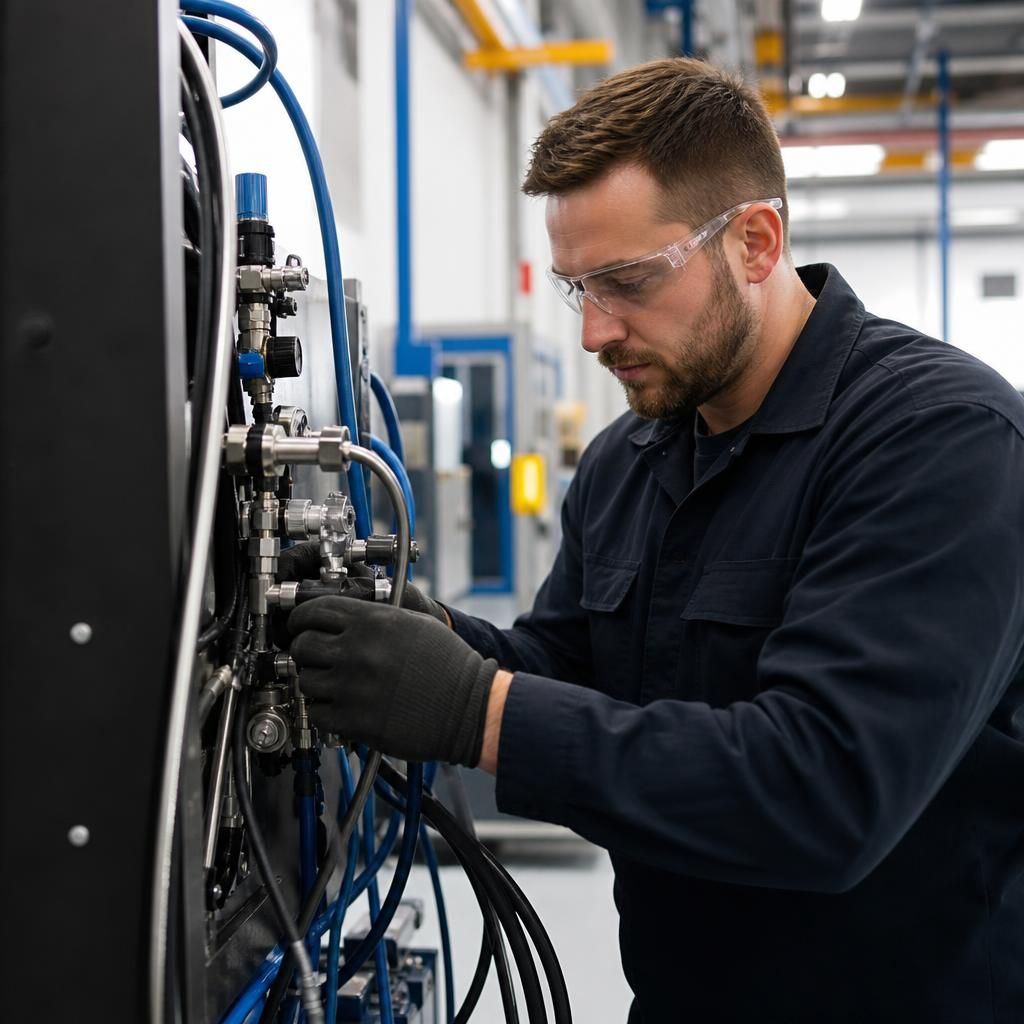
Restart maintenance is the inspection and controlled re-commissioning carried out after a prolonged shutdown, relocation or major change to the powder coating equipment package. Before production resumes, check for moisture ingress, settled powder, damaged seals, restricted hoses and deterioration in electrical or pneumatic connections. Confirm that consumables and stored powder remain within the relevant technical requirements, rather than assuming the system is ready because it was operating correctly before the shutdown.
Run the package through a controlled no-load or test-piece cycle before releasing it for normal work. This allows abnormal noise, leaks, alarms, unstable powder delivery or movement problems to be identified without risking a production batch. Record the restart inspection and any corrective action, particularly where the equipment has been moved, unused for an extended period or exposed to unusual environmental conditions.
Ask About Powder Coating Equipment Maintenance Requirements
Ask about the maintenance requirements for your powder coating equipment package, including the recommended servicing tasks, documentation and specialist support for your installation. Share your equipment configuration and operating conditions so the relevant requirements can be assessed.