

What are the environmental considerations associated with the powder coating degreasing process?
The environmental considerations of powder coating degreasing include the chemicals used, energy and water consumption, air emissions, and the treatment or disposal of contaminated waste. Choosing less hazardous products, controlling rinse water and residues, and following appropriate waste-management procedures can reduce environmental impact while preparing metal surfaces effectively for coating.
The environmental impact of powder coating degreasing is determined by the formulation selected, how efficiently the process is controlled, and what happens to the resulting residues. A responsible approach reduces the amount of cleaning chemistry required, keeps contaminated materials segregated, and ensures that wastewater and waste are handled through suitable, compliant routes.
Product formulation is an important starting point. Degreasers may be alkaline, acidic, solvent-based or water-based, and each has different environmental characteristics. The safety data sheet should be reviewed for aquatic toxicity, persistence, corrosivity, harmful additives and disposal requirements rather than relying on descriptions such as “green” or “biodegradable”. A product that breaks down readily may still be unsuitable if it is highly corrosive, contains problematic surfactants or creates a difficult-to-treat effluent.
Phosphates, complexing agents and certain surfactants can affect downstream treatment or contribute to water pollution if they enter the wrong disposal route. This does not mean that one chemistry is universally preferable: the appropriate choice depends on the metal, contamination, equipment and subsequent pre-treatment stages. The product should remove the soil effectively without introducing unnecessary environmental hazards.
Process control can reduce the quantity of chemistry used. Degreasing tanks and spray systems should be operated at the supplier’s specified concentration and temperature. Excessive dosing does not necessarily improve cleaning; it can increase the contaminant load in the bath and make later treatment more difficult. Monitoring concentration, temperature, bath condition and cleaning performance helps identify when adjustment or replacement is actually needed.
Extending bath life through filtration, oil separation or other suitable controls can reduce chemical replenishment and the volume of spent solution produced. These measures must be compatible with the equipment and the type of contamination. A heavily loaded bath should not be kept in service merely to avoid disposal, because poor cleaning can lead to rejected parts, additional preparation and repeat processing.
Rinsing needs to be designed as part of the whole cleaning system. Excessive rinsing increases the volume of liquid requiring management, while inadequate rinsing can leave residues that interfere with powder adhesion or create surface defects. Where the process allows it, staged or counter-current rinsing can make better use of clean water. Conductivity or other suitable checks can help determine when a rinse needs attention instead of relying only on a fixed replacement routine.
Water from rinsing, equipment cleaning and floor wash-down should be kept separate from uncontaminated surface water. It may contain oils, suspended solids, metal residues and cleaning chemicals. It should not be sent to a drain simply because it appears clear. Discharge requirements can depend on the substance, concentration, drainage system and local consent arrangements, so the receiving water company or relevant environmental regulator should be consulted before establishing a disposal method.
Waste should be identified by source and composition. Typical waste streams can include spent degreaser, tank sludge, separated oils, used filters, absorbent materials and contaminated containers. Mixing these streams can make recovery harder and may change their classification. Containers should be closed, labelled and stored to prevent leaks, with incompatible substances kept apart. A licensed waste contractor can advise on classification and provide the documentation needed to demonstrate that waste has been transferred appropriately.
In the UK, businesses have environmental duties covering waste storage, transfer and disposal. The exact requirements depend on the operation and the substances involved. Safety data sheets, waste transfer records and any applicable trade-effluent consent should be retained and kept consistent with the actual process. Where a waste is hazardous, it must be managed through the relevant hazardous-waste procedures rather than treated as general industrial waste.
Environmental assessment should also consider the condition of the finished component. Effective degreasing supports sound adhesion and reduces the likelihood of premature coating failure. A durable finish can avoid unnecessary stripping, re-cleaning, recoating and replacement of parts over their service life. This benefit should be weighed alongside the impacts of the cleaning stage rather than assessing the degreaser in isolation.
A practical review of a degreasing system should therefore ask:
- Does the formulation contain substances that create avoidable treatment or disposal problems?
- Is the product being applied at a controlled concentration and temperature?
- Can filtration, oil separation or bath monitoring reduce replacement frequency?
- Are rinse streams and other contaminated liquids prevented from entering unsuitable drains?
- Are sludge, oils, filters and spent solutions separated, labelled and correctly classified?
- Does the cleaning method achieve a reliable surface without causing excessive rework?
The most environmentally responsible degreasing process is not simply the one with the mildest label. It is the process that removes contamination consistently while using the least necessary material, maintaining a manageable waste stream and providing a documented route for treatment or disposal.
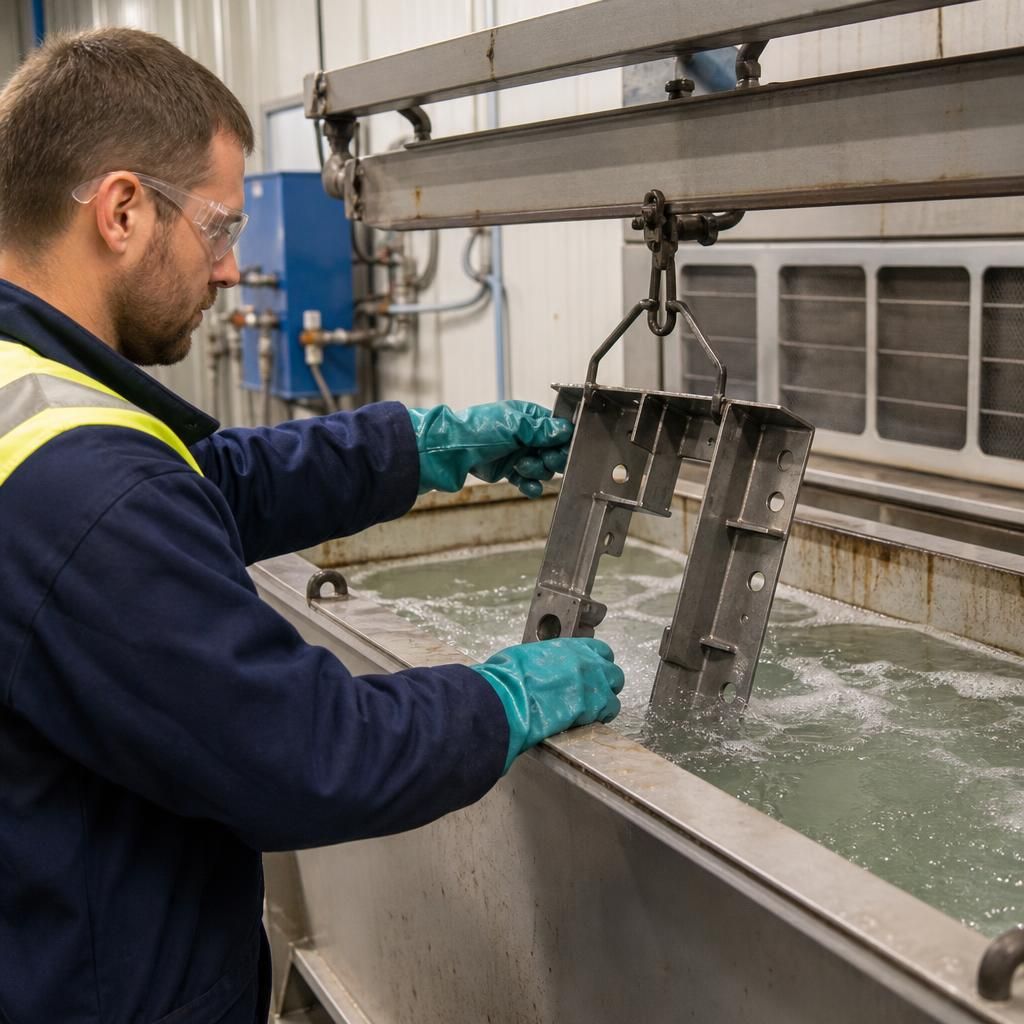
Energy consumption is another environmental consideration in powder coating degreasing, particularly where tanks or spray systems require heated solutions. The overall impact includes the energy used to heat and maintain the cleaning bath, operate pumps and ventilation, and dry components before subsequent pre-treatment or coating stages.
Energy use can be assessed by reviewing bath temperature, insulation, heating controls, equipment loading and standby operation. Maintaining the process at the supplier’s specified temperature avoids unnecessary heating, while suitable insulation and controlled covers can reduce heat loss. Components should also be arranged so the equipment is used efficiently without compromising cleaning performance.
This assessment should consider the complete preparation route rather than the degreaser alone. A method that uses less energy but leaves contamination behind may create additional cleaning, rework or recoating, increasing the environmental burden. The more useful comparison is whether each method delivers a consistently clean surface with a proportionate demand for energy, materials and further processing.
Review Your Powder Coating Degreasing Process
Review your current degreasing chemistry, rinse arrangements and waste streams against the component requirements and applicable UK environmental controls. For advice on preparing metal parts for powder coating, discuss your process and collection or delivery requirements with the Powder-coatings.co.uk team.