

What industries benefit most from specialist powder coating pretreatment?
Specialist powder coating pretreatment is particularly valuable in manufacturing, fabrication, construction and automotive applications where metal components must withstand corrosion, handling, weather exposure, chemicals or repeated use. The right process prepares each substrate for stronger coating adhesion and more consistent long-term performance, especially for complex, large-scale or demanding components.
The industries that benefit most from specialist powder coating pretreatment are those using metal components exposed to corrosion, abrasion, chemicals, weather or repeated handling. Manufacturing, metal fabrication, construction and automotive businesses often require more than a standard cleaning cycle because the substrate, component geometry and service environment can vary significantly from one job to the next.
Manufacturing benefits when components form part of machinery, enclosures, frames, assemblies or production equipment. Pretreatment removes oils, residues and surface contamination that could interfere with coating adhesion. It can also help create a more suitable surface for parts made from different metals or supplied with varying levels of oxidation. Consistent preparation is particularly important for batch production, where differences between components can lead to uneven appearance or variable coating performance.
Metal fabricators commonly handle bespoke parts, welded assemblies and mixed-size batches. These components may include weld zones, cut edges, drilled sections, folded profiles and areas that are difficult to access. Specialist pretreatment needs to address the whole surface rather than only the most visible faces. Attention to weld contamination, sharp edges, trapped residues and complex joints helps reduce weak points in the finished coating.
Construction and architectural metalwork benefit where coated steel or aluminium will be used in external or semi-exposed settings. Structural and building-related components may face rain, condensation, airborne pollutants, handling during installation and contact with other materials. Pretreatment is therefore selected with the intended exposure and substrate in mind. Correct preparation supports the coating system at vulnerable areas such as edges, fixings and joints, although the final specification must also take account of design, drainage and installation conditions.
Automotive businesses use specialist pretreatment for brackets, frames, fabricated parts, guards and other components that may experience road contamination, moisture, vibration, abrasion or contact with cleaning chemicals. Surface preparation must be compatible with the component material and the required finish. Parts with formed sections, recesses or welded areas may need particular process control so that contamination does not remain in areas where it could affect adhesion or encourage corrosion beneath the coating.
Specialist pretreatment is also valuable for businesses working with:
- large or heavy components that require controlled handling throughout preparation;
- intricate assemblies with recesses, corners, holes or partially enclosed sections;
- components requiring nylon or another specialist powder coating system;
- parts exposed to chemicals, oils, moisture or repeated mechanical contact;
- mixed batches containing different dimensions, surface conditions or metal substrates.
The strongest case for specialist treatment is not determined by industry name alone. It depends on the metal used, its previous condition, the presence of weld scale or fabrication residues, the coating specification and the environment in which the part will operate. A component intended for indoor equipment may need a different preparation route from one installed outdoors, even if both are made from the same material.
Surface condition should be assessed before the process is selected. New steel may carry mill scale, oils or fabrication debris, while previously coated or stored components may present flaking material, oxidation or contamination from handling. Aluminium and other non-ferrous substrates can require a different approach from steel, and galvanised or zinc-coated surfaces need preparation that preserves the underlying protective layer while providing a suitable key for the powder coating.
For B2B projects, pretreatment also affects production control. Clear requirements for component cleanliness, masking, drainage and presentation can reduce variation between batches. The coater should understand the component’s end use, substrate, dimensions, handling requirements and expected exposure before confirming the most appropriate preparation method. Collection and delivery arrangements may also be relevant for large-scale or batch work, particularly where components need to arrive protected from additional contamination.
In practical terms, manufacturing, fabrication, construction and automotive applications benefit most when pretreatment is treated as part of the coating specification rather than as a routine preliminary wash. A properly matched process helps provide a sound foundation for the powder coating, while unsuitable or inconsistent preparation can limit the performance of even a well-applied finish.
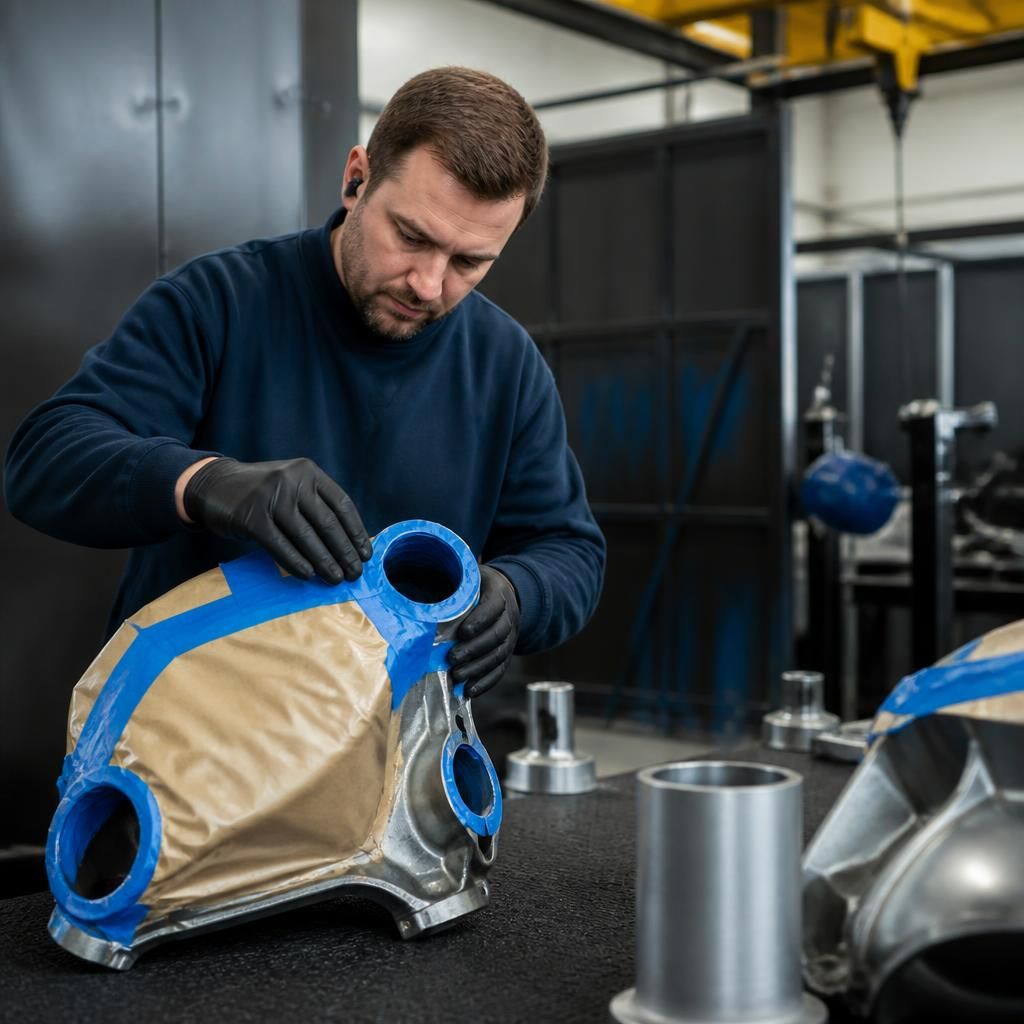
Specialist powder coating pretreatment is particularly important where a component has functional surfaces that must remain accurate after preparation and coating. In engineering and automotive assemblies, these may include threads, bearing seats, mating faces and electrical contact points. Pretreatment planning can identify areas that require masking or controlled treatment, protecting fit and function while allowing the remaining surfaces to receive the appropriate preparation.
This makes specialist pretreatment relevant not only to parts exposed to demanding conditions, but also to components where dimensional control and assembly accuracy are essential. Requirements for masking, racking and inspection should be agreed before processing so that the preparation method supports both the coating specification and the component’s intended use.
Discuss your industry’s pretreatment requirements
Discuss your component material, surface condition, end-use environment and required coating system with our team to identify the most suitable pretreatment considerations for your industry. Share your component details and batch requirements so the preparation route can be assessed accurately.