

What steps are involved in rust removal during the surface clean pretreatment process?
Rust removal during surface clean pretreatment involves assessing the corrosion, removing loose rust through suitable mechanical or chemical cleaning, then rinsing, drying and inspecting the metal. Any remaining residue or flash rust is addressed before the surface proceeds to further pretreatment and powder coating.
Rust removal in a surface clean pretreatment process is the controlled elimination of iron oxides and corrosion products without damaging the underlying metal or leaving residues that could interfere with powder adhesion. The work involves selecting a treatment suited to the substrate and corrosion severity, controlling the cleaning action, and verifying that the surface is chemically and physically suitable for the next pretreatment stage.
- Assess the type and extent of corrosion. The operator first distinguishes light surface oxidation from adherent scale, corrosion in seams, and pitting. This distinction matters because loose surface rust may be removed relatively easily, whereas deep pitting can leave cavities that cannot be restored by cleaning alone. Existing paint, weld spatter, mill scale, sharp edges and contamination around fixings are also noted because they can conceal corrosion.
- Confirm the substrate and its condition. Steel, galvanised steel and other metals do not respond identically to abrasive or chemical treatment. The cleaning method must avoid excessive metal removal, distortion or an unnecessarily coarse surface profile. Thin sections, folded returns and threaded areas require particular care, as aggressive treatment can affect fit, dimensions or function.
- Remove loose and friable corrosion first. Flaking oxide and poorly attached scale are taken away before more controlled cleaning begins. This prevents unstable material from breaking away later and becoming trapped beneath the coating. Weld areas, corners, recesses and the reverse sides of brackets deserve close attention because rust is often retained in these less accessible locations.
- Apply the appropriate rust-removal method. Mechanical treatment may include abrasion or other controlled preparation techniques where corrosion is localised or firmly attached. Chemical treatment can be appropriate where the geometry is complex or access is restricted, but the chemistry must be compatible with the metal and fully controlled. The objective is not simply to make the surface look clean; it is to remove corrosion while preserving a sound, even surface for subsequent treatment.
- Deal with pitting and embedded corrosion products. Rust can remain in pits, pores, lap joints and seams after the visible surface appears clean. These areas are checked individually rather than assuming that a uniform appearance proves complete removal. Where corrosion has caused significant metal loss, cleaning cannot recreate the original profile, so the component may require engineering assessment before coating.
- Remove treatment residues. Abrasive dust, loosened oxide, spent cleaning chemistry and dissolved salts must not remain on the component. Residues in holes, folds and recessed sections are especially significant because they can later attract moisture or disrupt the coating interface. The rinsing or residue-removal stage is therefore matched to the cleaning method used.
- Control the transition to the next pretreatment stage. Clean steel can begin to oxidise again if it remains exposed to moisture or contaminants. Handling, drainage and drying are managed so that water does not collect in cavities and freshly prepared areas are not touched with contaminated gloves or equipment. If any new oxidation appears, it is corrected before the component progresses.
- Inspect the prepared surface under suitable conditions. The check covers visible oxide, staining, scale, pitting, residues, missed areas and physical damage caused by cleaning. Particular attention is paid to edges, welds, joints, apertures and concealed faces. A component is only passed forward when its condition is consistent with the requirements of the planned pretreatment and powder coating system.
Rust removal is only one part of preparing metal for powder coating. It does not replace degreasing, rinsing, conversion treatment or any other process needed to establish the specified coating interface. Any oil, grease, salts or handling contamination identified during inspection must be addressed by the relevant cleaning stage rather than being hidden beneath the powder.
For fabricated parts and batch work, consistent loading and repeatable handling are also important. Components should be positioned so that cleaning media and rinsing access the areas most likely to retain corrosion, while drainage prevents treated liquid from remaining in hollow sections. This is particularly relevant to frames, brackets, enclosures and assemblies with overlapping joints.
The practical acceptance point is a sound, residue-free metal surface with no loose corrosion or untreated rust in accessible areas, ready for the remaining pretreatment sequence. Where the substrate has extensive pitting, perforation or structural deterioration, rust removal can expose the true condition of the part; coating may improve protection but cannot compensate for lost metal or an underlying fabrication defect.
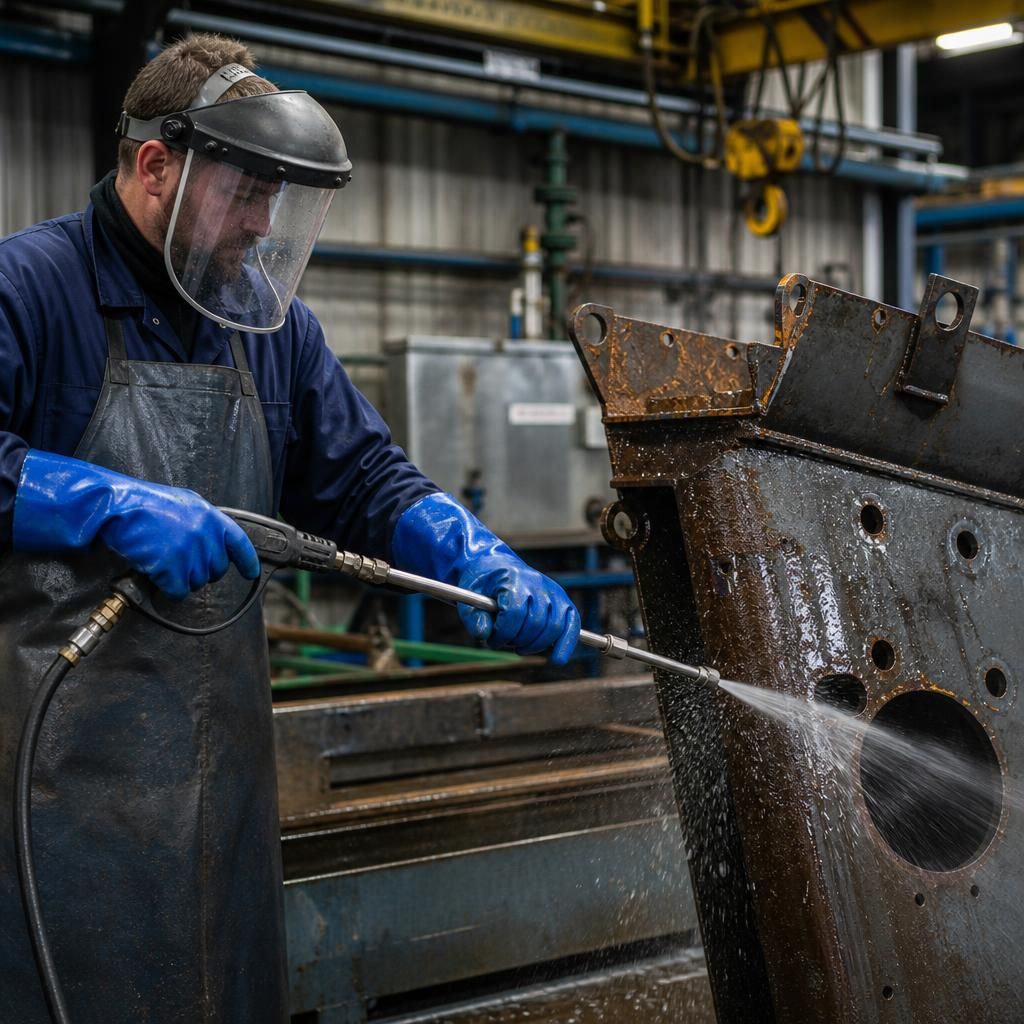
The order of cleaning stages affects how effectively rust can be removed. Oil, grease, dirt and process films can shield corrosion from mechanical contact or chemical action, so they should be dealt with before the selected rust-removal treatment. This allows the treatment to reach the oxidised metal rather than working against a layer of surface contamination.
After the corrosion treatment, the component must be rinsed and dried in a way that does not reintroduce contamination or leave moisture in joints and recesses. The final check is not based on brightness alone: the surface should be free from loose oxide, treatment residues and unstable material, with a condition suitable for the remaining pretreatment stages.