

Why is pre treatment crucial before applying powder coating?
Pre-treatment is crucial before powder coating because it removes contaminants and prepares the metal surface for strong, consistent adhesion. It also helps protect against corrosion and reduces the risk of defects such as peeling, blistering and premature coating failure.
Pre-treatment is crucial because it creates a chemically suitable and stable surface for the powder coat, rather than relying on the coating to compensate for the condition of the bare metal. The powder may be applied correctly, but its long-term performance depends heavily on what happens to the component before spraying and curing.
Metal surfaces commonly carry substances that are not always visible, including oil, grease, machining residue, dust, fingerprints, mill scale and light oxidation. These materials can interfere with the surface chemistry required for a reliable finish. Pre-treatment removes or controls these contaminants so that the coating is applied to the metal itself, not to a thin layer of residue.
The process can also alter the surface at a microscopic level. After cleaning, a suitable conversion treatment may form a thin protective layer that gives the powder coating a more receptive and stable base. This layer helps the coating remain attached when the finished component is exposed to moisture, handling, temperature changes or the general conditions of its intended environment.
Preparation is particularly important because different metals behave differently. Mild steel, galvanised steel, aluminium and other substrates may require different cleaning methods and chemical treatments. A process suitable for one material may be ineffective or unnecessarily aggressive for another. The substrate, its condition, the presence of existing scale or oxidation, and the required end use should therefore be considered before the treatment sequence is selected.
A properly controlled pre-treatment stage supports several aspects of finish quality:
- Surface uniformity: consistent preparation gives the powder a more even base across the whole component, including edges, recesses and complex profiles.
- Improved wetting: a suitably prepared surface allows the coating to spread and form a continuous film during curing.
- Better resistance to underfilm deterioration: if moisture reaches a damaged or poorly prepared area, a suitable pre-treatment can help limit the progression of deterioration beneath the coating.
- More predictable appearance: removing residues and uneven surface contamination reduces the risk of patchiness, cratering, fisheyes and other finish irregularities.
- Reliable batch consistency: repeatable treatment conditions help ensure that components processed at different times receive a comparable foundation for coating.
Pre-treatment also provides an opportunity to address the condition of the component before it reaches the spray stage. Sharp contamination, loose scale, weld residues, handling marks and other surface issues may need to be removed or managed first. Powder coating is not intended to conceal significant fabrication defects or repair unsuitable metalwork; preparing the component properly helps distinguish a coating problem from an underlying substrate problem.
Process control is as important as the choice of treatment. Factors such as chemical concentration, contact time, temperature, rinsing and drying affect the result. Inadequate rinsing can leave residues behind, while insufficient drying can introduce moisture into the coating operation. Inconsistent control may produce variable results across a batch even when the same powder and application settings are used.
Good preparation must also be matched to the service environment. Components used indoors may face different demands from parts exposed to rain, condensation, road contaminants, industrial atmospheres or frequent handling. The required level of preparation should reflect the metal, the design, the exposure conditions and the performance expected from the finished part.
For that reason, pre-treatment is not simply a cleaning step added before powder application. It is a controlled preparation stage that links the condition of the metal to the performance of the finished coating. Where components are produced in batches or have demanding service requirements, a dedicated pre-treatment plant can help maintain consistent treatment across different loads, geometries and substrate types.
Before coating, the prepared parts should be checked for visible contamination, water marks, incomplete coverage and other signs that the process has not produced a suitable surface. This inspection does not replace proper process control, but it helps identify issues before powder is applied and cured. In industrial work, preventing an unsuitable part from progressing through the line is generally more effective than trying to diagnose coating failure after completion.
In practical terms, the powder coating system should be viewed as a complete sequence: suitable metal preparation, controlled chemical treatment, thorough rinsing and drying, correct powder application, and appropriate curing. Omitting or weakening the preparation stage can undermine the later stages, whereas a carefully selected and controlled pre-treatment gives the coating the foundation it needs to perform consistently.
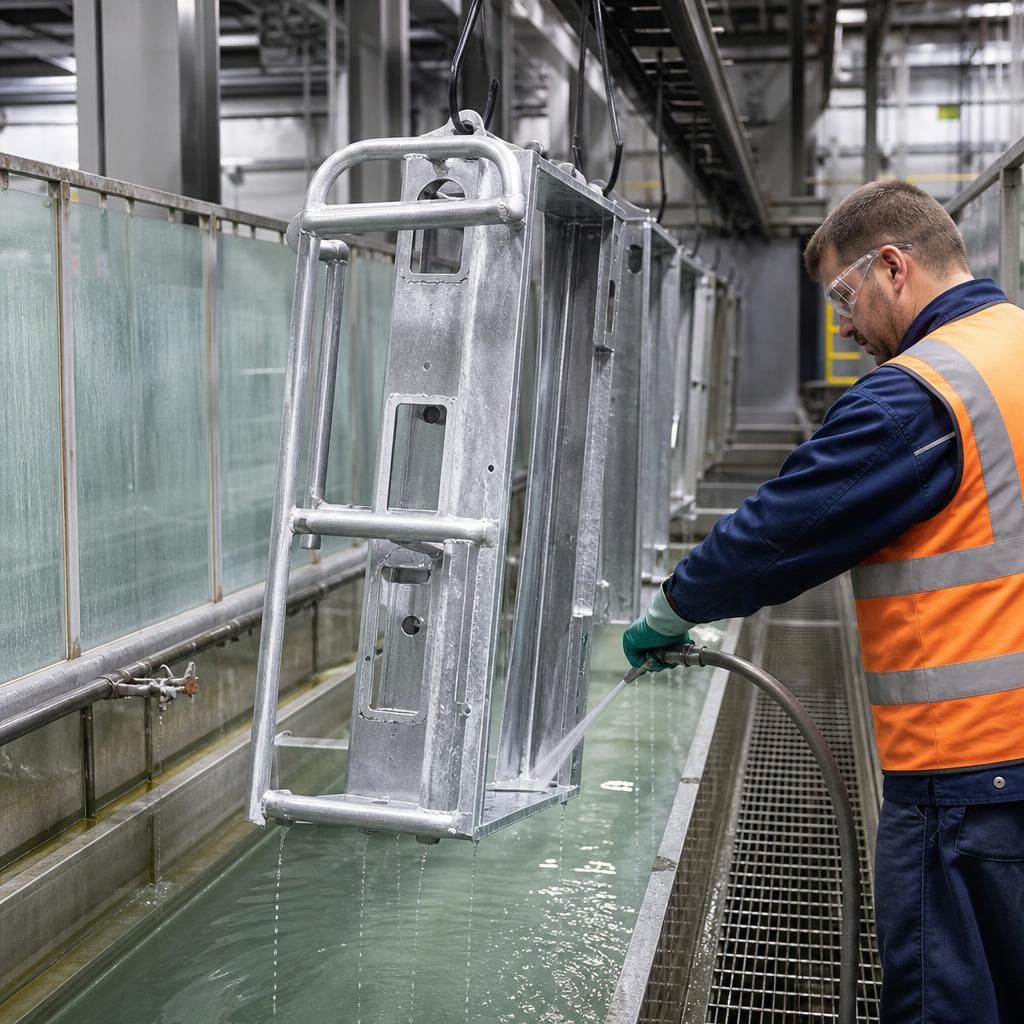
Pre-treatment is especially important for fabricated parts with folds, welds, recesses or enclosed sections. These features can retain oil, cleaning solution or rinse water, creating localised defects even when the more accessible surfaces appear clean. Components must therefore be positioned and drained so that treatment reaches the relevant surfaces and does not remain trapped in awkward areas.
This is one reason preparation cannot be judged solely by the appearance of the outer face. A part may look ready for powder coating while contamination or residual chemicals remain around joints, corners and concealed surfaces. Proper pre-treatment and handling reduce these hidden risks, helping the finished coating perform consistently across the complete component rather than only on its most visible areas.