

What are the key differences between zinc phosphate spray pretreatment and other phosphate treatments?
Zinc phosphate spray pretreatment forms a more substantial, corrosion-resistant conversion layer than iron phosphate, making it well suited to metal components that require durable protection beneath powder coating. Compared with manganese phosphate, which is mainly used to improve wear resistance and support lubrication, zinc phosphate is primarily selected to improve coating adhesion and corrosion performance.
Zinc phosphate spray pretreatment differs from other phosphate treatments mainly in its coating chemistry, crystal structure, process requirements and intended performance. It is a conversion treatment in which a controlled spray stage reacts with the metal surface to create a phosphate layer before powder coating. The correct comparison depends on the substrate, the required corrosion protection, the coating specification and whether the component is processed through a spray line or an immersion system.
Zinc phosphate compared with iron phosphate
Iron phosphate is generally a simpler and lighter conversion treatment. It produces a relatively thin, fine phosphate film and is often used where the main objective is to provide a suitable surface for paint or powder-coating adhesion. Zinc phosphate creates a more developed crystalline structure containing zinc-based phosphate compounds. This gives the pretreated surface different chemical and physical characteristics, including greater capacity to support demanding coating systems when the process is correctly controlled.
The two treatments also differ in their sensitivity to process conditions. Iron phosphate systems are commonly associated with straightforward cleaning and conversion stages, whereas zinc phosphate normally requires tighter control of bath chemistry, temperature, spray pressure, contact time and rinsing. The additional control is important because excessive or insufficient coating formation can affect powder adhesion, surface appearance and corrosion performance. Zinc phosphate systems may also generate more treatment residue or sludge, so filtration, bath maintenance and waste handling form a more significant part of process management.
Zinc phosphate compared with manganese phosphate
Manganese phosphate is principally selected for engineering applications where the phosphate layer contributes to running-in behaviour, oil retention and resistance to mechanical wear. It is commonly applied to components such as moving or contacting parts, often as an immersion treatment rather than a conventional conveyorised spray pretreatment for powder coating. Its darker, heavier crystalline finish is not automatically an indication that it is the best base for a decorative or protective powder coating.
Zinc phosphate is normally the more relevant phosphate option when the next stage is the application of a protective coating to fabricated or manufactured metalwork. Manganese phosphate may still be appropriate where the component’s function requires friction, lubrication or wear-related properties, but the treatment specification should not be chosen solely by comparing the visible colour or weight of the conversion layer. The complete coating system and the component’s working conditions must be considered.
Differences in application and substrate suitability
Spray-applied zinc phosphate is suited to parts that can be presented consistently to a sequence of process stages. Effective treatment depends on complete exposure of the surfaces, including edges, recesses and areas where oil, scale or fabrication residue may remain. Immersion processes can offer more uniform contact with complex shapes, although drainage, entrapment and subsequent rinsing still need to be assessed. The choice between spray and immersion is therefore a production and component-design decision as well as a chemical one.
Phosphate selection also varies with the metal. Steel, galvanised steel and aluminium do not react in the same way, and a treatment formulated for one substrate should not be assumed to be suitable for another. Mixed-metal assemblies can require a validated multi-metal process or separate treatment routes. Surface condition is equally important: mill scale, weld contamination, cutting fluids and corrosion can prevent the conversion layer from forming consistently, regardless of which phosphate chemistry is used.
How zinc phosphate differs from newer non-phosphate alternatives
Some pretreatment systems use zirconium-, titanium- or other thin-film chemistries rather than conventional phosphate conversion coatings. These alternatives generally form a much thinner layer and may be designed to reduce chemical consumption, sludge generation or wastewater-treatment requirements. They can provide a suitable base for powder coating when matched to the substrate, equipment and coating specification, but they are not interchangeable with zinc phosphate without process validation.
A non-phosphate system may be attractive where a compact process footprint or reduced residue is important. Zinc phosphate may remain preferable where the specification calls for a well-established crystalline conversion stage and the production process is already designed to control its chemistry and rinsing. The relevant comparison should include the whole system: cleaning performance, conversion quality, rinse-water control, drying, powder compatibility, corrosion testing and the treatment of process waste.
Practical selection criteria
- Required performance: establish whether the priority is powder adhesion, corrosion resistance, wear behaviour, lubrication or a combination of these.
- Substrate: confirm whether the parts are steel, galvanised steel, aluminium or mixed-metal assemblies, as each may need a different treatment sequence.
- Component geometry: assess hollow sections, recesses, overlaps, drain holes and areas that may be difficult to spray or rinse.
- Production method: compare the suitability of spray and immersion equipment, including drainage, handling and drying requirements.
- Coating specification: ensure that the pretreatment is compatible with the powder coating, film thickness and required appearance.
- Process control: define checks for bath concentration, pH, temperature, spray conditions, rinse quality and surface cleanliness.
- Environmental controls: consider chemical storage, sludge, rinse-water treatment and disposal obligations alongside the treatment’s technical performance.
In practice, zinc phosphate spray pretreatment is not simply a stronger version of every other phosphate treatment. Iron phosphate is often chosen for a simpler coating-preparation route, manganese phosphate for tribological requirements, and newer thin-film systems for different process or environmental priorities. A technically sound choice matches the treatment to the metal, component design, powder-coating system and required service conditions, with representative testing used to confirm the result before full production.
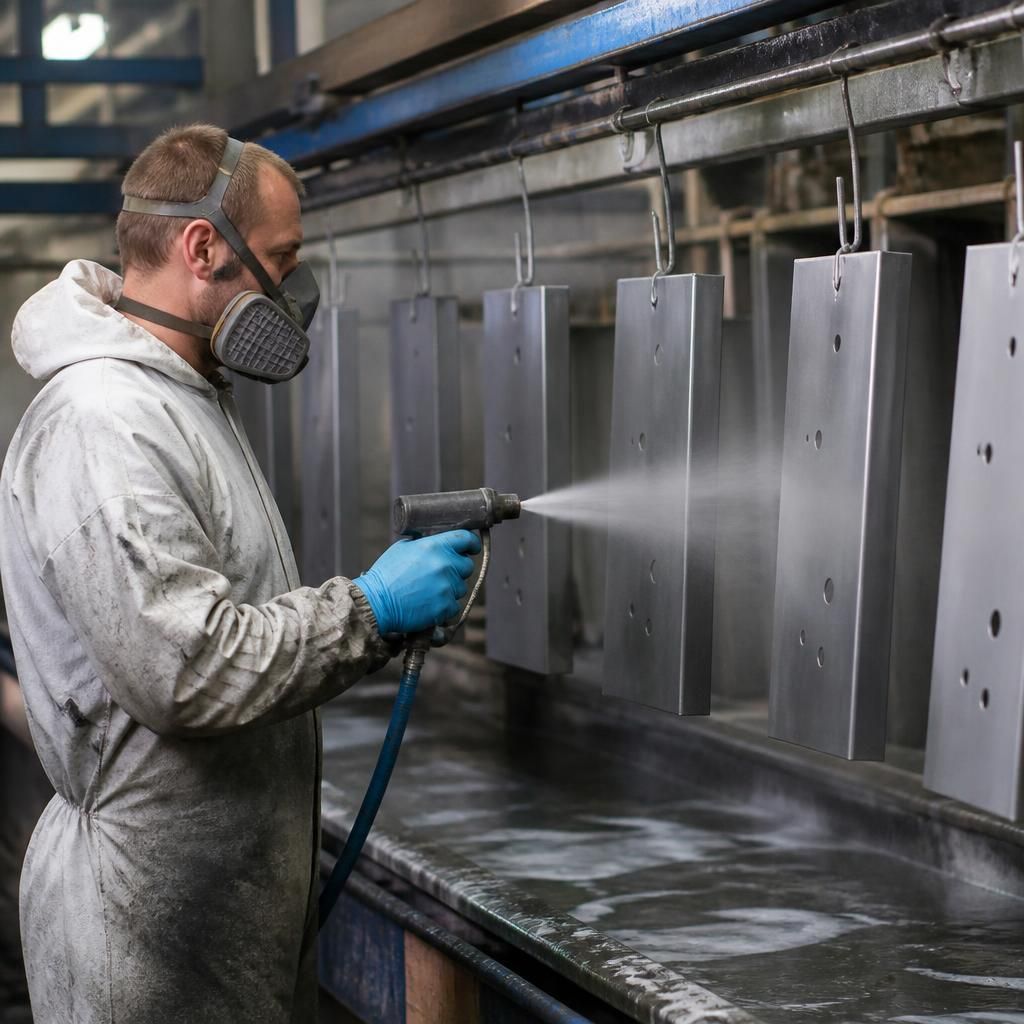
The visible appearance of a phosphate layer is not a reliable way to determine whether zinc phosphate, iron phosphate or another treatment has performed correctly. Colour and texture can vary with the substrate, surface condition and process settings, so a darker or more noticeable film does not automatically indicate better corrosion protection or powder-coating adhesion.
Inspection should therefore combine visual checks with controlled process records and, where required, performance testing. Look for consistent coverage, water-break-free rinsing and the absence of powdery residue, bare areas or staining, then assess the complete pretreatment and powder-coating system against the relevant specification. This approach prevents the treatment being selected or accepted solely on the basis of its appearance.
Compare Pretreatment Options for Your Components
If you are comparing pretreatment routes for a powder-coated component, discuss the metal type, component design and required service performance with Powder-coatings.co.uk. The team can help assess a suitable preparation and coating specification for your parts.