

What maintenance practices are needed to ensure the longevity and effectiveness of stainless steel shot blasting media?
Maintaining stainless steel shot blasting media requires regular inspection, separation of fines and contaminants, and correct storage to prevent moisture-related problems. Monitor shot condition and blasting performance, remove worn particles, and replenish the working mix when necessary to maintain consistent surface preparation.
Maintaining stainless steel shot blasting media involves controlling how the shot is handled, circulated and used, rather than simply adding more abrasive when performance falls. The main objectives are to preserve the intended shot size distribution, prevent grade mixing, limit mechanical damage and keep blasting equipment correctly adjusted for the media.
Use the correct operating settings. Excessive wheel speed, air pressure or abrasive flow can accelerate shot breakage and create an inconsistent working mix. Settings should be matched to the equipment, component material, required surface profile and selected shot size. Avoid increasing blasting intensity to compensate for a blocked nozzle, uneven media flow or poor reclaim performance; correct the underlying equipment issue instead.
- Keep abrasive flow steady so the shot is distributed evenly across the work area.
- Maintain the correct nozzle distance and angle, or ensure that blast wheels are correctly aligned.
- Prevent media starvation, which can increase equipment wear and produce uneven impact.
- Avoid excessive impact energy where the component only requires light cleaning or preparation.
Protect the media during handling. Stainless steel shot can be damaged by careless transfer, particularly when it is dropped from excessive height or moved through unsuitable handling equipment. Use clean, dedicated containers and transfer routes where possible. Do not mix different shot sizes, shapes or grades unless the process has been specifically designed for a controlled blend. An uncontrolled mixture changes impact behaviour and makes it harder to reproduce the required surface finish.
Keep a clear identification system for each media grade used on site. Label containers, reclaim lines and storage locations so that the wrong abrasive cannot be introduced into a machine. This is especially important where one cabinet or blast room is used for components requiring different preparation standards.
Maintain the reclaim and classification system. A blasting system should return usable shot to the working circuit while directing dust and unsuitable particles away from it. Air-wash separators, screens, cyclones, elevators and reclaim ducts need to be kept correctly adjusted and free from obstructions. Poor classification can allow excessive dust into the machine, return particles that should have been removed, or carry usable shot away with waste.
Check that collection bins are not overfilled and that seals, hoses and duct connections are secure. Leaks can alter airflow and reduce separation accuracy. The classification system should be reviewed after changes to blast pressure, wheel speed or media size, because these changes affect the amount and type of material entering the reclaim stream.
Control the working mix rather than relying on appearance alone. The colour and general appearance of stainless steel shot are not sufficient indicators of process suitability. Track the media grade in use, additions made to the machine and any changes in blasting results. Where the application is critical, use a documented method for checking particle size distribution and shape. This helps identify gradual drift before it produces visibly uneven preparation or inconsistent powder-coating adhesion.
Relate media checks to the finished surface, not just to the abrasive itself. Test pieces or representative components can be used to confirm that the prepared surface has the required cleanliness and texture. If results change, consider equipment settings, reclaim efficiency, component condition and the media mix together rather than changing several variables at once.
Reduce contact with unsuitable materials. Stainless steel shot should not be allowed to pick up residues from oils, machining fluids, paint, scale or other process materials. Effective extraction and suitable pre-cleaning of heavily contaminated components reduce the load placed on the blast system. The machine interior, reclaim path and surrounding transfer points should also be cleaned using methods that do not introduce water or foreign abrasive into the working circuit.
Where components made from different metals are processed, establish controls to prevent unwanted transfer between jobs. Separate processing routes or a dedicated media circuit may be appropriate where surface contamination could affect corrosion performance, powder coating preparation or the appearance of the finished coating.
Protect the blasting equipment that carries the media. Worn liners, damaged hoses, poorly adjusted valves and eroded nozzles can cause abnormal impact, uneven flow and unnecessary shot consumption. Maintenance should therefore include the parts that meter, accelerate, direct and recover the abrasive. Replace worn components in accordance with their condition and the equipment manufacturer’s instructions, then confirm that the media flow and blast pattern remain uniform.
- Isolate the machine safely before accessing the abrasive circuit.
- Check feed controls, hoses, nozzles, wheel components, liners and reclaim passages.
- Clear restrictions and correct leaks or misalignment.
- Run a controlled check after maintenance to confirm consistent coverage.
Finally, keep records of media grade, equipment adjustments, classification checks and surface-preparation results. A consistent record makes it easier to identify whether a change is caused by the abrasive, the machine or the component being processed. This structured approach extends useful media life while maintaining repeatable preparation for subsequent powder coating.
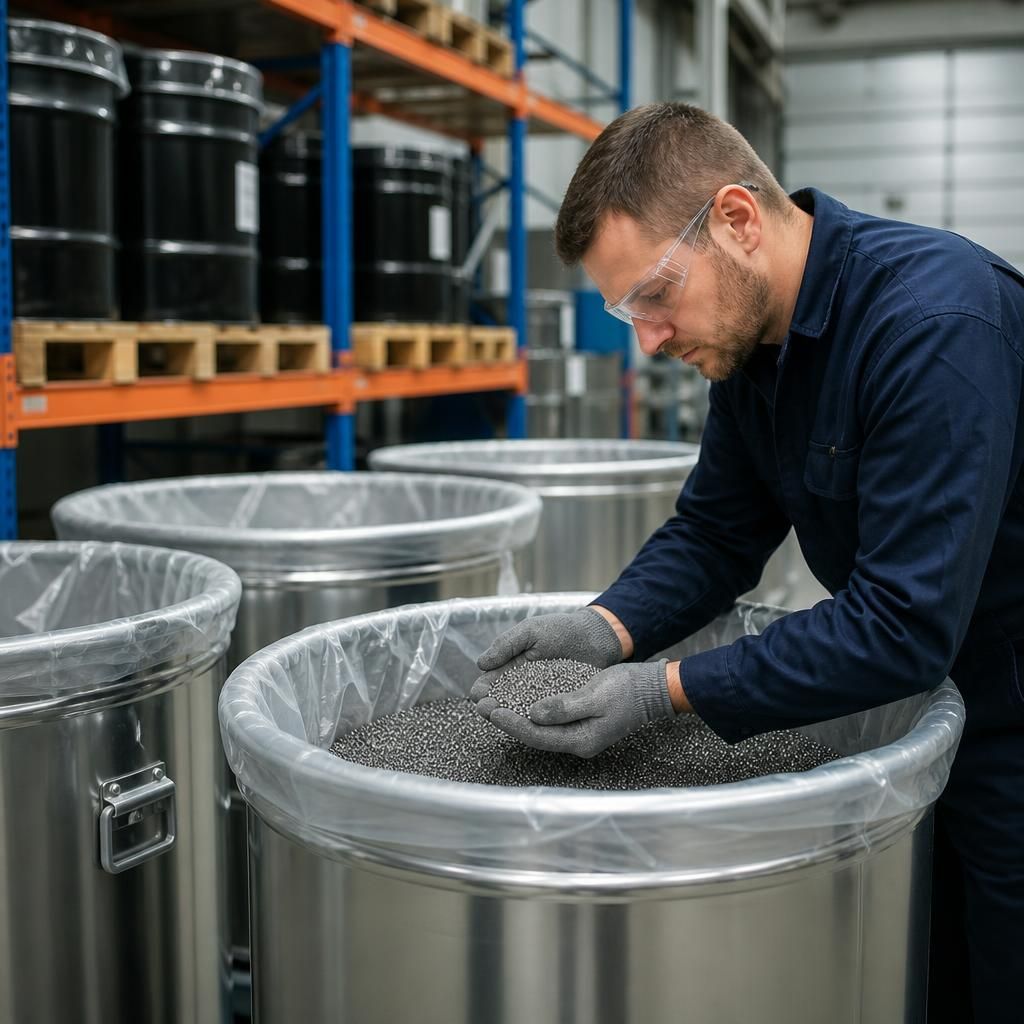
Proper storage prevents moisture, dust and foreign material from changing stainless steel shot before it enters the blasting circuit. Keep unused media in sealed, dry containers protected from condensation and raised clear of floors or areas where wash-down water, oils or process residues may collect.
Inspect stored shot before use. Dampness can cause clumping and interfere with consistent feeding, while contamination can affect surface preparation. Separate any questionable material for assessment rather than tipping it directly into the machine. Use older, approved stock before newer stock and keep storage areas clean so the abrasive remains in a usable condition between blasting operations.