

What types of shot blasting media are most suitable for achieving a specific surface texture in powder coating?
The most suitable shot blasting media depends on the texture required: angular steel grit or aluminium oxide produces a coarse, keyed profile, while glass bead creates a finer, smoother satin finish. Media size, blasting pressure and the metal substrate should also be controlled so the profile supports powder adhesion without damaging the component.
The most suitable blasting media for a specified powder-coating texture is determined by the required surface profile, the appearance of the finished coating and the metal being prepared. Rounded media such as steel shot or ceramic bead create a more subdued, peened texture, whereas sharper mineral or metallic media produce a more pronounced mechanical key. The correct choice should therefore be based on the required finish rather than on media type alone.
Steel shot for a compact, peened surface
Steel shot is a rounded metallic media available in different grades. It impacts the surface without cutting into it as aggressively as angular grit, so it is useful where a relatively uniform, low-profile texture is required. It can also harden or peen some steel surfaces, which may be beneficial for robust components but unsuitable where a sharply defined anchor pattern is needed.
Steel shot is generally most appropriate for durable steel fabrications that can tolerate impact and where the final powder coating is intended to have an even appearance. The shot must be clean and correctly graded; worn or contaminated media can produce inconsistent preparation and transfer unwanted material to the component.
Ceramic bead for controlled, refined texturing
Ceramic bead provides a rounded, reusable alternative for applications requiring controlled impact with relatively low ferrous contamination. It can produce a consistent, lightly textured surface and is often considered where dimensional control and a clean appearance are important. Its suitability depends on the substrate, component geometry and the level of texture specified by the coating system.
Because ceramic bead is less aggressive than many sharp-cutting abrasives, it may be preferable for parts that need surface conditioning without a heavily etched appearance. It is not automatically suitable for removing thick corrosion, mill scale or substantial existing coatings, which may require a more cutting medium.
Plastic and organic media for sensitive substrates
Plastic media can create a relatively gentle, low-profile texture on aluminium, thin sheet and other surfaces that could be distorted or excessively roughened by harder abrasives. It is commonly considered where preserving edges, tolerances or existing detail is more important than producing a deep profile.
Organic media, including crushed nut shell, are softer still and are used for delicate cleaning or coating removal rather than for creating a strong profile for powder adhesion. They can be useful where aggressive abrasion would damage the base metal, but they may not provide enough mechanical key for a demanding powder-coating specification. Any residue must be removed thoroughly before pretreatment and coating.
Fine glass bead for a uniform decorative texture
Glass bead is suited to a consistent, lightly textured appearance where preserving the shape and visual quality of the component is important. It is generally selected for cleaning, blending and producing a uniform finish rather than for deep cutting. On its own, it may not be the best option where the powder system requires a more substantial anchor profile.
The apparent texture after coating will also depend on the powder’s gloss level, colour, film thickness and cure. A finely prepared surface can look more textured beneath a low-gloss powder, while a smooth or high-gloss powder can make small preparation marks more visible. Blasting media should therefore be assessed alongside the intended powder finish rather than in isolation.
Garnet and other sharp mineral media
Garnet and similar non-metallic abrasives can provide a clean, angular profile and are considered where a defined surface key is needed without introducing ferrous particles. They are useful for suitable steel and aluminium preparation, but the grade and blasting conditions must be matched to the component. Excessive aggression can round edges, remove detail or create a profile deeper than the powder coating can adequately cover.
Mineral media also require effective recovery and cleaning controls. Dust, spent abrasive and embedded particles can affect pretreatment, coating appearance and adhesion if they remain on the workpiece. The substrate should be inspected after blasting rather than judged solely by the visual appearance of the blasted surface.
Matching the media to the required texture
- For a compact, subtly peened texture on robust steel, consider a suitable grade of steel shot.
- For a controlled and refined texture with reduced risk of ferrous contamination, ceramic bead may be appropriate.
- For thin, soft or easily distorted components, plastic or another low-aggression medium can help preserve detail.
- For a uniform decorative preparation, fine glass bead may be suitable where a deep profile is not required.
- For a pronounced angular key, a sharp mineral abrasive may be selected, provided the substrate and coating specification can tolerate it.
Texture selection should also account for corners, welds, recesses, holes and areas that cannot be blasted evenly. A single component may need different controls across exposed faces and difficult geometries, although changing media within one process can introduce variation. Masking, plugging and post-blast cleaning are important where abrasive could lodge in threads, bearings, cavities or drainage points.
The most reliable method is to agree the desired appearance and coating requirements first, then produce a trial on representative material using the proposed media and process settings. The trial should be checked for profile consistency, edge condition, cleanliness and the appearance of the cured powder coating. This confirms that the selected medium creates a surface the coating can cover consistently without compromising the component.
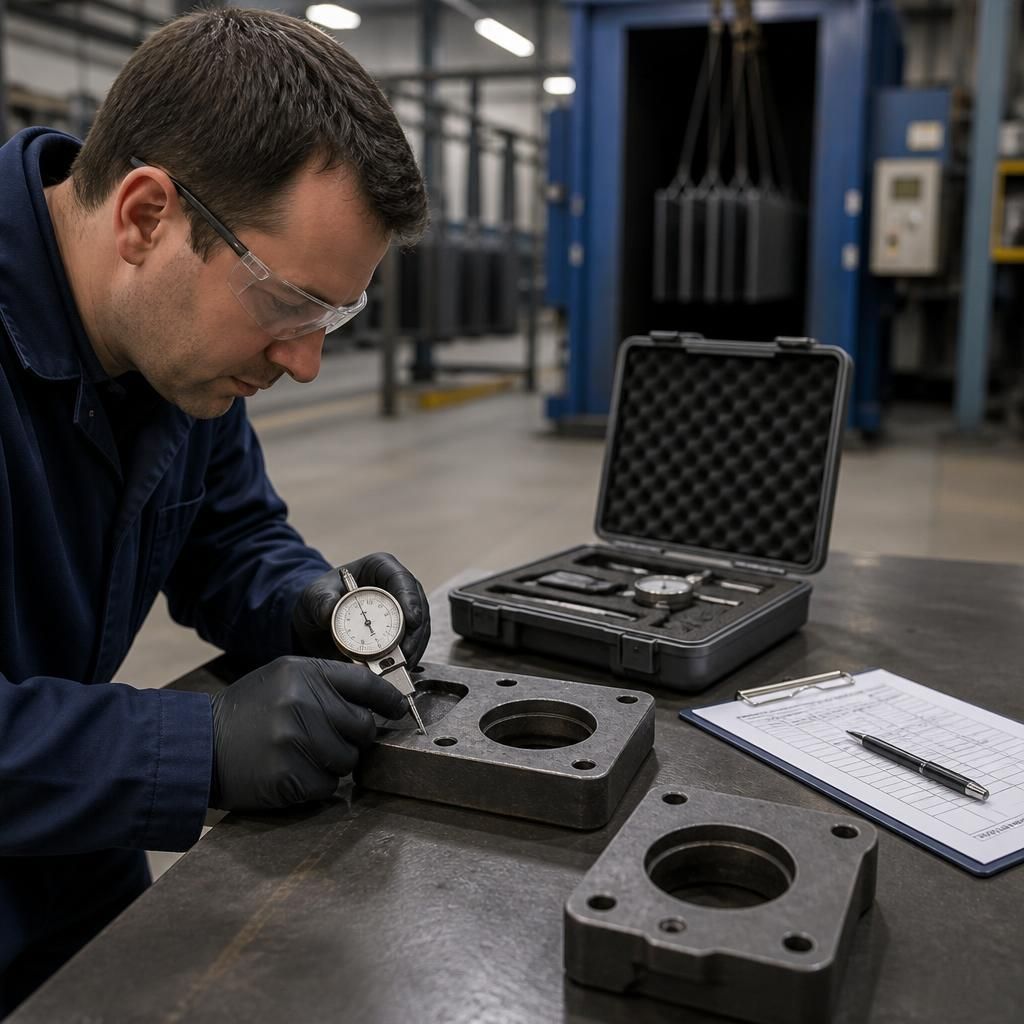
Surface texture for powder coating should be assessed as a measurable blast profile, not by visual appearance alone. A surface may look evenly matt while still having peaks that are too sharp, valleys that are too deep or an inconsistent pattern across the component. These differences can affect powder coverage and the uniformity of the cured finish.
After blasting, inspect representative areas for consistent profile depth, clean edges and any embedded abrasive. Profile comparators or replica measurements can provide a more reliable check than sight or touch alone. The result should be considered alongside the powder film thickness: the coating must cover the profile without leaving exposed peaks or masking important component detail. This is particularly important when comparing a fine bead finish with a more aggressively cut texture.
Discuss the Right Shot Blasting Media for Your Texture
Discuss your component material, geometry and required powder-coating texture with the team to identify a suitable blasting media and preparation approach. Providing a sample or representative specification can help determine the appropriate process before production work begins.