

Why is surface cleanliness crucial before applying powder coating to steel?
Surface cleanliness is crucial before powder coating steel because oil, grease, dust, rust and other contaminants can prevent the powder from bonding evenly to the metal. Thorough cleaning supports consistent adhesion, reduces coating defects and helps the finished surface provide reliable protection against corrosion.
Surface cleanliness determines whether steel is genuinely ready for powder coating. It is not enough for the metal to look free from visible dirt: residues left by fabrication, handling or storage can alter the way pretreatment reacts with the surface and can create weaknesses beneath the cured film. Cleaning therefore forms the foundation of a controlled preparation process, rather than being a cosmetic step carried out immediately before coating.
Steel components can carry several types of contamination, including:
- cutting oils, lubricants and forming compounds;
- finger marks and other handling residues;
- dust, abrasive particles and workshop debris;
- marker ink, polishing compounds, adhesive residue and silicone;
- welding deposits, smoke residues and loose scale; and
- soluble salts or moisture-related contamination acquired during storage.
Some of these contaminants are difficult to identify by sight. A component may appear clean while still carrying a thin oily film or salt residue. Such contamination can interfere with chemical pretreatment, leave isolated areas less receptive to the coating system and contribute to defects such as cratering, pinholes, blistering or uneven appearance. The risk is particularly relevant where parts have passed through several fabrication stages or have been handled between preparation operations.
Effective cleaning has to match the condition and use of the steel. Degreasing removes oils and organic residues, while mechanical methods may be needed for loose scale, rust, weld spatter or firmly attached deposits. Where a chemical cleaner is used, its concentration, contact time, temperature and rinsing requirements need to be controlled according to the process. Inadequate rinsing can replace one contamination problem with another by leaving detergent or chemical residue on the surface.
Inspection should take place after cleaning and before the next preparation stage. A visual check can identify remaining rust, scale, dust and fabrication debris, but it will not reliably detect every invisible residue. A clean white cloth can reveal transferred soil during a wipe check, while a water-break assessment can indicate whether a surface is being evenly wetted rather than repelling water in isolated patches. These checks are useful process controls, although they do not replace the coating applicator’s specified preparation requirements.
The timing between cleaning and coating preparation also matters. Clean bare steel can be affected by humidity, condensation and handling, allowing light oxidation or renewed contamination to develop. Components should therefore be kept protected from further soiling and handled in a way that avoids reintroducing grease or moisture. If visible oxidation appears after cleaning, the surface may need to be reassessed and treated again before coating proceeds.
Cleanliness should be considered alongside the steel’s condition, the intended coating system and the component’s service environment. A decorative indoor part may have different preparation requirements from steel exposed to moisture, chemicals or outdoor conditions, but both require a defined, repeatable cleaning process. For batch work, documenting the preparation method and checking representative parts can also help identify variation between loads, especially where components arrive from different fabrication operations.
For manufacturers, fabricators and other businesses sending steel for powder coating, useful preparation information includes the presence of oils, temporary corrosion protection, weld treatments, masking materials or previous coatings. Sharing this detail helps the coating process account for contamination before the parts enter final preparation. Clean steel gives subsequent profiling, pretreatment and powder application a sounder starting point, allowing the finished system to be assessed on the basis of its designed performance rather than avoidable surface residues.
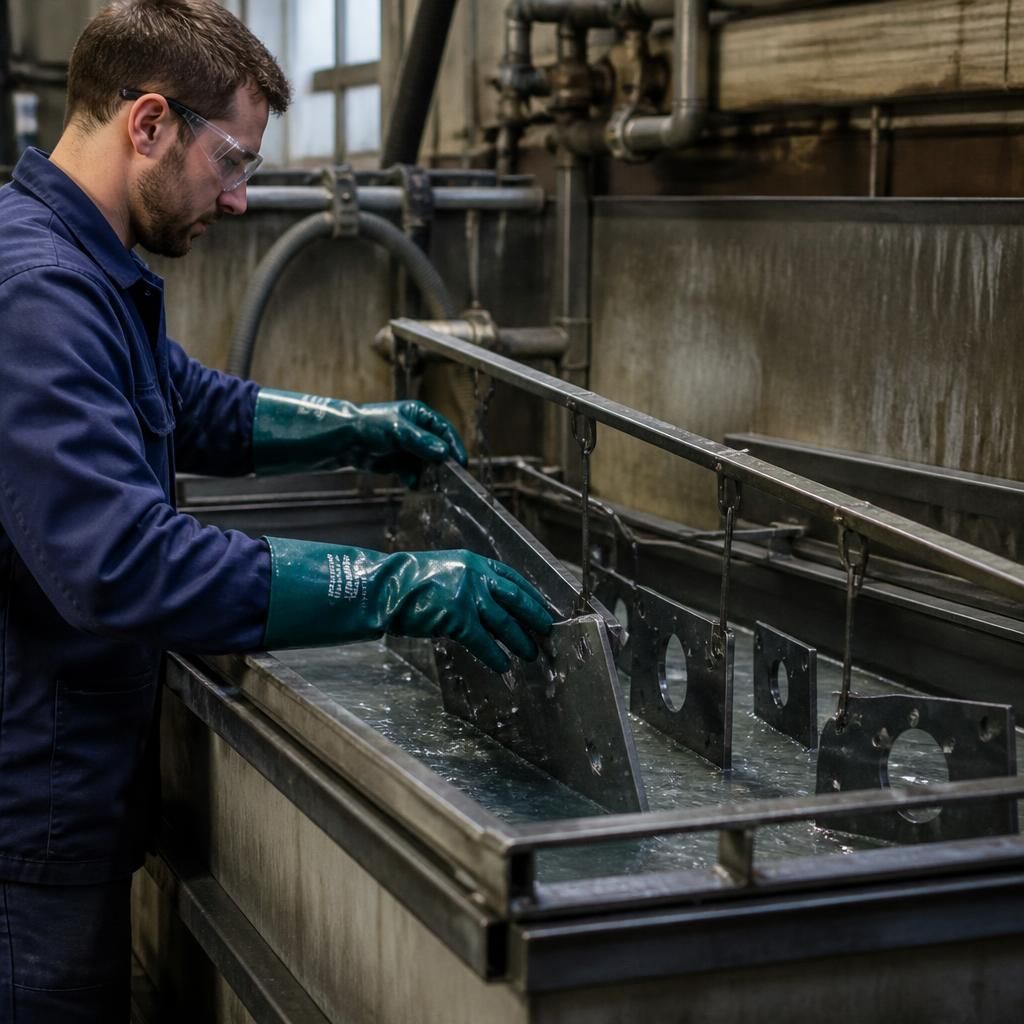
Surface cleanliness is essential because it allows chemical pretreatment to form a consistent conversion layer on the steel. This layer is not the powder coating itself; it modifies the metal surface to support the coating system and improve resistance to corrosion. Oil, salts and other residues can block or weaken this reaction, leaving local areas with less effective protection.
The effect may be most significant around welds, folded edges, drilled holes and other areas where contamination can collect. If these areas are not properly cleaned, the pretreatment may be uneven even when the broad faces of the component appear satisfactory. A controlled cleaning stage therefore helps ensure that the protective system begins with a chemically receptive steel surface, rather than relying on the powder film to compensate for incomplete preparation.
Discuss Your Steel Preparation Requirements
Discuss your steel preparation requirements with our Midlands powder coating specialists before sending components for coating. Sharing details of the steel’s condition, fabrication processes and intended use helps establish an appropriate preparation approach.