

How does the pre-treatment process vary for different types of metals in powder coating applications?
Pre-treatment varies according to the metal’s surface chemistry, corrosion condition and existing finish. Steel typically requires degreasing, rinsing and corrosion protection, while aluminium needs cleaning and controlled removal of its oxide layer; galvanised and other coated metals may require additional preparation to avoid adhesion problems.
Powder coating pre-treatment is selected according to the metal’s composition, porosity, oxide layer, contamination and previous coating. The objective is not simply to make the surface look clean; it is to remove substances that interfere with adhesion, create a suitable surface for the powder system and control corrosion or outgassing during curing.
Mild and carbon steel: Steel commonly carries oil, mill scale, rust, welding residue and handling contamination. The preparation method depends on the severity and type of contamination. Light surface contamination may be dealt with through a multi-stage cleaning process, whereas mill scale, rust or heavily oxidised areas may need abrasive treatment or another approved removal method. Weld seams, sharp edges, crevices and drilled holes require particular inspection because residues can remain in these areas and later cause blistering or premature corrosion. The cleaned surface must also be protected from flash rust before coating.
Steel components with visible corrosion should not be treated as though they were merely dirty. Rust is removed to a sound surface, and the chosen conversion or corrosion-control stage must be compatible with the powder coating and the intended service conditions. Heavy sections may also retain moisture after rinsing, so drainage, drying and inspection are important before the parts enter the spray and curing stages.
Aluminium: Aluminium forms a tenacious oxide layer almost immediately when exposed to air. That layer is not the same as rust on steel, and aggressive treatment can damage the relatively soft substrate or leave an uneven profile. Preparation therefore has to remove grease and other contaminants while controlling the oxide layer rather than unnecessarily attacking the base metal. Suitable chemical cleaning, controlled abrasion or an aluminium-compatible conversion treatment may be selected according to the alloy, existing finish and required performance.
Aluminium alloys can also contain machining lubricants, embedded swarf or residues from fabrication. These contaminants may be concentrated around cut edges, welds and folded sections. Thorough rinsing and drying are essential because trapped chemicals or moisture can lead to pinholing, staining or adhesion loss. The alloy and any heat-affected areas should be considered when choosing both the preparation method and the powder cure schedule.
Galvanised and zinc-coated steel: A zinc coating provides sacrificial corrosion protection, so preparation must remove contamination without stripping or excessively damaging that layer. New galvanised surfaces can contain passivation residues, storage marks or oils, while weathered surfaces may show zinc corrosion products. Light, controlled abrasion or a compatible chemical treatment is often more appropriate than aggressive blasting. The profile must be sufficient for adhesion, but excessive abrasion can expose the underlying steel and create local corrosion points.
Galvanised components also need attention to drainage and trapped air. Hollow sections, overlaps and vent holes can retain cleaning solution or release gases during curing. These design features may cause blistering, pinholing or local coating defects even when the visible exterior appears clean. Parts should therefore be inspected for suitable drainage and venting, with any required fabrication corrections made before coating.
Stainless steel: Stainless steel’s chromium-rich passive surface gives it strong resistance to corrosion, but it can also make adhesion more demanding than on ordinary carbon steel. Preparation normally focuses on removing grease, embedded iron particles, shop dirt and heat-treatment discolouration without contaminating the surface with unsuitable tools or abrasive media. A controlled key may be introduced where the powder system requires one, followed by a compatible chemical or conversion treatment if specified.
Iron contamination is particularly important on stainless steel. Particles transferred from carbon-steel tools or shared abrasive media can rust on the surface and undermine the expected corrosion performance. Separate or properly controlled equipment, careful rinsing and a clean handling process help prevent this type of contamination.
Cast iron: Cast iron is porous and may retain oil, moisture and foundry residues below the apparent surface. It can also release trapped gas when heated, producing pinholes or blisters in the cured coating. Preparation may therefore require more intensive degreasing, controlled heating or outgassing assessment before final cleaning and coating. The casting’s geometry matters: deep recesses and rough faces are harder to clean and may need additional inspection.
Zinc die-cast parts: Zinc die castings can be porous and may contain release agents from the manufacturing process. They are vulnerable to defects caused by retained gases, so cleaning and drying must be controlled carefully. Abrasion should be light enough to avoid distorting details or exposing excessive porosity. A coating system suitable for zinc substrates may also be needed rather than a process intended solely for steel.
Copper, brass and other non-ferrous metals: Copper and brass may carry tarnish, oxides, polishing compounds or machining oils. Preparation removes these residues while avoiding an unnecessarily aggressive attack on the surface. Brass can also contain variations in alloy composition that affect colour, surface response and coating behaviour. Where appearance is important, the cleaning, abrasion and conversion stages should be assessed on representative parts before full batch processing.
Regardless of the substrate, the preparation sequence normally includes several controlled checks:
- identifying the base metal, alloy, coating condition and intended use;
- removing oil, grease, dirt, salts, oxides, rust and fabrication residues;
- selecting abrasion, chemical treatment or a combination that suits the metal;
- rinsing sufficiently to remove cleaning and conversion residues;
- drying all surfaces, joints, recesses and hollow sections;
- checking for remaining contamination, flash corrosion, sharp edges, damage and trapped moisture; and
- confirming that the prepared surface is compatible with the selected powder coating system.
Existing paint, plating or powder coating introduces another variable. The old finish may need complete removal if it is poorly bonded, contaminated, incompatible or damaged. If it is retained, its adhesion and chemical compatibility must be established, and the surface may require deglossing, cleaning and local repair. Coating over a sound, compatible finish without addressing weak edges or contamination can transfer the original failure into the new system.
The correct pre-treatment is therefore determined by both the metal and the component’s design. A flat, clean aluminium panel, a porous cast-iron housing and a galvanised fabricated frame should not be processed using the same preparation settings. Material identification, inspection of welds and recesses, control of abrasive intensity, thorough rinsing and effective drying are what allow the powder layer to bond consistently and provide the required protection and finish.
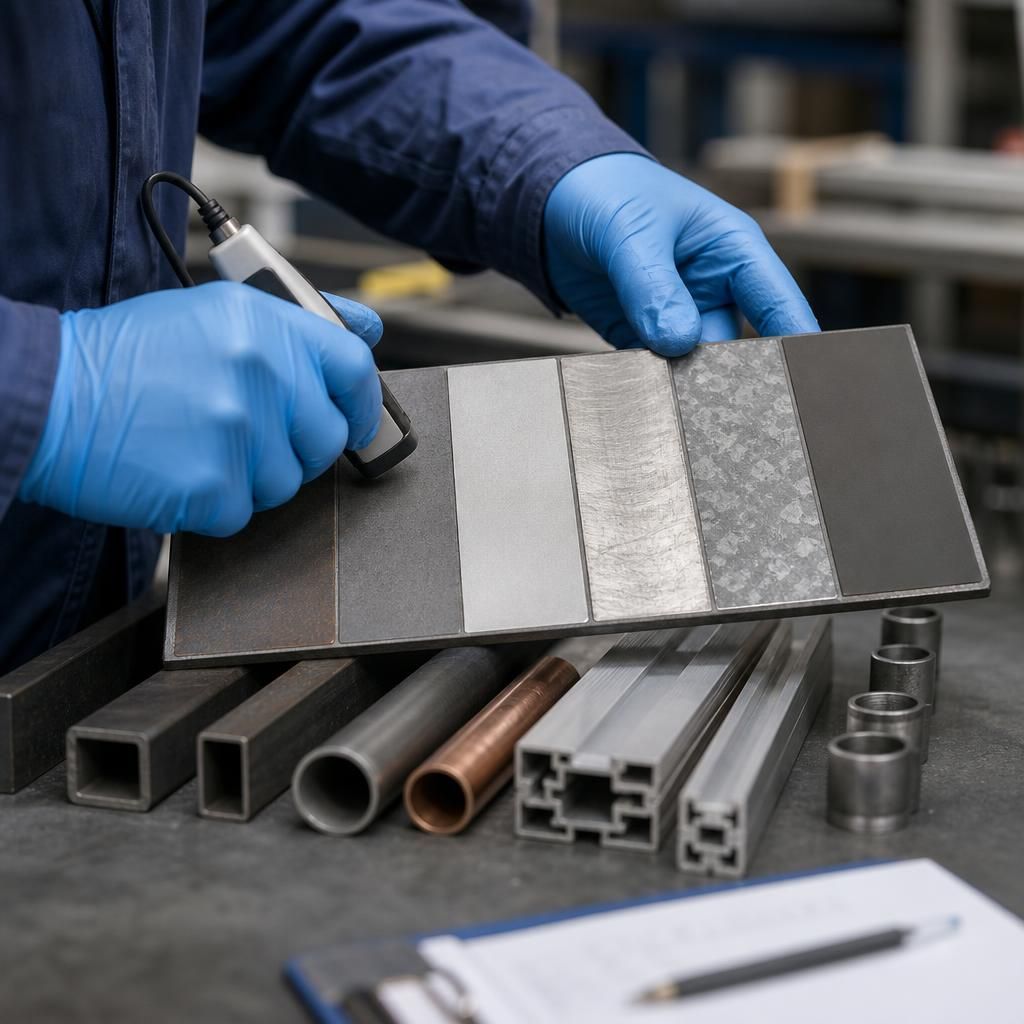
Metal type influences not only the pre-treatment chemicals used, but also how the prepared surface is verified before powder application. A surface that appears clean may still carry residues or have an unsuitable chemical condition for the coating system.
- Steel: inspection focuses on whether corrosion products and mill scale have been removed without leaving active rusting areas.
- Aluminium: the surface should be checked for an even, controlled oxide or conversion condition rather than excessive abrasion or visible attack.
- Galvanised steel: checks should confirm that contamination has been removed while the zinc layer remains sufficiently intact.
- Stainless steel: inspection should include the possibility of iron transfer from tools, media or handling equipment.
Where the substrate, coating specification or service conditions are unfamiliar, a representative test piece can help confirm that the selected preparation produces the required surface condition before a complete batch is processed. This validation is particularly useful when appearance, corrosion resistance or adhesion requirements are stringent.