

What are some common applications for powder colour paints in industrial settings?
Powder colour paints are used to give metal components a durable, consistent decorative and protective finish in industrial applications. Common uses include machinery, automotive parts, construction components, fabricated metalwork and other manufactured items produced in batches or requiring a hard-wearing surface.
Powder colour paints are commonly applied to metal products that need both a controlled appearance and a hard-wearing surface. In industrial settings, this includes electrical enclosures, storage systems, agricultural equipment, heating components, architectural metalwork, retail fixtures and transport-related parts, with the coating selected according to the item’s environment, operating temperature and required finish.
Electrical and control equipment
Switchgear cabinets, control panels, electrical enclosures, meter boxes and cable-management components are often powder coated to provide a uniform coloured finish across visible surfaces. Colour can also help distinguish equipment, identify panels or support an organisation’s visual standards. Masking may be required around hinges, earth points, threaded holes, contact faces and other areas where coating could affect assembly or electrical continuity.
Storage, handling and workplace equipment
Racking components, shelving, lockers, cabinets, trolleys, workbenches and material-handling frames are suitable applications where the coating must withstand regular handling and contact. A carefully specified powder colour paint can provide a consistent appearance across uprights, shelves, doors and brackets while helping protect the underlying metal from routine wear and environmental exposure.
Agricultural and industrial equipment
Frames, guards, housings, covers and fabricated parts used around agricultural or general industrial machinery may be powder coated when the components can be prepared and cured within the process requirements. The appropriate coating system depends on exposure to moisture, dirt, chemicals, abrasion and sunlight. Areas subject to impact or severe contamination may require a more protective specification than lightly handled indoor parts.
Architectural and public-use metalwork
Powder colour paints are used on items such as balustrades, handrails, gates, fencing components, brackets, grilles and street furniture. These applications typically place importance on colour uniformity, edge coverage and resistance to weathering. The selected colour and gloss level should be considered alongside the location, orientation and expected exposure, particularly for exterior components.
Heating, ventilation and building-service components
Radiator covers, ventilation grilles, ductwork accessories, heat-pump housings and other building-service components can use powder coatings where the metal is compatible with the curing temperature and the finished part’s operating conditions. The coating specification should account for heat, condensation, cleaning products and any areas that need to remain uncoated for installation or electrical contact.
Retail, display and commercial fixtures
Display stands, shop fittings, shelving systems, counters, frames and point-of-sale structures often use powder colour paints to create a repeatable appearance across multiple components. This is particularly useful where parts are manufactured in batches and need to match after assembly. Designers may select different colours or gloss levels to distinguish structural elements from panels, trims or customer-facing surfaces.
Transport-related components
Brackets, frames, guards, housings and other non-critical metal parts used in transport applications may be coated for appearance and protection. The process specification must reflect the component’s exposure to road contaminants, abrasion, moisture and temperature changes. Parts that are safety-critical, subject to unusual heat or exposed to specialist fluids require a coating assessment before production.
What determines whether an application is suitable?
- Substrate: Steel, aluminium and other conductive metals may require different preparation and pretreatment methods.
- Part size and geometry: Deep recesses, enclosed sections, sharp edges and complex welds can affect powder coverage and curing.
- Service environment: Indoor, outdoor, humid, chemically exposed and high-contact locations place different demands on the finish.
- Operating temperature: The part must tolerate the curing cycle, and the finished coating must remain suitable at its working temperature.
- Assembly requirements: Threads, bearing seats, earth points, mating faces and close tolerances may need masking or post-coating treatment.
- Appearance: Colour, gloss, texture and surface preparation should be agreed before coating, especially where separate batches must match.
For manufacturers and fabricators, the most effective specification considers the complete use of the component rather than colour alone. A powder-coating specialist can assess the metal, preparation requirements, masking points, curing constraints and expected exposure before recommending a suitable powder colour paint for the application.
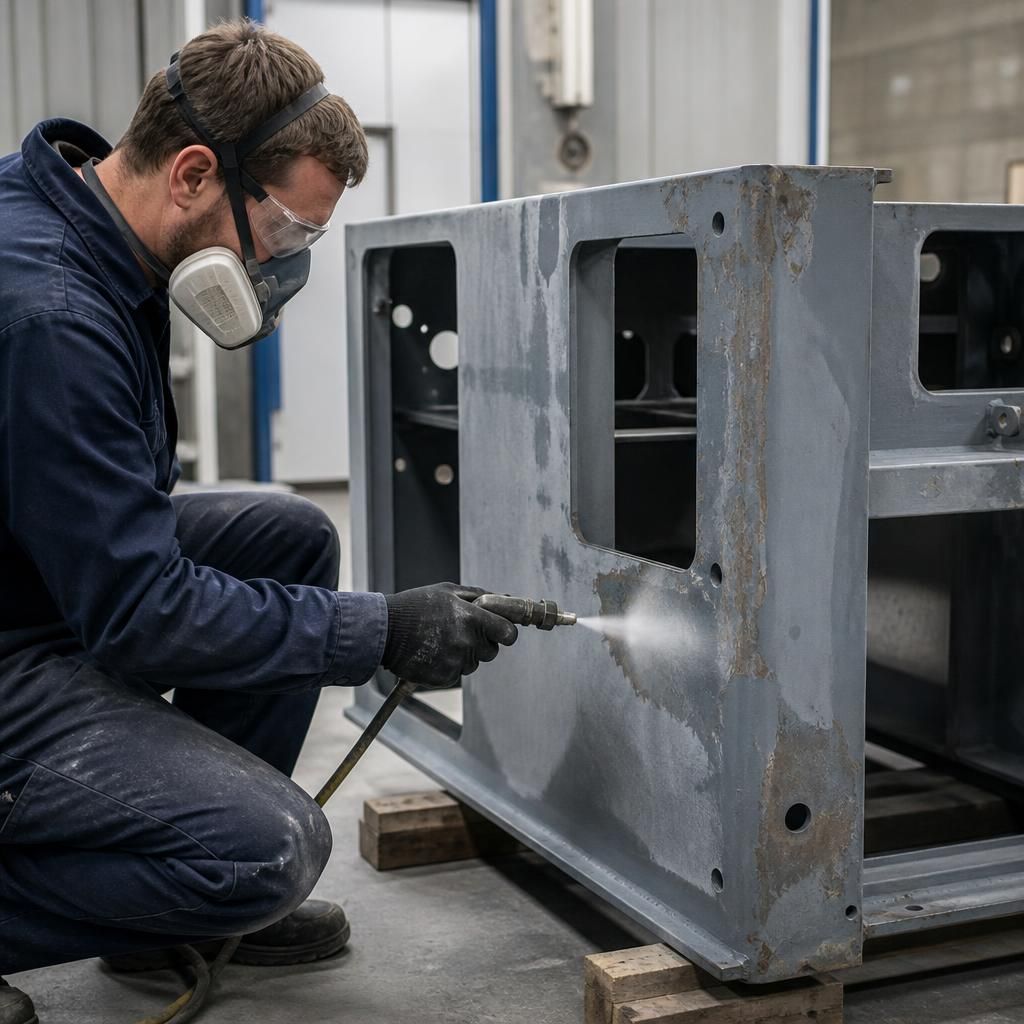
Powder colour paints are also used to refurbish industrial metalwork that has worn, faded or developed surface corrosion. Typical examples include machine guards, cabinets, frames, racking and fabricated housings being returned to service. Before recoating, the existing finish and any corrosion must be removed or stabilised, with the metal checked for distortion, contamination and damage that could affect the new coating.
Refurbishment projects require the coating specification to reflect the component’s future use rather than simply reproduce its original colour. Surface preparation, masking and curing must be suitable for the condition and construction of the item, while the chosen colour and texture can help distinguish updated equipment or bring several components into a consistent scheme.
Discuss Your Industrial Powder Colour Paint Requirements
If you are assessing powder colour paint for a new or existing metal component, discuss its material, dimensions, operating environment and finish requirements with our team. This information helps establish whether the application is suitable and identify the relevant preparation and coating considerations.